
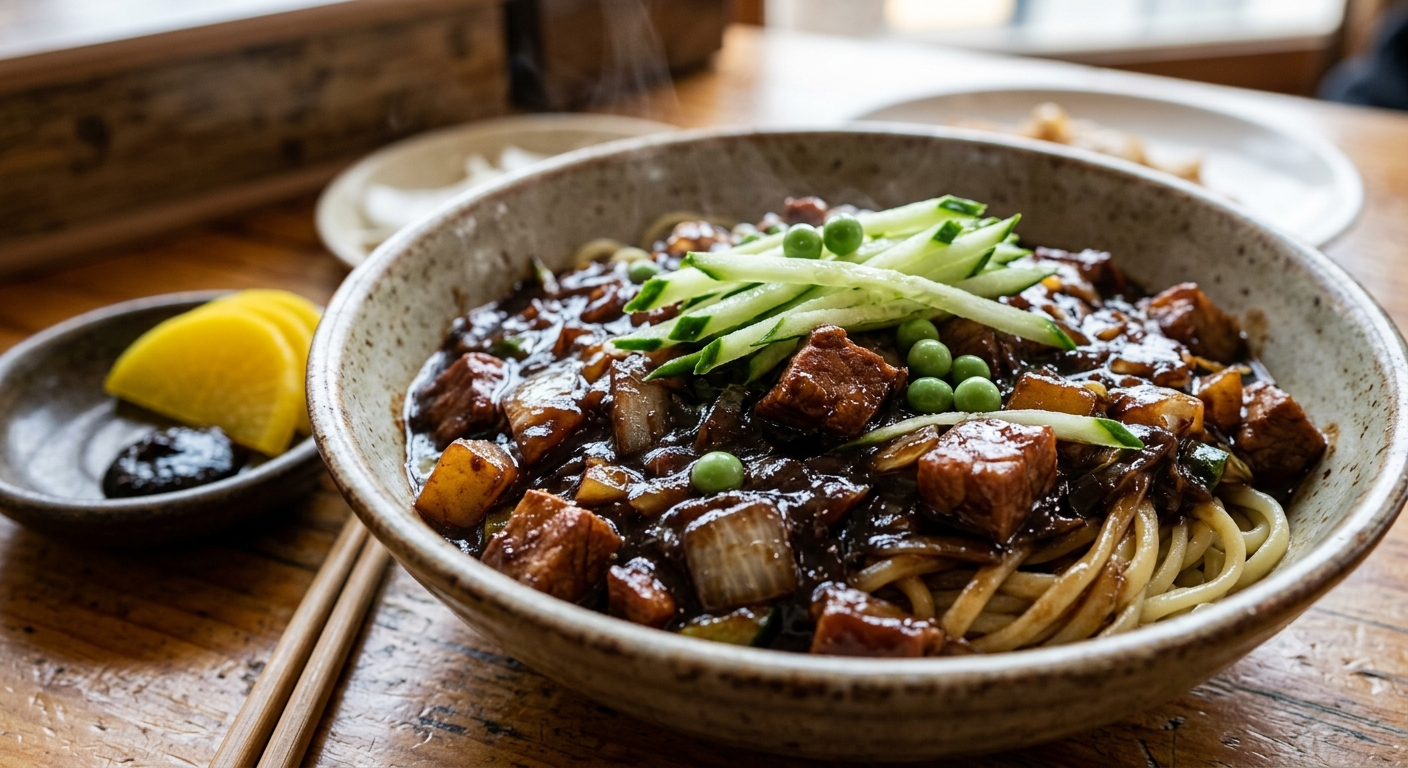
Jjajangmyeon: Korean Black Bean Noodles with Deep, Savory Comfort 🍜
Glossy black sauce, springy noodles, and tender vegetables: jjajangmyeon is one of Korea’s most irresistible comfort foods. This beloved noodle bowl balances savory fermented black bean paste with a gentle sweetness, creating a rich, velvety sauce that clings beautifully to every strand. Whether you are exploring Korean home cooking or craving a restaurant-style meal, this easy jjajangmyeon recipe brings big flavor to your table..
📜 The History of Jjajangmyeon
Jjajangmyeon has roots in the Chinese dish zhajiangmian, meaning “fried sauce noodles.” It was introduced to Korea by Chinese immigrants in Incheon during the late 19th and early 20th centuries. Over time, Korean cooks adapted the original recipe using chunjang, a fermented Korean black bean paste with a distinctively roasted, earthy character.
Today, jjajangmyeon is a Korean-Chinese classic and a cherished symbol of casual celebration. It is famously eaten on Korea’s Black Day, when singles gather on April 14 to enjoy black noodles together. From delivery-food favorite to homemade weeknight dinner, its appeal remains timeless: hearty, affordable, and deeply satisfying.
🛒 Ingredients for Authentic Jjajangmyeon
- 12 ounces fresh Korean wheat noodles or udon noodles
- 3 tablespoons Korean black bean paste (chunjang)
- 2 tablespoons neutral oil, divided
- 8 ounces pork belly, pork shoulder, or diced chicken
- 1 medium onion, diced
- 1 small zucchini, diced
- 1 medium potato, peeled and diced
- 1 cup diced cabbage
- 1/2 cup diced daikon radish or Korean radish
- 1 tablespoon sugar
- 1 tablespoon oyster sauce or soy sauce
- 1 1/2 cups water or unsalted chicken stock
- 1 tablespoon cornstarch mixed with 2 tablespoons cold water
- Cucumber matchsticks, optional, for garnish
👩🍳 How to Make Jjajangmyeon Step by Step
- Prepare the black bean paste. Heat 1 tablespoon oil in a wok or deep skillet over medium-low heat. Add the chunjang and stir-fry for 1 to 2 minutes. This quick frying step softens its bitter edge and develops a smoother, richer flavor. Transfer the paste to a small bowl.
- Brown the meat 🍖. Add the remaining oil to the pan. Cook the pork belly or pork shoulder over medium-high heat until lightly browned and fragrant, about 4 to 5 minutes. If using lean chicken, add an extra teaspoon of oil to prevent sticking.
- Cook the vegetables 🥕. Add onion, zucchini, potato, cabbage, and radish. Stir-fry for 4 minutes, allowing the onion to turn translucent and the vegetables to pick up the savory meat juices.
- Build the sauce. Return the fried chunjang to the pan. Add sugar and oyster sauce, stirring until every ingredient is coated in the dark paste. Pour in water or stock, bring to a gentle simmer, and cook for 10 to 12 minutes until the potato is fork-tender.
- Thicken until glossy ✨. Stir the cornstarch slurry once more, then slowly pour it into the simmering sauce. Stir continuously for 1 to 2 minutes. The sauce should become thick, shiny, and spoon-coating. Add a splash of water if it becomes too thick.
- Boil the noodles. Cook fresh noodles according to package directions, usually 3 to 5 minutes. Drain well and rinse briefly with warm water to remove excess starch while keeping the noodles tender.
- Serve immediately. Divide noodles among bowls and ladle the hot black bean sauce generously over the top. Finish with crisp cucumber matchsticks for a fresh contrast. Mix well before eating and enjoy your homemade Korean black bean noodles.
🌿 Health Benefits and Practical Tips
Jjajangmyeon is a satisfying meal that can also be made more balanced at home. The sauce includes fiber-rich vegetables such as cabbage, zucchini, onion, and radish, while pork or chicken provides protein. Fermented black bean paste also contributes intense umami, meaning you can use less added salt than in many other savory sauces.
- For a lighter bowl: Use lean pork loin, chicken breast, turkey, or finely diced mushrooms.
- For a vegan jjajangmyeon: Replace meat with shiitake mushrooms, firm tofu, or diced eggplant, and use mushroom stock.
- For better texture: Dice vegetables evenly so the sauce cooks consistently.
- For authentic flavor: Do not skip frying the chunjang first; it makes a noticeable difference.
❓ Jjajangmyeon FAQ
What is the best meat for jjajangmyeon?
Pork belly is the traditional choice because its fat enriches the black bean sauce. Pork shoulder is an excellent, less fatty alternative. Chicken thigh, beef, shrimp, tofu, or mushrooms also work well for flexible home cooking.
Can I make jjajangmyeon ahead of time?
Yes. Make the sauce up to 3 days ahead and refrigerate it in an airtight container. Reheat gently with a splash of water or stock. Cook the noodles fresh just before serving for the best chewy texture.
What can I substitute for chunjang?
Chunjang has a unique roasted, fermented flavor, so it is worth seeking out at a Korean grocery store or online. Chinese sweet bean sauce can work in a pinch, but the flavor will be sweeter and less distinctly Korean. Avoid using regular black bean sauce without tasting first, as salt levels vary greatly.
Are black bean noodles spicy?
No. Traditional jjajangmyeon is savory and slightly sweet rather than spicy. If you enjoy heat, serve it with kimchi, sliced fresh chilies, or a small spoonful of Korean chili flakes.
What noodles should I use for jjajangmyeon?
Fresh Korean wheat noodles are ideal because they are thick, bouncy, and hold the sauce well. Udon noodles are a convenient substitute. For a lower-carb option, try zucchini noodles, though the final dish will be lighter and less traditional.
Recommended Ingredients 🥢
Bring out the authentic, deeply savory character of jjajangmyeon with quality Korean chunjang, fresh noodles, and traditional pantry staples.
Recommended Kitchen Tools 🍳
A deep wok or sturdy skillet makes it easy to stir-fry the chunjang, vegetables, and protein into a glossy, restaurant-worthy sauce.
👉 Check Out Essential Cooking Tools on Amazon
* Disclaimer: As an Amazon Associate, I earn from qualifying purchases at no additional cost to you.
TAGS: #Jjajangmyeon, #KoreanFood, #BlackBeanNoodles, #KoreanRecipe, #ComfortFood
Leave a Reply