
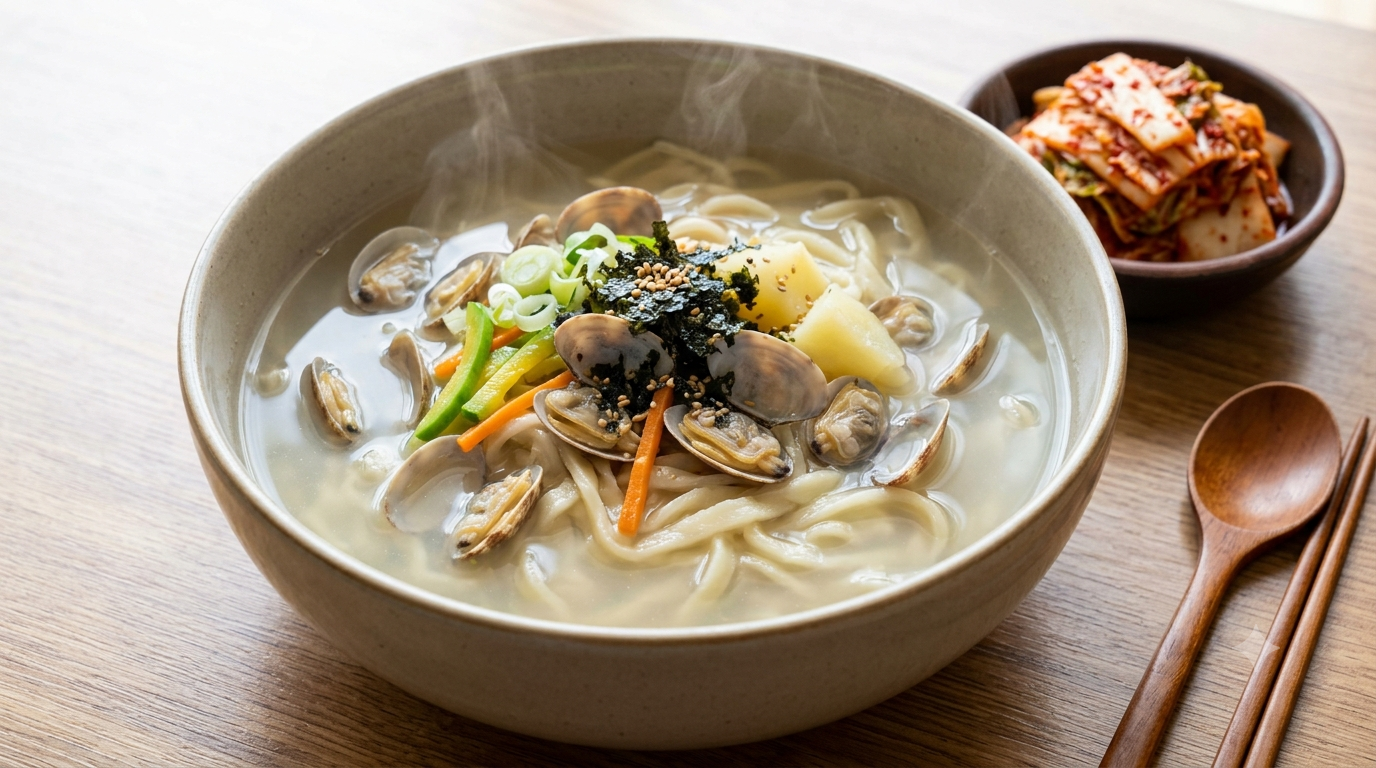
Kalguksu: Comforting Korean Knife-Cut Noodle Soup in a Rich, Savory Broth 🍜
Few bowls are as soothing as Kalguksu, Korea’s beloved knife-cut noodle soup. With its tender, rustic wheat noodles, clear yet deeply savory broth, and simple seasonal vegetables, this dish turns humble pantry ingredients into pure comfort. Whether you need a warming rainy-day meal or a nourishing homemade lunch, Korean kalguksu delivers a silky, slurpable bowl with unforgettable depth.
📜 The History of Korean Kalguksu
The name kalguksu literally means “knife noodles”: kal means knife, while guksu means noodles. Rather than being extruded or pulled, the dough is rolled thin, folded, and sliced by hand into uneven ribbons. That handmade texture is part of what makes authentic kalguksu so special.
Historically, wheat was once a valuable ingredient in Korea, so noodle dishes were often reserved for celebrations, harvest gatherings, and special family meals. Over time, kalguksu became a familiar everyday comfort food, especially during Korea’s humid monsoon season. Today, regional versions range from chicken-based dak kalguksu to seafood-rich coastal broths and boldly flavored spicy variations.
🥣 Classic Kalguksu Recipe: Ingredients
This easy Korean noodle soup recipe uses store-bought fresh knife-cut noodles for convenience while keeping the broth full-bodied and traditional.
- 8 cups chicken broth or anchovy-kelp stock
- 1 tablespoon soy sauce
- 1 teaspoon fish sauce, optional
- 2 cloves garlic, finely minced
- 10 ounces fresh Korean kalguksu noodles
- 1 small zucchini, cut into thin matchsticks
- 1 medium potato, peeled and cut into thin matchsticks
- 1 small onion, thinly sliced
- 1 cup shredded cooked chicken, optional
- 2 green onions, thinly sliced
- Salt and black pepper, to taste
- Kimchi, sesame seeds, and chili flakes for serving
👩🍳 How to Make Kalguksu Step by Step
-
Build the savory broth. 🫕 Pour the chicken broth or anchovy-kelp stock into a large pot. Add soy sauce, fish sauce if using, and minced garlic. Bring everything to a gentle boil over medium-high heat.
-
Cook the vegetables. 🥔 Add the potato and onion first. Simmer for 5 to 6 minutes, until the potato begins to soften. Add the zucchini and cook for another 2 minutes. This layered cooking keeps the vegetables tender but not mushy.
-
Add chicken for a heartier bowl. 🍗 Stir in shredded cooked chicken if desired. Rotisserie chicken is an excellent time-saving option, while poached chicken breast gives the broth a lighter finish.
-
Prepare the fresh noodles. 🍜 Gently loosen the kalguksu noodles with your hands. If they are heavily dusted with flour, rinse them quickly under cold water; this helps create a cleaner, less cloudy broth.
-
Cook the noodles. Add the noodles to the simmering broth and stir immediately to prevent sticking. Cook for 4 to 6 minutes, or according to the package directions, until the noodles are tender with a pleasantly chewy bite.
-
Season and serve. ✨ Taste the soup and add salt and black pepper as needed. Ladle into warm bowls, scatter with green onions, and serve immediately with kimchi, sesame seeds, or a pinch of Korean chili flakes.
🌿 Health Benefits and Smart Cooking Tips
Kalguksu can be a balanced, comforting meal when prepared with a broth rich in vegetables and lean protein. The zucchini and onion contribute vitamins and antioxidants, while potatoes add satisfying carbohydrates and potassium. Chicken supplies protein, helping make the dish more filling and complete.
- For a lighter kalguksu: use low-sodium broth, skip excess salt, and add more zucchini, mushrooms, napa cabbage, or spinach.
- For deeper Korean flavor: make anchovy-kelp stock with dried anchovies, dried kelp, Korean radish, and onion.
- Do not overcook the noodles: fresh knife-cut noodles continue softening in hot broth, so serve them as soon as they are tender.
- For meal prep: store broth and noodles separately. Reheat the broth, then cook fresh noodles just before serving for the best texture.
❓ Kalguksu FAQ
What are the best noodles for kalguksu?
Fresh Korean knife-cut noodles, often sold as kalguksu myeon, are the best choice because they have a soft, handmade-style texture. In a pinch, fresh udon or thick wheat noodles can work, although the final bowl will not have the same rustic bite.
Can I make kalguksu broth ahead of time?
Yes. The broth can be made up to three days ahead and refrigerated in an airtight container. Reheat it gently, add fresh vegetables if needed, and cook the noodles immediately before serving.
Can I make vegetarian Korean kalguksu?
Absolutely. Replace chicken broth with a kelp, mushroom, and vegetable stock. Add shiitake mushrooms, tofu, napa cabbage, and zucchini for a satisfying vegetarian kalguksu with savory umami character.
Why is my kalguksu broth cloudy?
A slightly cloudy broth is normal because the noodles release starch as they cook. For a clearer soup, rinse flour-dusted noodles briefly before adding them to the pot and avoid stirring too aggressively.
What should I serve with kalguksu?
Baechu kimchi, kkakdugi radish kimchi, seasoned cucumber salad, and simple pan-fried dumplings are excellent pairings. The bright acidity and spice of kimchi beautifully cut through the rich, savory noodle broth.
🥬 Recommended Ingredients
Bring authentic Korean comfort to your kitchen with fresh knife-cut noodles, quality anchovy stock ingredients, toasted sesame seeds, and flavorful kimchi.
🍲 Recommended Kitchen Tools
A roomy soup pot, fine noodle strainer, sharp chef’s knife, and sturdy ladle make homemade kalguksu easier, cleaner, and more enjoyable to prepare.
👉 Check Out Essential Cooking Tools on Amazon
* Disclaimer: As an Amazon Associate, I earn from qualifying purchases at no additional cost to you.
TAGS: #Kalguksu, #KoreanFood, #NoodleSoup, #ComfortFood, #KoreanRecipes
Leave a Reply