
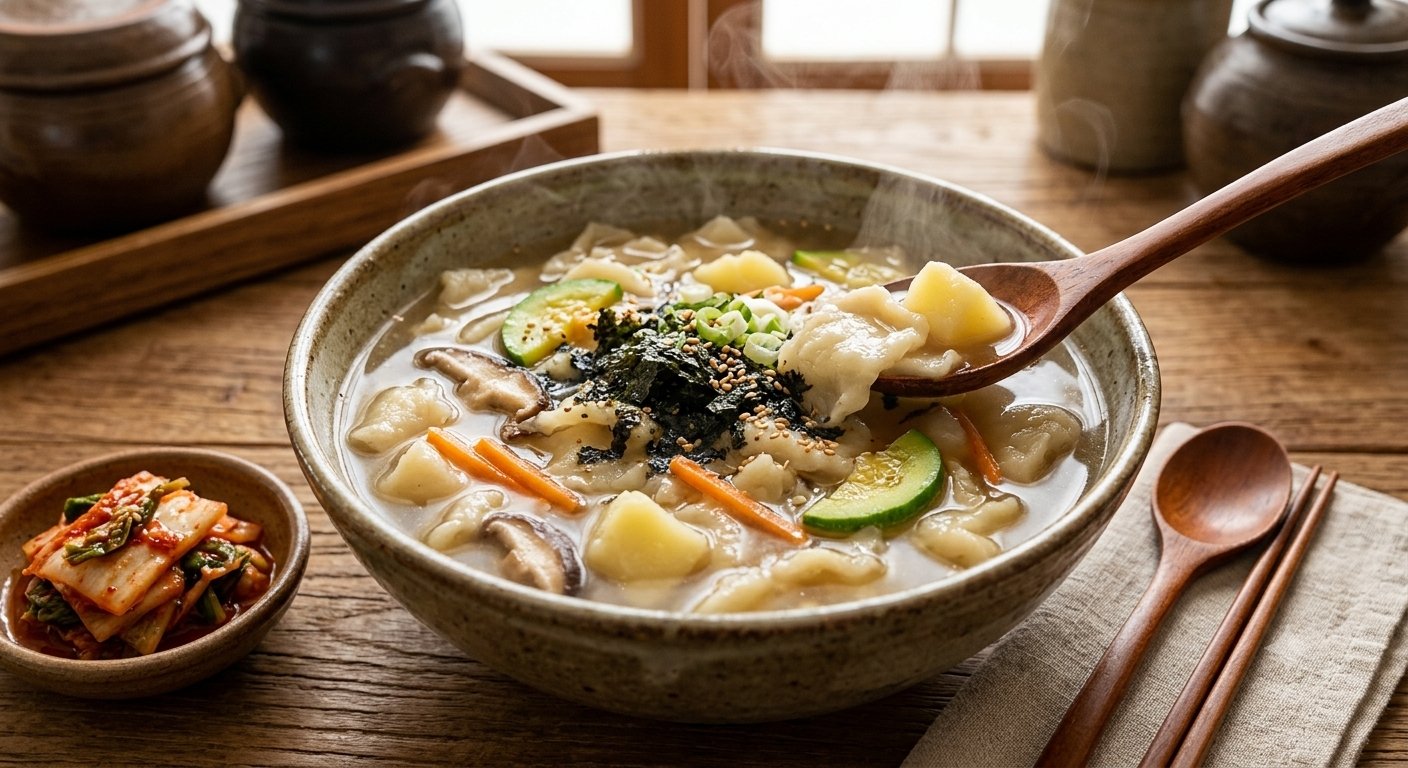
When the weather turns cool—or you simply need a bowl of edible comfort—sujebi delivers. This beloved Korean soup features tender, hand-torn dough flakes drifting through a savory anchovy-kelp broth with potatoes, zucchini, and silky vegetables. Unlike neatly cut noodles, sujebi’s irregular shapes are the point: every bite is delightfully rustic, chewy, and deeply satisfying. 🍲
📜 The Humble History of Korean Sujebi
Sujebi (수제비) is a traditional Korean hand-torn noodle soup with roots in everyday home cooking. Its name comes from the Korean words suggesting dough “torn by hand,” a technique that requires no pasta machine, knife skills, or special equipment. Historically, Korean families prepared sujebi when rice was scarce or when a nourishing, economical meal was needed from pantry staples.
While recipes vary by region and household, the classic version begins with a clean, umami-rich broth made from dried anchovies and kelp. Seasonal vegetables are simmered in the broth, while rested wheat dough is stretched and torn directly into the pot. The result is a warming Korean comfort food that feels both simple and special—especially when served with bright, tangy kimchi. 🇰🇷
🛒 Ingredients for Authentic Anchovy Broth Sujebi
- 2 cups all-purpose flour
- ¾ teaspoon fine salt
- ¾ cup lukewarm water, plus 1 to 2 tablespoons if needed
- 6 cups water
- 10 large dried anchovies, heads and dark innards removed
- 1 piece dried kelp (dashima), about 4 x 4 inches
- 1 medium potato, peeled and cut into thin bite-size pieces
- ½ small zucchini, cut into thin half-moons
- ½ small onion, thinly sliced
- 2 garlic cloves, minced
- 1 tablespoon soup soy sauce or regular soy sauce
- Salt, to taste
- 1 scallion, thinly sliced
- Optional: Korean chili flakes, sesame oil, or kimchi for serving
🥣 How to Make Sujebi Step by Step
- Make the dough. In a medium bowl, combine flour and salt. Gradually add lukewarm water while mixing with chopsticks, a fork, or your hands. Knead for 3 to 5 minutes until the dough comes together. It should feel soft and slightly tacky, not wet. Cover and rest for at least 30 minutes. ⏳
- Build the anchovy-kelp broth. Add water, prepared dried anchovies, and dried kelp to a large pot. Bring it gently to a simmer over medium heat. Remove the kelp after 5 minutes to prevent bitterness, then simmer the anchovies for 10 more minutes.
- Strain and season. Remove and discard the anchovies. Add potato, onion, garlic, and soy sauce to the clear broth. Simmer for 8 to 10 minutes, until the potato is nearly tender. Tip: Thin potato slices cook quickly and help give the broth extra body.
- Add zucchini. Stir in the zucchini and cook for 2 minutes. Keep the broth at a steady, gentle boil so the vegetables remain vibrant and the dough cooks evenly. 🥒
- Tear in the dough. Wet your fingertips with water. Pinch off a small piece of dough, stretch it thin, and tear it directly into the simmering broth. Repeat until all the dough is used. Make each piece thin because it will puff slightly as it cooks. ✋
- Cook until tender. Stir gently to keep the sujebi pieces from sticking together. Cook for 4 to 6 minutes, until the dough is tender, slightly chewy, and floating in the broth.
- Finish and serve. Taste the soup and adjust with salt or a little more soy sauce. Add scallions, then ladle into warm bowls. Finish with a few drops of sesame oil or Korean chili flakes if desired. Serve immediately with kimchi for the full Korean comfort-food experience. 🌶️
🌿 Health Benefits and Practical Sujebi Tips
Sujebi is a naturally comforting one-pot meal that can be adapted to your needs. The broth provides hydration, while potatoes contribute potassium and energy-rich carbohydrates. Zucchini, onion, garlic, and scallions add fiber, antioxidants, and aromatic flavor without relying on heavy cream or butter.
- For a lighter bowl: Add spinach, napa cabbage, mushrooms, or shredded carrots.
- For more protein: Stir in cooked shredded chicken, clams, tofu, or thinly sliced beef.
- For a chewier texture: Rest the dough for 1 hour in the refrigerator.
- For deeper flavor: Use Korean soup soy sauce, which has a cleaner and more savory taste than standard soy sauce.
- Best serving advice: Enjoy sujebi fresh. The hand-torn noodles continue to absorb broth as they sit.
❓ Sujebi FAQ: Korean Hand-Torn Noodle Soup
What is sujebi made of?
Sujebi is made with a simple wheat flour dough, water, and salt. The dough is rested, stretched thin, and torn by hand into simmering broth. A traditional Korean sujebi broth often includes dried anchovies and kelp, plus vegetables such as potatoes and zucchini.
Can I make sujebi dough ahead of time?
Yes. Make the dough up to one day ahead, wrap it tightly, and refrigerate it. Let it sit at room temperature for about 20 minutes before stretching and tearing. Rested dough is easier to handle and produces pleasantly chewy noodles.
What can I use instead of dried anchovies in sujebi broth?
For a vegetarian sujebi, replace anchovies with a broth made from dried shiitake mushrooms, kelp, onion, and radish. You can also use a good-quality vegetable stock, although dried kelp will add a more traditional Korean umami flavor.
Why is my sujebi dough tough?
Tough sujebi usually comes from using too little water, overworking the dough, or skipping the resting period. Keep the dough soft, knead only until smooth, and rest it for at least 30 minutes so the gluten can relax.
Can leftover sujebi be reheated?
Yes, but the dough pieces will soften as they absorb broth. Reheat gently with a splash of water or stock. For the best texture, store extra uncooked dough separately and tear it into fresh broth when ready to eat.
Recommended Ingredients 🛒
Bring authentic Korean pantry flavor to your kitchen with quality dried anchovies, kelp, soup soy sauce, and other fresh essentials for a deeply savory sujebi broth.
Recommended Kitchen Tools 🍳
A sturdy soup pot, fine strainer, and roomy mixing bowl make preparing silky broth and tender hand-torn noodles easy and enjoyable.
* Disclaimer: As an Amazon Associate, I earn from qualifying purchases at no additional cost to you.
TAGS: #Sujebi, #KoreanFood, #NoodleSoup, #AnchovyBroth, #ComfortFood
Leave a Reply