
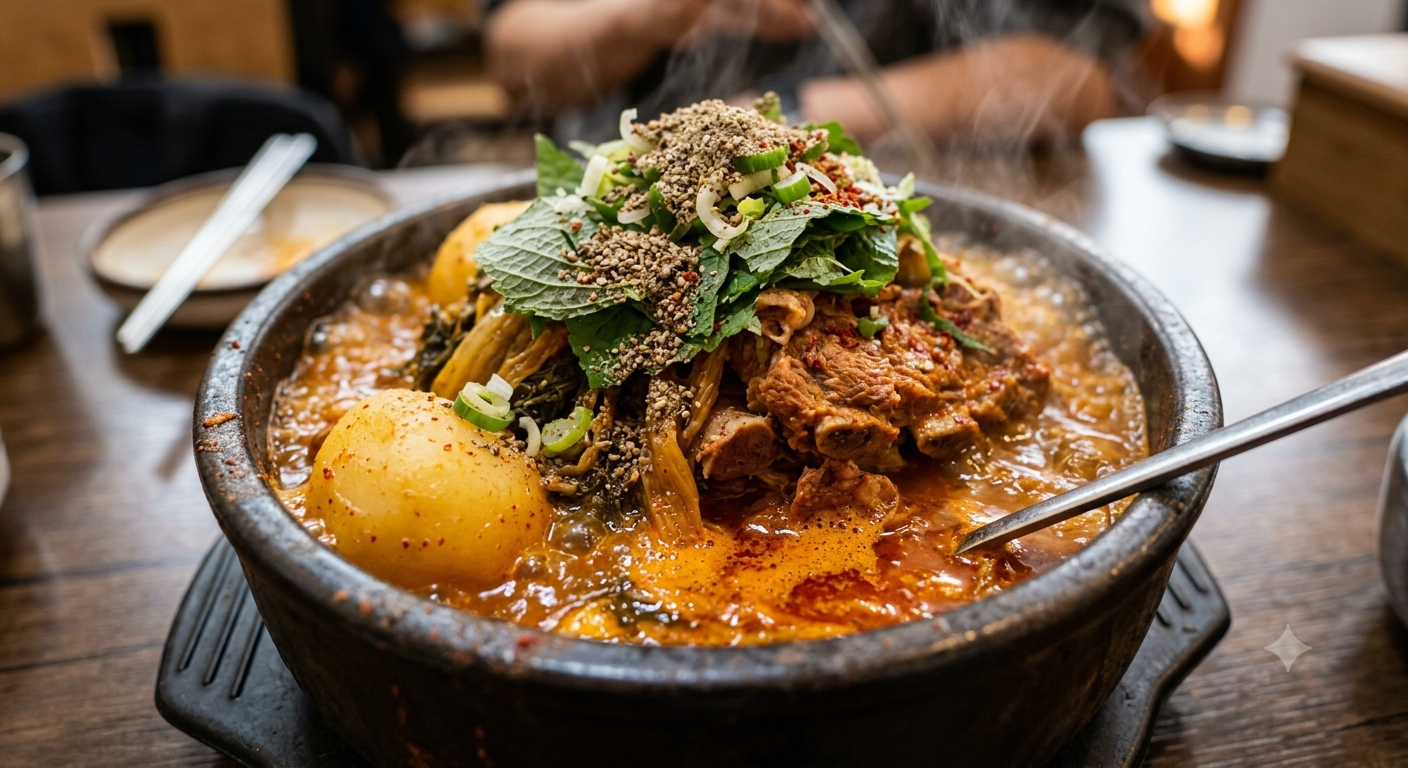
Gamjatang: Hearty Korean Pork Bone Soup with Potatoes 🍲
Few dishes capture the comforting spirit of Korean home cooking like Gamjatang, a deeply savory pork bone soup filled with tender potatoes, earthy perilla seed powder, and fragrant greens. Bold, warming, and wonderfully restorative, this traditional Korean stew is the kind of meal that turns a chilly evening into a celebration..
📜 The History of Gamjatang
Gamjatang, often translated as Korean pork bone soup, has long been enjoyed as an affordable, filling meal across Korea. Despite the name, “gamja” can refer to more than potatoes; some food historians connect the dish to the pork backbone, which was once called gamja-bone in certain regional dialects. Today, potatoes are an essential part of most versions, soaking up the rich broth and adding satisfying texture.
The dish became especially popular among laborers, travelers, and late-night diners because pork neck bones create an intensely flavorful broth without requiring expensive cuts of meat. In Korea, Gamjatang is commonly served in large bubbling pots for sharing, often alongside rice, kimchi, and extra perilla leaves. Its signature combination of pork, potatoes, spicy seasoning, and deulkkae garu (perilla seed powder) gives it a uniquely nutty, comforting finish.
🥔 Authentic Gamjatang Recipe
This homemade Gamjatang recipe serves 4 to 6 people and delivers a restaurant-style Korean pork bone stew with a rich, aromatic broth.
Ingredients
- 3 pounds pork neck bones or pork spine bones
- 8 cups water, plus more for blanching
- 4 medium Yukon Gold or russet potatoes, peeled
- 1 large onion, halved
- 6 garlic cloves
- 1-inch piece fresh ginger, sliced
- 2 tablespoons doenjang (Korean soybean paste)
- 2 tablespoons gochugaru (Korean red pepper flakes)
- 1 tablespoon gochujang (Korean red pepper paste)
- 2 tablespoons soy sauce
- 1 tablespoon fish sauce
- 2 tablespoons perilla seed powder
- 1 bunch napa cabbage or Korean mustard greens, roughly chopped
- 2 scallions, sliced
- 1 tablespoon toasted sesame seeds
- Salt and black pepper, to taste
Step-by-Step Instructions
- 🫧 Soak the pork bones: Place the pork neck bones in a large bowl, cover with cold water, and soak for 30 to 60 minutes. Drain and rinse well. This helps remove excess blood for a cleaner-tasting broth.
- 🔥 Blanch the bones: Add the bones to a large stockpot and cover with fresh water. Bring to a vigorous boil for 8 to 10 minutes. Drain the bones, discard the water, and rinse both the bones and pot thoroughly.
- 🍲 Build the broth: Return the cleaned bones to the pot. Add 8 cups water, onion, garlic, ginger, and doenjang. Bring to a boil, then reduce to a gentle simmer. Cover partially and cook for 1½ hours, skimming foam as needed.
- 🌶️ Season the stew: In a small bowl, combine gochugaru, gochujang, soy sauce, fish sauce, and a few tablespoons of hot broth. Stir into a smooth seasoning paste, then add it to the pot.
- 🥔 Add potatoes: Add the peeled potatoes whole or halved, depending on size. Simmer for 25 to 35 minutes, until fork-tender but not falling apart.
- 🌿 Finish with greens: Remove the onion and ginger if desired. Add napa cabbage or mustard greens and simmer for 5 to 8 minutes until softened.
- ✨ Add the signature nutty finish: Stir in perilla seed powder. Taste and adjust with salt, pepper, or a touch more gochugaru for extra heat.
- 🥢 Serve hot: Ladle the Gamjatang into deep bowls. Garnish with scallions and sesame seeds, then serve immediately with steamed rice and kimchi.
💚 Health Benefits and Smart Cooking Tips
Gamjatang is a nourishing one-pot meal packed with protein, minerals, vegetables, and slow-cooked comfort. Pork bones provide protein and gelatin-rich connective tissue, while potatoes offer potassium and satisfying carbohydrates. Garlic, ginger, and Korean chili flakes bring bold flavor along with antioxidant compounds.
- For a clearer broth: Never skip the soaking and blanching steps.
- For deeper flavor: Make the stew a day ahead; chilled Gamjatang tastes even richer after reheating.
- For a less spicy version: Reduce the gochugaru to 1 tablespoon and omit gochujang.
- For authentic texture: Use pork neck bones with visible meat attached rather than plain soup bones.
- For a lighter finish: Skim the fat from the broth before adding potatoes and greens.
❓ Gamjatang FAQ
What are the best pork bones for Gamjatang?
Pork neck bones are the best choice because they offer a balance of meat, marrow, cartilage, and fat. Pork spine bones are also traditional and work well. Ask a Korean butcher or Asian market for pork bones specifically suited for Gamjatang.
Can I make Gamjatang ahead of time?
Yes. Gamjatang is an excellent make-ahead Korean stew. Prepare it up to two days in advance, refrigerate it, and reheat gently on the stove. For best potato texture, you can cook the broth ahead and add fresh potatoes when reheating.
What can I substitute for perilla seed powder?
Perilla seed powder has a distinctive nutty flavor and is highly recommended. If unavailable, finely ground toasted sesame seeds can add nuttiness, although the flavor will not be identical. Avoid using peanut butter, which changes the dish too dramatically.
Is Gamjatang spicy?
Traditional Gamjatang is moderately spicy, but you control the heat. Use less gochugaru and gochujang for a milder soup, or add extra chili flakes for a more intense Korean-style kick.
What should I serve with Gamjatang?
Serve this Korean pork bone soup with steamed short-grain rice, kimchi, cubed radish kimchi, and simple banchan. A cold cucumber side dish also balances the stew’s rich, spicy broth beautifully.
Recommended Ingredients 🌿
Bring authentic Korean depth to your Gamjatang with fresh pork neck bones, aromatic gochugaru, doenjang, and nutty perilla seed powder.
Recommended Kitchen Tools 🍲
A heavy-duty stockpot makes long, gentle simmering easy and gives your Korean pork bone soup the rich flavor it deserves.
👉 Check Out Essential Cooking Tools on Amazon
* Disclaimer: As an Amazon Associate, I earn from qualifying purchases at no additional cost to you.
TAGS: #Gamjatang, #KoreanFood, #PorkBoneSoup, #KoreanRecipe, #ComfortFood
Leave a Reply