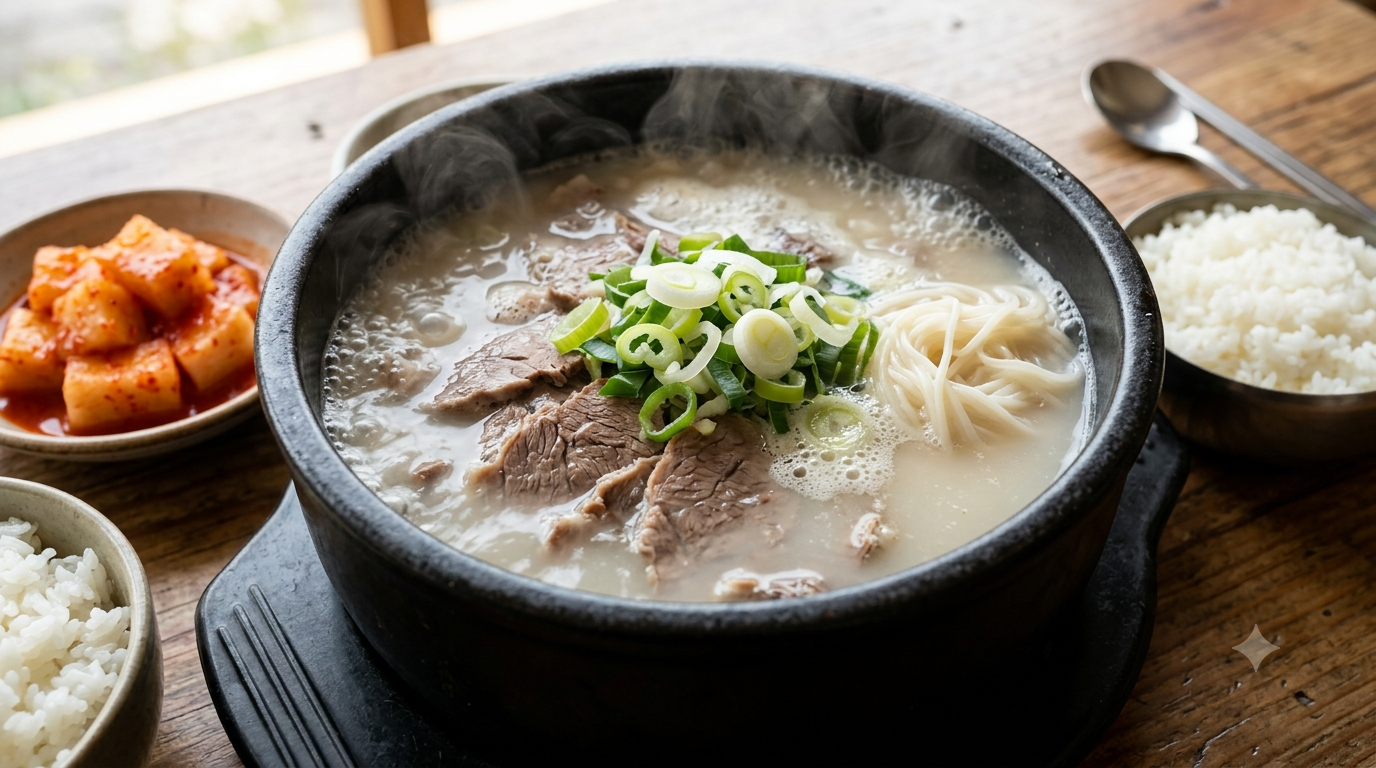
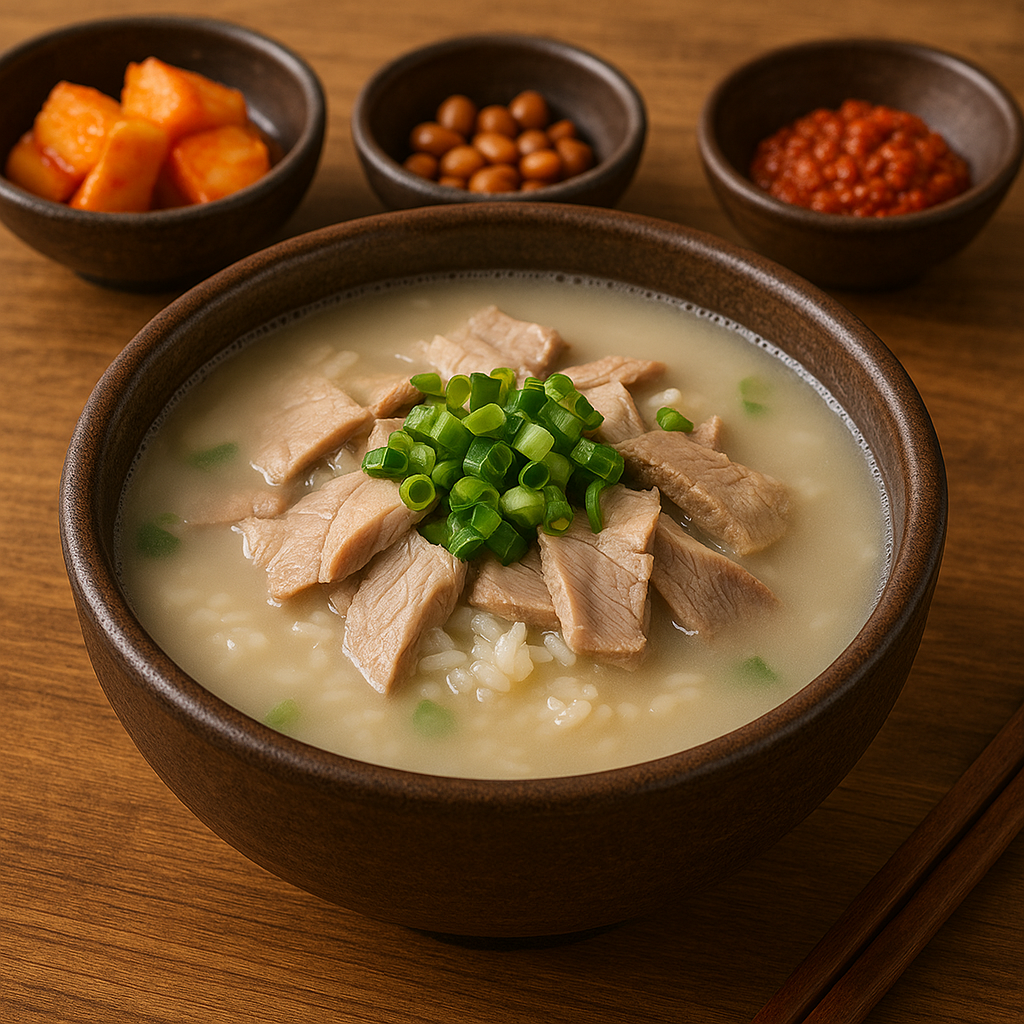
Dwaeji Gukbap: Busan’s Hearty Pork and Rice Soup in a Milky, Savory Broth
Few Korean comfort foods are as deeply satisfying as Dwaeji Gukbap, Busan’s beloved pork-and-rice soup. A steaming bowl arrives with tender pork, fluffy rice, scallions, and a pale, richly savory broth that feels both nourishing and indulgent. It is simple food with serious soul—especially welcome on a rainy day, a cold evening, or whenever you crave a restorative meal. 🍲
📜 The History of Busan-Style Dwaeji Gukbap
Dwaeji gukbap literally translates to “pork soup with rice.” While pork soups have long existed across Korea, the iconic version is closely tied to Busan, South Korea’s bustling southern port city. During and after the Korean War, Busan became a refuge for displaced families. Affordable cuts of pork, bones, and rice were transformed into filling bowls of soup that could feed many people economically.
Over time, Busan’s pork soup became a regional institution. The broth is traditionally simmered for hours with pork bones and meat until it turns cloudy and milky, developing a silky body without cream or dairy. Diners typically season their own bowls with salted fermented shrimp, chili paste, fresh chives, and sliced green chilies—making every serving personal and flavorful.
🥢 How to Make Dwaeji Gukbap at Home
This approachable version creates a deeply comforting broth using pork shoulder, pork belly, and optional bones. Serve it with warm rice and Korean-style condiments for the most authentic experience.
Ingredients for 4 Servings
- 1 pound pork shoulder or pork neck, cut into large chunks
- 8 ounces pork belly, sliced into thick pieces
- 1 pound pork neck bones or pork bones, optional but recommended
- 10 cups water, plus more for blanching
- 1 medium onion, halved
- 1 whole garlic bulb, halved crosswise
- 1-inch piece fresh ginger, sliced
- 2 scallions, cut into large sections
- 4 cups cooked short-grain white rice
- 2 tablespoons Korean salted fermented shrimp (saeujeot), to taste
- 1 tablespoon fish sauce or soup soy sauce, optional
- Fresh chopped scallions, chives, or garlic chives for serving
- Fresh green chili or jalapeño slices, optional
- Kimchi, ssamjang, or gochugaru for serving
Step-by-Step Instructions
-
🫧 Blanch the pork. Place the pork shoulder, pork belly, and bones in a large pot. Cover with cold water and bring to a boil for 5 minutes. This removes excess blood and impurities for a cleaner-tasting broth.
-
Rinse thoroughly. Drain the pork and rinse it under cold running water. Wash the pot as well, removing any foam or residue stuck to the sides.
-
🍲 Build the broth. Return the pork and bones to the clean pot. Add 10 cups fresh water, onion, garlic, ginger, and scallion sections. Bring to a gentle boil over medium-high heat.
-
Simmer slowly. Reduce the heat to low and simmer, partially covered, for 1½ to 2 hours. Skim off visible foam during the first 30 minutes. The broth should become lightly cloudy, fragrant, and savory.
-
Remove and slice the meat. Transfer the pork shoulder and belly to a cutting board. Let cool slightly, then slice thinly. If using bones, pick off any tender meat and reserve it for serving.
-
Strain and season. Strain the broth, discarding the aromatics. Return the clear-to-milky broth to the pot and keep it warm. Season lightly with fish sauce or soup soy sauce, but avoid over-salting because diners will add saeujeot individually.
-
🍚 Assemble each bowl. Add 1 cup warm rice to each serving bowl. Arrange sliced pork on top, then ladle over plenty of hot broth.
-
Finish with condiments. Serve with chopped scallions, chives, green chili, kimchi, gochugaru, and salted fermented shrimp. Encourage everyone to season their bowl to taste—the traditional Busan way.
🌿 Health Benefits and Practical Tips
Dwaeji gukbap offers a balanced combination of protein, carbohydrates, and warming broth. Pork provides protein, iron, zinc, and B vitamins, while rice supplies easy-to-digest energy. The long-simmered broth can be especially comforting when appetite is low or when you want a warming meal.
- Choose leaner pork shoulder if you prefer a lighter bowl; add a small amount of pork belly for richness.
- Do not rush the simmer. Gentle cooking creates tender meat and a more rounded broth.
- Season at the table. Saeujeot is salty and powerful, so add it gradually—about ½ teaspoon at a time.
- Make it ahead. The broth tastes even better the next day. Chill it, remove excess solidified fat if desired, then reheat gently.
❓ Dwaeji Gukbap FAQ
What is the best cut of pork for dwaeji gukbap?
Pork shoulder, pork neck, and pork jowl are excellent choices because they stay tender during long simmering. Pork belly adds richness, while pork bones provide a fuller, more traditional broth.
How do I make the pork broth milky without dairy?
The milky appearance comes from simmering pork bones, connective tissue, and fat over low heat. Blanching first and then simmering gently helps create a clean but naturally opaque broth—no milk or cream is used.
Can I make Busan pork soup without pork bones?
Yes. Use pork shoulder and pork belly, then simmer for at least 90 minutes. The broth will be lighter, but still delicious. For extra body, use a little more pork belly or add a small amount of unflavored pork stock.
Can I prepare dwaeji gukbap in advance?
Absolutely. Make the broth and pork up to three days ahead, refrigerate separately, and reheat before serving. Cooked rice can also be reheated with a splash of water, covered, until soft and steamy.
What can I use instead of Korean salted fermented shrimp?
For the closest flavor, use fish sauce in tiny amounts. Miso mixed with a little fish sauce can also add savory depth, though it will not taste exactly like traditional saeujeot.
Recommended Ingredients 🛒
Bring authentic Busan-style flavor to your kitchen with fresh pork, Korean short-grain rice, and savory salted fermented shrimp for the signature finishing touch.
Recommended Kitchen Tools 🍳
A sturdy stockpot or traditional Korean earthenware pot helps maintain gentle heat and keeps every bowl of dwaeji gukbap beautifully hot at the table.
👉 Check Out Essential Cooking Tools on Amazon
* Disclaimer: As an Amazon Associate, I earn from qualifying purchases at no additional cost to you.
TAGS: #DwaejiGukbap, #KoreanFood, #BusanCuisine, #PorkSoup, #ComfortFood