
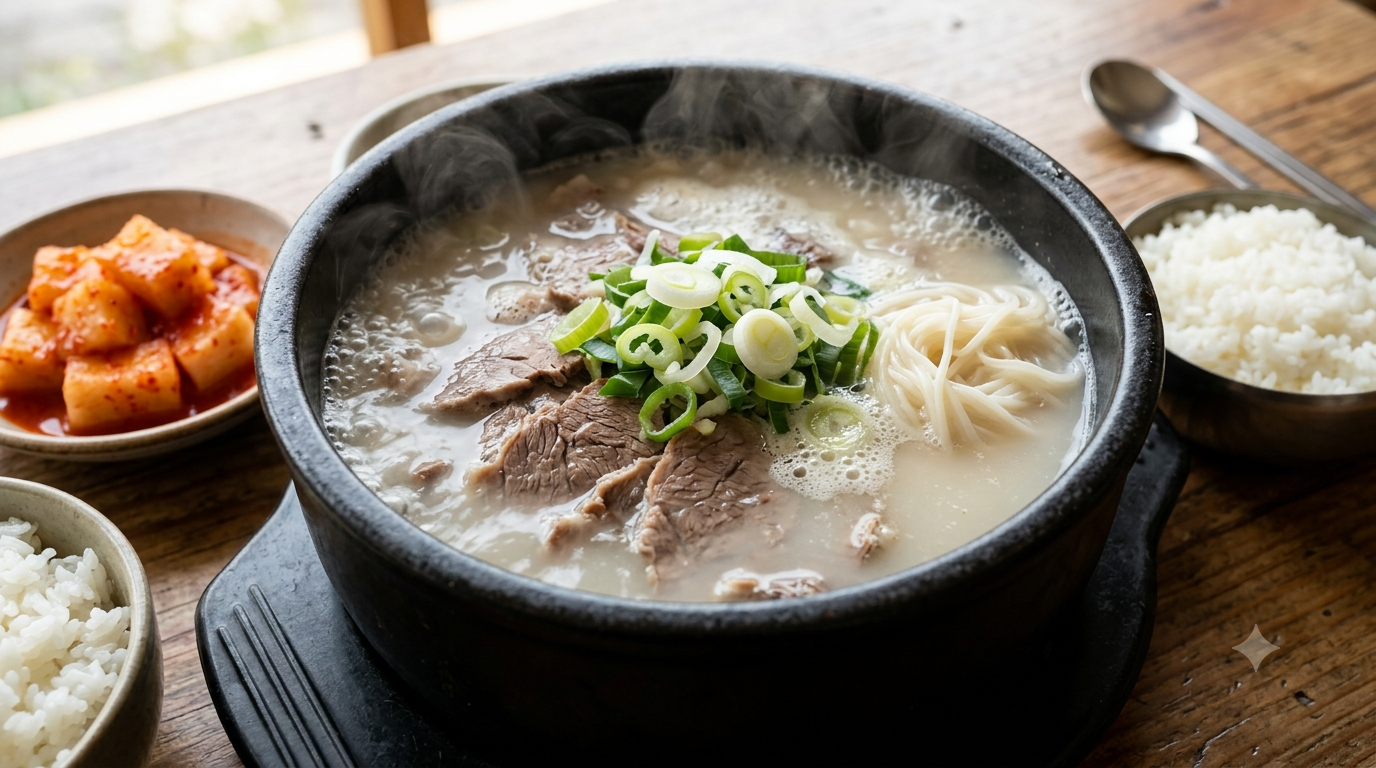
Seolleongtang: Rich and Milky Korean Ox Bone Soup for Pure Comfort
There is a special kind of comfort in a bowl of Seolleongtang: a pale, milky Korean ox bone soup with a clean, deeply savory flavor that feels soothing from the very first sip. Served steaming hot with tender beef, springy noodles, rice, and punchy kimchi, this is the kind of meal that turns an ordinary day into a cozy ritual. 🍲
📜 The History of Seolleongtang
Seolleongtang (설렁탕) is one of Korea’s most beloved traditional soups, made by slowly simmering beef bones, brisket, and aromatics until the broth turns naturally cloudy and ivory-colored. The creamy appearance does not come from dairy; it develops when marrow, collagen, fat, and minerals emulsify into the water during a long simmer.
Its origins are often linked to Seonnongje, an ancient royal agricultural ceremony where Korean kings prayed for a successful harvest. According to popular tradition, beef soup was prepared and shared after the ritual, eventually evolving into the hearty soup now known as seolleongtang. Today, it is a classic Korean comfort food, widely enjoyed for breakfast, lunch, late-night meals, and restorative family dinners.
🛒 Ingredients for Authentic Korean Ox Bone Soup
- 3 pounds beef leg bones, knuckle bones, marrow bones, or a combination
- 1 pound beef brisket or shank
- 1 small Korean radish or daikon, peeled and halved
- 1 onion, halved
- 4 garlic cloves
- 12 to 14 cups water, plus more as needed
- Cooked short-grain rice, for serving
- Cooked Korean wheat noodles or somyeon, optional
- Sliced scallions, for serving
- Salt, black pepper, and sliced green chili, to taste
- Kimchi and kkakdugi (cubed radish kimchi), for serving
🍲 How to Make Seolleongtang Step by Step
- Soak the bones. 💧 Place the beef bones in a large pot or bowl and cover with cold water. Soak for 1 to 2 hours, changing the water once if possible. This step helps remove excess blood and creates a cleaner-tasting broth.
- Parboil and rinse. Transfer the bones to a large stockpot, cover with fresh water, and bring to a boil for 10 minutes. Drain the pot, then rinse the bones thoroughly under cool running water. Clean the pot as well.
- Start the long simmer. 🔥 Return the cleaned bones to the pot and add 12 to 14 cups of fresh water. Bring to a boil, then lower the heat to maintain a steady, active simmer. Cook uncovered or partially covered for 5 to 6 hours.
- Add the beef and aromatics. After the first hour, add the brisket or shank, radish, onion, and garlic. Simmer until the meat is tender, usually 1½ to 2 hours. Remove the beef, let it cool slightly, then slice it thinly. Refrigerate it until serving.
- Build a milky broth. Continue simmering the bones for another 3 to 4 hours. Add hot water as the liquid reduces. For the signature cloudy white broth, keep the simmer lively enough to gently agitate the bones and marrow.
- Strain and season at the table. 🥄 Strain the broth through a fine sieve. Return it to the pot and reheat. Traditionally, seolleongtang is served lightly seasoned so each diner can add salt, pepper, scallions, and chili according to taste.
- Serve the comforting bowl. Divide sliced beef, rice, and optional noodles among large bowls. Ladle over the hot broth, scatter with scallions, and serve immediately with kimchi or kkakdugi on the side.
🌿 Health Benefits and Smart Cooking Tips
Seolleongtang is valued for its protein-rich beef, warming hydration, and satisfying gelatinous texture from slowly cooked bones. While bone broth should not be treated as a miracle food, it can be a nourishing addition to a balanced diet, especially when paired with rice, vegetables, and fermented kimchi.
- Skim for a lighter soup: Chill the finished broth overnight and lift off the solidified fat before reheating.
- Do not oversalt the pot: Korean diners traditionally season individual bowls, preserving the clean flavor of the broth.
- Use a pressure cooker: It can shorten the initial bone-cooking time, though a long stovetop simmer delivers the most traditional flavor.
- Freeze extra broth: Portion cooled broth into containers and freeze for up to 3 months.
❓ Seolleongtang FAQ
What are the best bones for seolleongtang?
A combination of beef knuckle bones, leg bones, and marrow bones creates the best balance of body, richness, and milky color. Ask a Korean butcher or local butcher for soup bones or ox bones.
Why is my Korean ox bone soup not milky white?
The broth may be too gently simmered or cooked for too short a time. A stronger simmer helps emulsify marrow and collagen into the liquid. Using a mix of marrow and joint bones also improves the color and texture.
Can I make seolleongtang ahead of time?
Yes. In fact, it is ideal for meal prep. Make the broth one day ahead, chill it, remove excess fat if desired, and reheat gently before serving with freshly cooked rice, noodles, and scallions.
Can I substitute chicken or pork bones?
You can make a delicious bone broth with other bones, but it will not taste like traditional seolleongtang. For its distinctively mild, beefy, milky profile, beef or ox bones are essential.
What should I serve with seolleongtang?
Serve it with steamed short-grain rice, sliced scallions, salt, pepper, and Korean kimchi. Kkakdugi is especially popular because its crisp, spicy, tangy flavor cuts through the rich broth beautifully.
🥩 Recommended Ingredients
Bring authentic Korean comfort to your kitchen with quality beef soup bones, fragrant scallions, and traditional kimchi. Choose fresh, well-marbled bones for the richest, silkiest seolleongtang broth.
🍲 Recommended Kitchen Tools
A roomy stockpot, fine-mesh strainer, and traditional Korean soup bowls make long-simmered broth easier to prepare and more enjoyable to serve.
👉 Check Out Essential Cooking Tools on Amazon
* Disclaimer: As an Amazon Associate, I earn from qualifying purchases at no additional cost to you.
TAGS: #Seolleongtang, #KoreanFood, #BoneBroth, #ComfortFood, #KoreanSoup
Leave a Reply