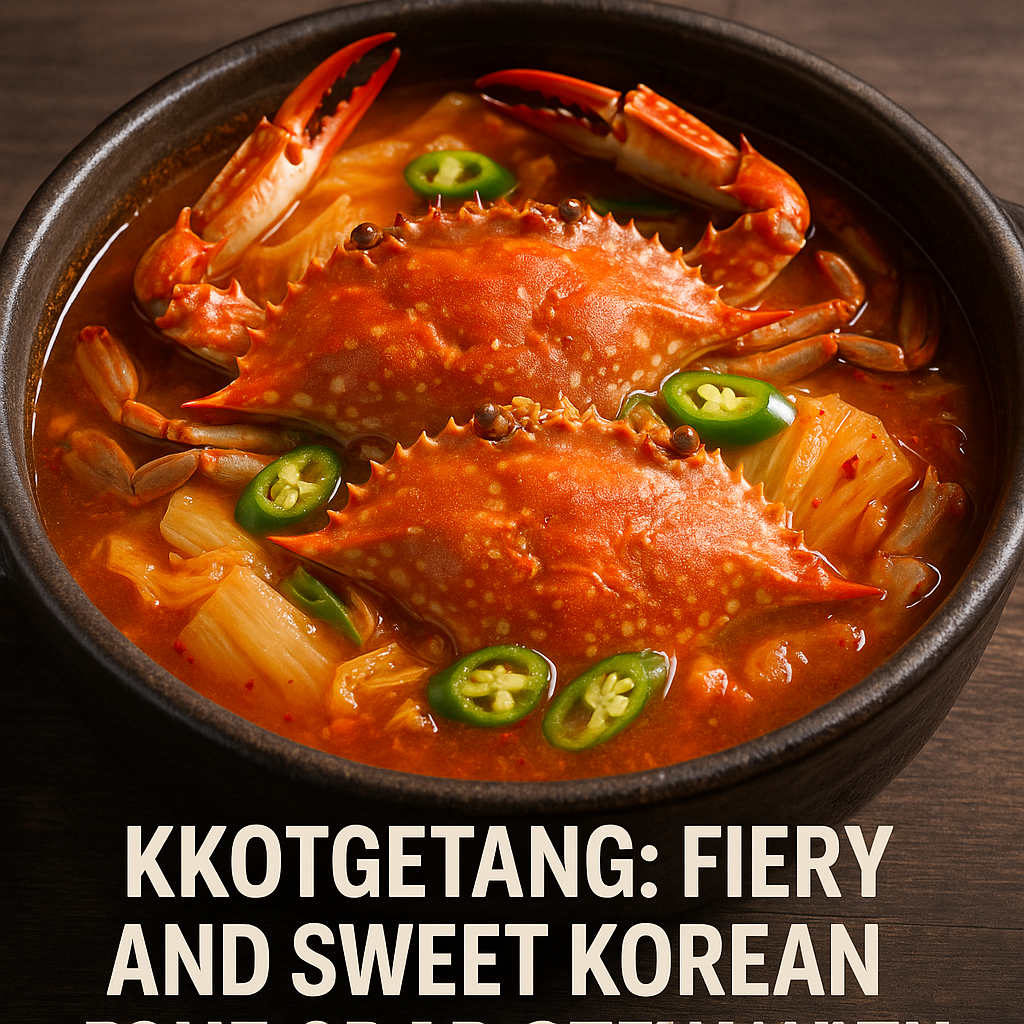
Kkotgetang: Fiery and Sweet Korean Blue Crab Stew with Deep Ocean Umami
Few Korean dishes capture the drama of the sea quite like Kkotgetang, a bubbling blue crab stew that is spicy, naturally sweet, and intensely savory. Each spoonful delivers tender crab meat, a crimson gochugaru broth, soft vegetables, and the unmistakable deep ocean umami released from crab shells as they simmer. It is the kind of communal, steam-filled meal that turns an ordinary dinner into an occasion. 🦀
🌊 The History of Korean Kkotgetang
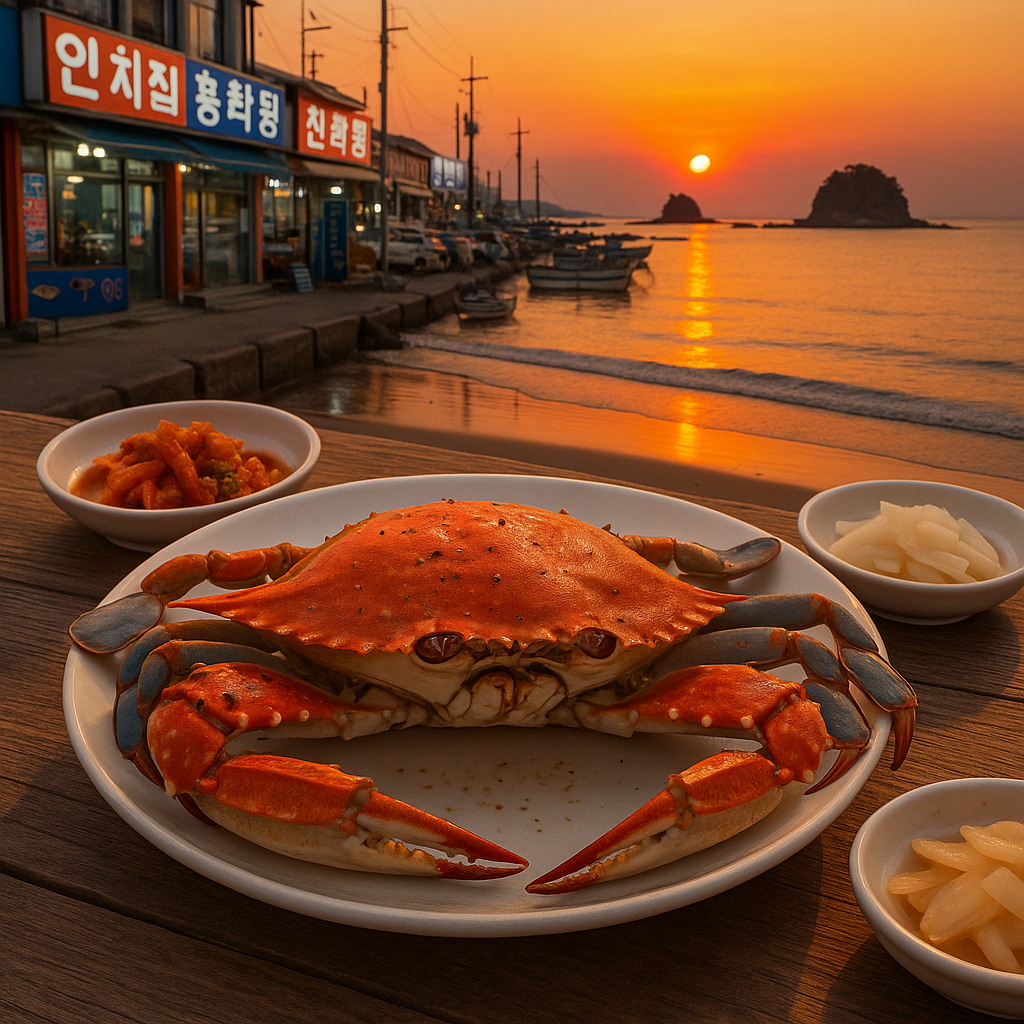
Kkotgetang (꽃게탕) translates simply to “blue crab soup” or “blue crab stew.” It is a beloved coastal Korean dish, especially associated with regions along the Yellow Sea and Korea’s western and southern shores, where fresh blue crab has long been a prized seasonal catch.
Traditional Korean home cooks developed crab stews as a practical and delicious way to celebrate fresh seafood. Rather than relying on heavy cream or butter, Korean cuisine builds flavor through fermented staples such as doenjang (fermented soybean paste), gochujang (Korean red chili paste), garlic, and gochugaru (Korean chili flakes). These ingredients amplify the crab’s natural sweetness while creating a broth that is warming, spicy, and deeply layered.
Today, Kkotgetang is enjoyed at seafood restaurants and family tables alike. It is especially popular during cooler weather, though its bright, briny flavor makes it just as satisfying year-round.
🍲 Korean Kkotgetang Recipe: Ingredients
- 2 whole fresh blue crabs, cleaned and cut into sections
- 6 cups water or light anchovy-kelp stock
- 1 tablespoon doenjang (Korean fermented soybean paste)
- 1 tablespoon gochujang (Korean red chili paste)
- 2 tablespoons gochugaru (Korean red pepper flakes)
- 1 tablespoon soy sauce
- 1 tablespoon fish sauce
- 5 garlic cloves, minced
- 1 teaspoon grated ginger
- 1 small Korean radish or daikon, sliced
- 1 small zucchini, sliced
- 1 medium potato, cut into bite-size pieces
- 1 onion, sliced
- 2 scallions, cut into 2-inch pieces
- 1 fresh red chili, sliced, optional
- Tofu or enoki mushrooms, optional
🔥 How to Make Fiery Korean Blue Crab Stew
-
Clean the crabs carefully. 🦀 Rinse the blue crabs under cold running water. Remove the gills, mouthparts, and internal sacs, then cut each crab into manageable sections. If possible, crack the claws lightly so the flavorful broth can reach the meat.
-
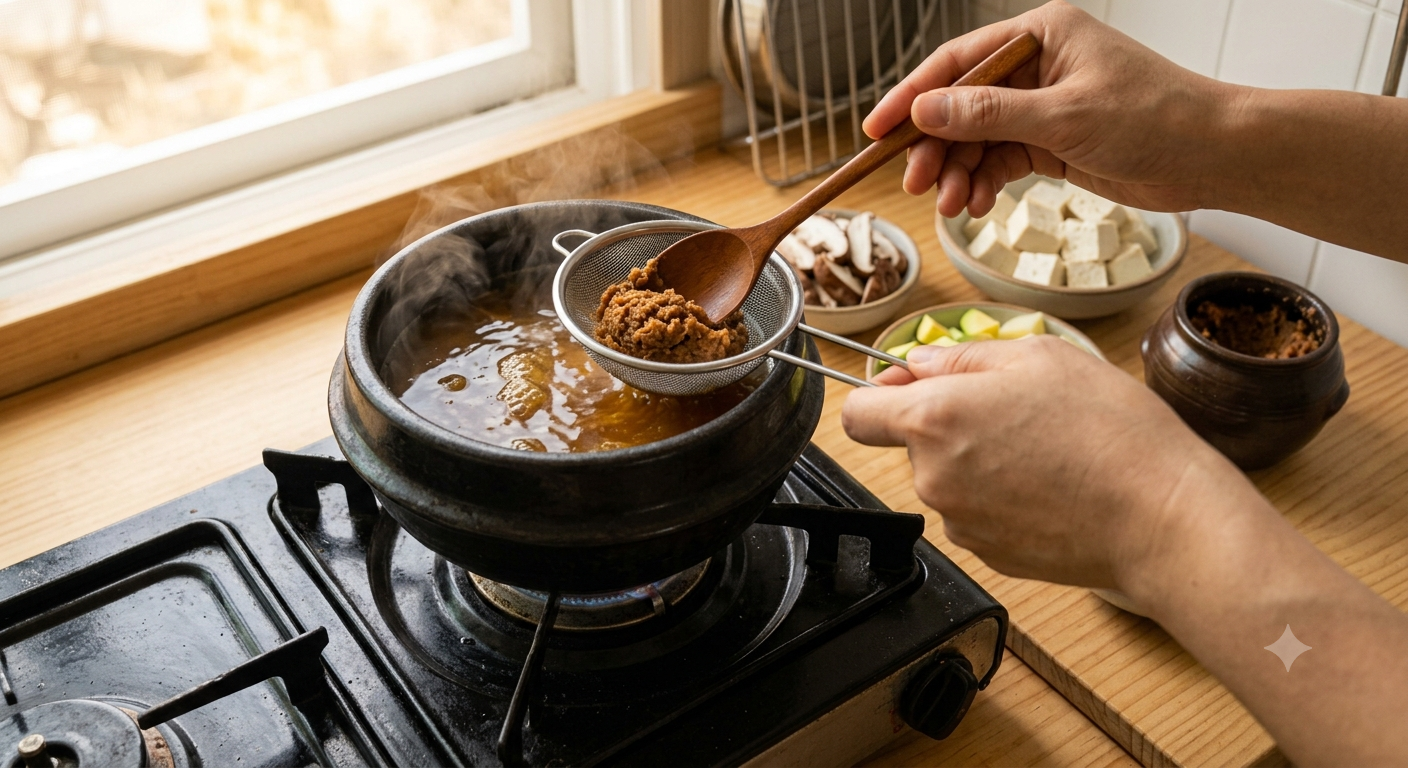
Build the savory broth. Add water or anchovy-kelp stock to a large pot. Stir in the doenjang, gochujang, gochugaru, soy sauce, fish sauce, minced garlic, and ginger until mostly dissolved.
-
Simmer the firm vegetables first. 🥔 Add the Korean radish and potato to the pot. Bring the broth to a boil, then reduce to a steady simmer for 10 minutes. This gives the vegetables time to soften and sweeten the broth naturally.
-
Add the blue crab. Carefully place the crab pieces into the simmering broth, shell-side down where possible. Cook for 8 to 10 minutes, until the shells turn bright orange-red and the crab meat is opaque.
-
Add tender vegetables. 🌶️ Add zucchini, onion, scallions, fresh chili, and optional tofu or enoki mushrooms. Simmer for another 4 to 5 minutes, just until the zucchini is tender but not mushy.
-
Skim and adjust. Skim off any foam from the surface for a cleaner broth. Taste and add a small splash of fish sauce for saltiness, extra gochugaru for heat, or a little water if the stew tastes too concentrated.
-
Serve immediately. 🍚 Ladle the hot Kkotgetang into deep bowls and serve with steamed Korean rice, kimchi, and simple banchan. Crackers or seafood picks are useful for reaching every sweet piece of crab meat.
💚 Health Benefits and Smart Cooking Tips
Blue crab is a lean source of protein, vitamin B12, selenium, and zinc, while the broth provides hydration and minerals from seafood and vegetables. Garlic and ginger bring aromatic depth and are commonly valued for their antioxidant properties. The stew is naturally low in added fat, though sodium can rise quickly with fermented pastes and fish sauce.
- Choose lively, fresh crabs: Fresh blue crabs should smell clean and briny, never strongly fishy or ammonia-like.
- Use frozen crab when needed: Frozen cleaned blue crab is a convenient, excellent option; thaw it overnight in the refrigerator.
- Don’t overcook: Crab becomes tough when simmered too long. Add it only after the potatoes and radish have started cooking.
- Make the broth richer: Anchovy-kelp stock gives the stew a more traditional Korean seafood restaurant flavor.
- Control the heat: Reduce gochugaru to 1 tablespoon for a gentler stew, or add sliced fresh chilies for extra fire.
❓ Kkotgetang FAQ
What is the best crab for Kkotgetang?
Korean blue crab, also called flower crab or swimming crab, is the traditional choice because its shell creates a sweet, highly flavorful broth. Dungeness crab, snow crab sections, or small mud crabs can work as substitutes.
Can I make Korean blue crab stew with frozen crab?
Yes. Frozen raw blue crab is ideal when fresh crab is unavailable. Thaw it safely in the refrigerator, rinse away any ice glaze, and add it directly to the simmering broth. Avoid pre-cooked crab if possible, as it can become dry.
Can Kkotgetang be made ahead?
You can prepare the seasoned broth and chop the vegetables up to one day ahead. For the best texture and freshest seafood flavor, cook the crab shortly before serving. Leftovers keep for up to one day in the refrigerator.
What can I substitute for doenjang?
For the closest flavor, use Japanese miso mixed with a small splash of soy sauce. It will be milder and less earthy than doenjang, but still adds fermented depth to the stew.
How do I make Kkotgetang less spicy?
Use less gochugaru, reduce or omit gochujang, and add extra radish, zucchini, or tofu. Serve with plenty of rice to soften the heat while preserving the stew’s sweet crab flavor.
Recommended Ingredients 🛒
Bring authentic Korean flavor to your kitchen with fresh blue crab, savory doenjang, bold gochujang, and fragrant gochugaru for a truly memorable Kkotgetang.
Recommended Kitchen Tools 🍲
A deep, sturdy stew pot makes it easy to simmer the crab evenly, serve the broth beautifully, and keep every flavorful ingredient piping hot at the table.
👉 Check Out Essential Cooking Tools on Amazon
* Disclaimer: As an Amazon Associate, I earn from qualifying purchases at no additional cost to you.
TAGS: #Kkotgetang, #KoreanFood, #BlueCrabStew, #SeafoodRecipe, #SpicySoup