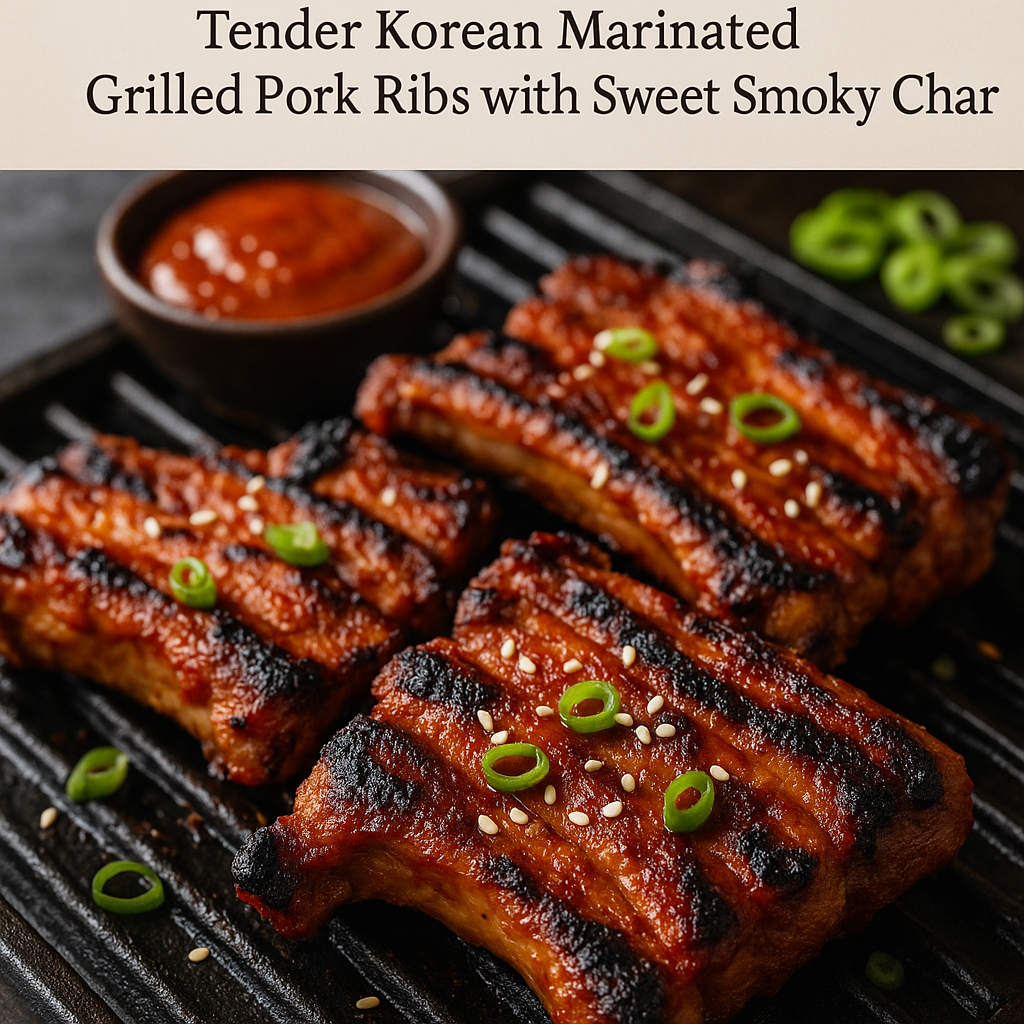
Dwaeji Galbi: Tender Korean Marinated Grilled Pork Ribs with Sweet Smoky Char 🔥
Few dishes capture the irresistible energy of Korean barbecue like Dwaeji Galbi—juicy pork ribs steeped in a sweet, savory, gently spicy marinade, then grilled until caramelized at the edges. The result is tender meat with a glossy finish and that unforgettable sweet-smoky char that makes every bite feel like a celebration.
This easy Korean grilled pork ribs recipe brings restaurant-style barbecue to your backyard grill, stovetop grill pan, or broiler. Serve it with warm rice, crisp lettuce leaves, kimchi, and a cool cucumber salad for a complete Korean BBQ-inspired meal. 🇰🇷
📜 The History of Dwaeji Galbi
Dwaeji means pork and galbi means ribs in Korean. While beef galbi is perhaps the better-known barbecue classic, dwaeji galbi has long been cherished as a flavorful, more approachable alternative. It is especially popular in regions such as Busan and Daegu, where grilled pork dishes are a beloved part of local dining culture.
Traditional Korean pork rib marinades combine salty-sweet ingredients such as soy sauce, garlic, sesame oil, fruit, and sugar. Many modern versions also include gochujang, Korean fermented red chili paste, which adds depth, warmth, and a vibrant red color. The use of grated Asian pear, apple, or kiwi is not just for sweetness: natural enzymes help tenderize the pork, creating the soft, succulent texture that makes authentic dwaeji galbi so satisfying.
🛒 Ingredients for Korean Marinated Pork Ribs
- 3 pounds pork spare ribs or baby back ribs, cut into individual or thin cross-cut pieces
- 1 small Asian pear or sweet apple, peeled and grated
- 1/2 cup soy sauce
- 3 tablespoons gochujang (Korean chili paste)
- 3 tablespoons brown sugar or honey
- 2 tablespoons mirin or rice wine
- 1 tablespoon toasted sesame oil
- 5 garlic cloves, finely minced
- 1 tablespoon grated fresh ginger
- 2 green onions, finely sliced
- 1 tablespoon toasted sesame seeds
- 1/2 teaspoon black pepper
- Optional: lettuce leaves, steamed rice, kimchi, sliced scallions, and ssamjang for serving
🔥 How to Make Dwaeji Galbi Step by Step
-
Soak and prepare the ribs 🥩
Place the pork ribs in a large bowl of cold water for 30 minutes. This helps remove excess blood and creates a cleaner flavor. Drain well, rinse, and pat the ribs completely dry with paper towels. -
Make the Korean pork rib marinade 🥣
In a blender or bowl, combine grated pear, soy sauce, gochujang, brown sugar, mirin, sesame oil, garlic, ginger, green onions, sesame seeds, and black pepper. Blend or whisk until smooth. The pear gives the marinade a natural sweetness and tenderizing power. -
Marinate for maximum flavor ⏳
Add the ribs and marinade to a large zip-top bag or shallow container. Turn the pork until evenly coated. Refrigerate for at least 4 hours, although overnight is ideal for deeply flavored, tender Korean pork ribs. -
Preheat the grill 🔥
Heat an outdoor grill, cast-iron grill pan, or Korean BBQ pan to medium-high heat. Lightly oil the grates or pan to prevent sticking. If using an oven broiler, line a baking tray with foil and position the rack about 6 inches from the heat source. -
Grill until caramelized 🍖
Remove the ribs from the marinade, allowing excess sauce to drip off. Grill for 4 to 6 minutes per side, depending on thickness, until browned, sticky, and lightly charred. Cook pork to an internal temperature of 145°F (63°C), then rest for 5 minutes. -
Serve Korean BBQ-style 🥬
Sprinkle with extra sesame seeds and sliced green onions. Serve the dwaeji galbi hot with rice, lettuce leaves, kimchi, and dipping sauce. For a classic ssam wrap, place rice and pork inside lettuce, add kimchi or ssamjang, then fold and enjoy.
💚 Health Benefits and Practical Tips
Pork ribs provide high-quality protein, iron, zinc, and B vitamins, including vitamin B12, which supports energy metabolism. Garlic and ginger contribute bold flavor while offering antioxidant compounds, and gochujang delivers fermented complexity with minimal effort.
- Choose meaty ribs: St. Louis-style spare ribs, flanken-cut ribs, or baby back ribs all work well. Thin-cut ribs cook fastest and develop the best char.
- Control the heat: Reduce gochujang to 1 tablespoon for a mild marinade, or add Korean chili flakes for more spice.
- Prevent burning: The sugar-rich marinade can darken quickly. Grill over medium-high rather than extremely high heat and move ribs away from flare-ups.
- Make it ahead: Marinate the pork up to 24 hours in advance for an easy dinner-party main course.
❓ Dwaeji Galbi FAQ
What is the best cut of pork for dwaeji galbi?
Thin-cut pork spare ribs or flanken-style ribs are the most traditional choices because they absorb marinade quickly and grill fast. Baby back ribs also work well, but may need a slightly longer cooking time or brief pre-cooking for extra tenderness.
Can I make Korean marinated pork ribs without a grill?
Yes. Cook dwaeji galbi in a cast-iron grill pan or heavy skillet over medium-high heat. You can also broil the ribs, turning once, until caramelized and cooked through.
Can I prepare dwaeji galbi ahead of time?
Absolutely. Marinate the ribs overnight for the best flavor. Cooked pork ribs can be refrigerated in an airtight container for up to 3 days and reheated gently in a skillet, oven, or air fryer.
What can I use instead of Asian pear in Korean BBQ marinade?
Use a sweet apple, such as Fuji or Honeycrisp, or substitute unsweetened applesauce. Kiwi also tenderizes meat effectively, but use only a small amount and marinate for no longer than 4 hours, as it can make pork mushy.
Is dwaeji galbi spicy?
Dwaeji galbi is usually mildly to moderately spicy, depending on the amount of gochujang used. Its heat is balanced by pear, sugar, sesame oil, and soy sauce, creating a rich sweet-and-savory profile rather than an aggressively hot one.
🌿 Recommended Ingredients
Bring authentic Korean barbecue flavor to your table with fresh gochujang, toasted sesame oil, quality soy sauce, and a naturally sweet Korean pear marinade base.
🍳 Recommended Kitchen Tools
For beautifully charred, evenly cooked dwaeji galbi, a sturdy grill pan, Korean BBQ grill, or cast-iron skillet makes all the difference.
👉 Check Out Essential Cooking Tools on Amazon
* Disclaimer: As an Amazon Associate, I earn from qualifying purchases at no additional cost to you.
TAGS: #DwaejiGalbi, #KoreanBBQ, #PorkRibs, #Gochujang, #KoreanFood