
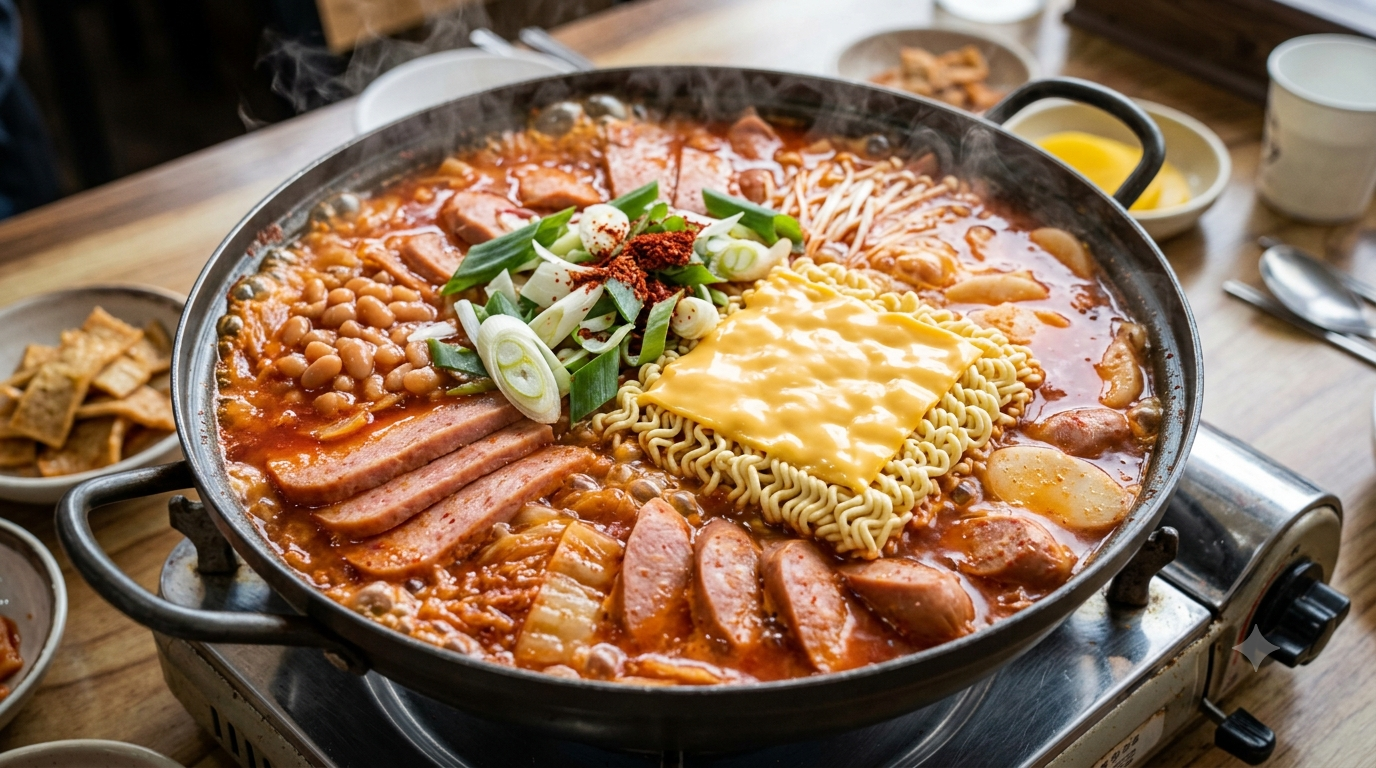
Budae Jjigae: Korea’s Bold, Comforting Army Stew 🍲
Few dishes tell a story as vividly as Budae Jjigae, Korea’s famously hearty “army stew.” Bubbling with spicy gochujang broth, kimchi, ramen noodles, sausage, Spam, tofu, and melted cheese, this one-pot meal is unapologetically rich, savory, and deeply comforting. It is the kind of communal dish made for cold evenings, casual dinner parties, and anyone craving a big bowl of Korean comfort food.
📜 The History Behind Budae Jjigae
Budae Jjigae literally translates to “army base stew.” The dish emerged in the years following the Korean War, when food shortages led local communities near United States military bases to creatively use surplus ingredients such as canned meat, hot dogs, baked beans, and processed cheese. These Western pantry staples were blended with classic Korean flavors including kimchi, gochugaru (Korean red pepper flakes), garlic, and fermented soybean pastes.
What began as a practical, resourceful meal became a beloved Korean restaurant staple. Today, Budae Jjigae in Seoul and across South Korea is often served in a wide shallow pot at the center of the table, where diners cook noodles, vegetables, and proteins together. Its distinctive mix of Korean and American ingredients makes it one of the most memorable examples of modern Korean fusion cuisine.
🥘 Easy Homemade Budae Jjigae Recipe
This recipe serves four and delivers a balanced broth: spicy, tangy, smoky, and savory. Adjust the heat with extra gochugaru or sliced fresh chili peppers.
Ingredients
- 2 cups well-fermented kimchi, roughly chopped
- 1 tablespoon kimchi brine, optional but recommended
- 4 cups low-sodium chicken or vegetable broth
- 1 tablespoon gochujang (Korean chili paste)
- 1 tablespoon gochugaru (Korean red pepper flakes)
- 1 tablespoon soy sauce
- 1 teaspoon sugar or honey
- 3 garlic cloves, minced
- 4 ounces Spam or luncheon meat, sliced
- 4 ounces smoked sausage or hot dogs, sliced
- 1 cup firm tofu, cubed
- 1/2 cup canned baked beans
- 1 cup mushrooms, sliced
- 1 small onion, sliced
- 1 package instant ramen noodles
- 2 slices American cheese or mild cheddar
- 2 scallions, sliced, for garnish
👩🍳 Step-by-Step Budae Jjigae Instructions
- Prepare the spicy broth 🌶️In a bowl, whisk together the broth, gochujang, gochugaru, soy sauce, sugar, minced garlic, and kimchi brine. Stir until the chili paste dissolves. This creates the signature spicy Budae Jjigae broth.
- Arrange the ingredients in a pot 🥘Use a wide, shallow pot or Dutch oven. Arrange kimchi, Spam, sausage, tofu, baked beans, mushrooms, and onion in separate sections. This traditional presentation looks inviting and allows each ingredient to retain its character.
- Add broth and simmer 🔥Pour the prepared broth over the ingredients. Bring the stew to a boil over medium-high heat, then reduce to a lively simmer. Cook for 10 to 12 minutes, until the kimchi softens and the meats are heated through.
- Add ramen noodles 🍜Place the ramen noodles in the center of the pot. Simmer for 3 to 4 minutes, turning the noodles gently as they soften. Avoid overcooking; the noodles should remain pleasantly chewy.
- Finish with cheese and scallions 🧀Lay the cheese over the hot stew and allow it to melt for about one minute. Scatter scallions on top, then serve immediately with steamed rice, extra kimchi, and small side dishes.
🌿 Health Benefits and Smart Cooking Tips
While Budae Jjigae is an indulgent dish, it can be adapted into a more balanced meal. Kimchi contains beneficial fermented compounds and adds bold flavor without needing much extra seasoning. Tofu contributes plant-based protein, while mushrooms, onions, and scallions add fiber and micronutrients.
- Lower the sodium: Choose reduced-sodium broth, rinse canned meats briefly, and use less Spam or sausage.
- Add more vegetables: Napa cabbage, zucchini, bok choy, bean sprouts, and spinach all work beautifully.
- Make it vegetarian: Replace meat with plant-based sausage, extra tofu, mushrooms, and vegetable broth.
- Control the spice: Start with half the gochugaru if you are new to Korean food, then add more at the table.
- Serve immediately: Ramen absorbs broth quickly, so Budae Jjigae tastes best fresh from the pot.
❓ Budae Jjigae FAQ
What is the best meat for Budae Jjigae?
The classic combination is Spam and sliced hot dogs or smoked sausage. For a fuller stew, add thinly sliced pork belly, bacon, ground beef, or leftover roast chicken. A mix of smoky and savory proteins gives the broth its distinctive flavor.
Can I make Budae Jjigae ahead of time?
Yes. Prepare the broth and chop all ingredients up to one day ahead. Store them separately in the refrigerator. Assemble and simmer just before serving, then add ramen at the very end for the best texture.
What can I substitute for Spam in Korean army stew?
Try canned ham, turkey sausage, kielbasa, plant-based luncheon meat, or extra-firm tofu. For a less processed version, use shredded chicken and mushrooms, although the flavor will be less traditional.
Is Budae Jjigae very spicy?
It is typically medium to hot, but it is easy to customize. Use less gochugaru and gochujang for a milder broth. Cheese, rice, and extra broth also help soften the heat.
Do I need baked beans for authentic Budae Jjigae?
Baked beans are common in many traditional versions because they provide a subtle sweetness and reflect the dish’s army-base roots. They are optional, but adding a small amount gives the stew a more classic flavor.
🥬 Recommended Ingredients
Bring authentic Korean flavor to your kitchen with fresh kimchi, quality gochujang, gochugaru, ramen, and pantry-ready stew essentials.
🍳 Recommended Kitchen Tools
A wide shallow pot, dependable Dutch oven, ladle, and heat-safe chopsticks make serving bubbling Budae Jjigae easy and enjoyable.
👉 Check Out Essential Cooking Tools on Amazon
* Disclaimer: As an Amazon Associate, I earn from qualifying purchases at no additional cost to you.
TAGS: #BudaeJjigae, #KoreanFood, #KoreanArmyStew, #KimchiRecipe, #ComfortFood
Leave a Reply