
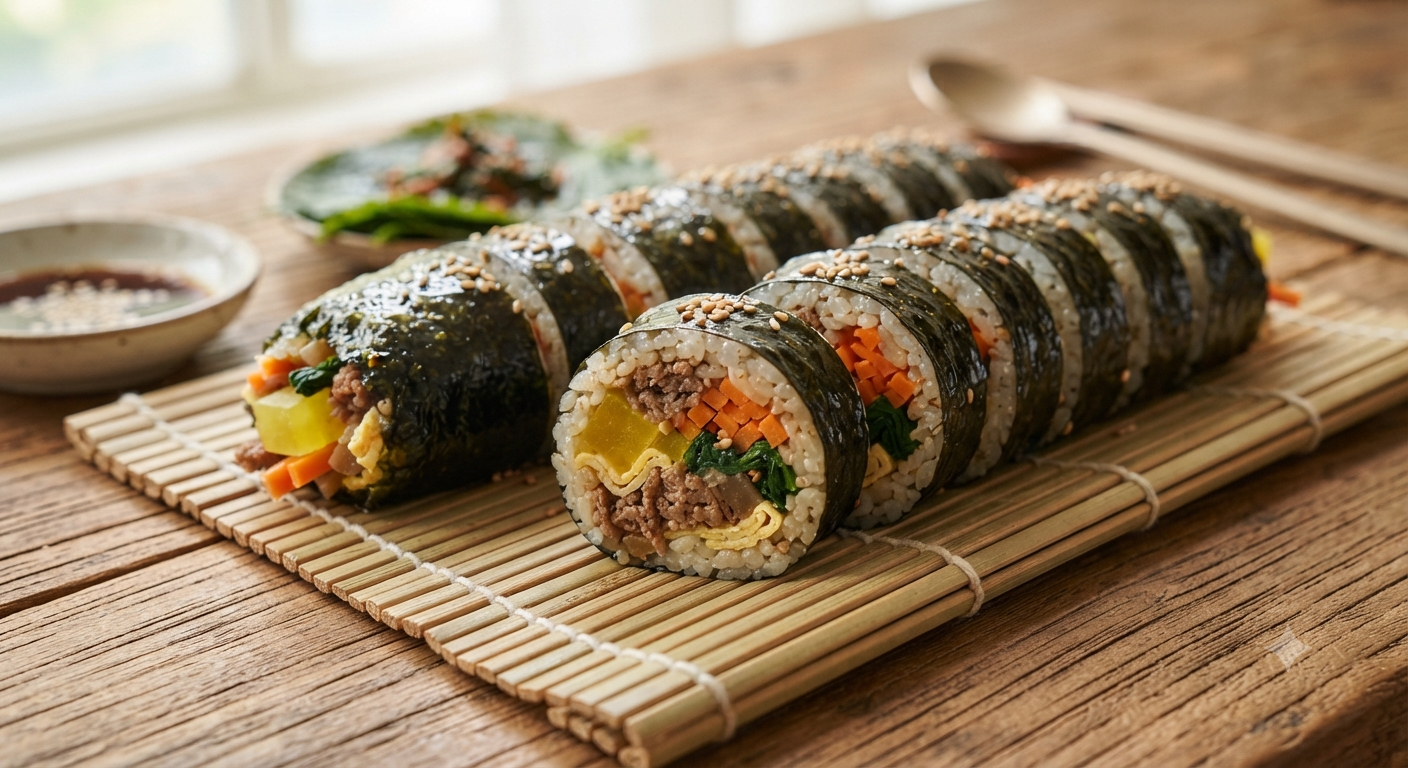
Gimbap: Korea’s Colorful, Flavor-Packed Seaweed Rice Rolls 🍙
Bright, portable, and endlessly customizable, gimbap is one of Korea’s most beloved comfort foods. Wrapped in glossy roasted seaweed and packed with seasoned rice, vegetables, egg, and savory fillings, these beautiful rolls are ideal for picnics, lunchboxes, road trips, or a quick weeknight meal. Unlike sushi, Korean gimbap is typically made with sesame-oil-seasoned rice and fully cooked ingredients, giving every bite a warm, nutty, deeply satisfying flavor.
📜 The History and Tradition of Gimbap
The name gimbap comes from two Korean words: gim, meaning roasted seaweed, and bap, meaning rice. While its exact origins are debated, gimbap became widely popular in Korea during the early 20th century, influenced by Japanese rolled rice dishes while evolving into a distinctly Korean favorite.
Today, gimbap is much more than a snack. It is a familiar sight at Korean markets, school outings, hiking trips, and family gatherings. Traditional fillings often include yellow pickled radish (danmuji), spinach, carrot, egg, fish cake, and beef. Modern versions feature tuna, cheese, bulgogi, spicy pork, crab sticks, or plant-based fillings. The magic lies in the contrast: crisp vegetables, tender rice, savory seaweed, and sesame aroma in one neat, satisfying roll.
🥢 Classic Korean Gimbap Recipe
This easy homemade gimbap recipe makes four rolls and uses approachable ingredients while keeping the traditional flavor profile intact.
Ingredients
- 4 sheets roasted seaweed (gim or nori)
- 3 cups cooked short-grain rice, slightly warm
- 1 tablespoon sesame oil, plus more for brushing
- 1/2 teaspoon fine sea salt
- 1 teaspoon toasted sesame seeds
- 2 eggs, beaten with a pinch of salt
- 1 medium carrot, cut into thin matchsticks
- 2 cups spinach
- 4 strips yellow pickled radish (danmuji)
- 4 strips imitation crab, cooked beef, fish cake, or tofu
- 1 teaspoon neutral cooking oil
👩🍳 How to Make Gimbap Step by Step
- 🍚 Season the rice: Place the warm cooked rice in a large bowl. Add 1 tablespoon sesame oil, salt, and sesame seeds. Gently fold until evenly seasoned. Cover with a clean, damp towel so the rice stays soft while you prepare the fillings.
- 🥬 Prepare the spinach: Blanch spinach in boiling water for about 30 seconds, then rinse under cold water. Squeeze out excess moisture and season lightly with a few drops of sesame oil and a pinch of salt.
- 🥕 Sauté the carrot: Heat oil in a skillet over medium heat. Cook carrot matchsticks for 2 to 3 minutes until slightly tender but still vibrant. Season with a small pinch of salt.
- 🍳 Cook the egg: Pour the beaten egg into a lightly oiled nonstick pan. Cook into a thin omelet, flip once, and transfer to a board. Slice into long strips.
- 🌯 Build the roll: Place one seaweed sheet shiny-side down on a bamboo rolling mat. Spread about 3/4 cup seasoned rice over the sheet, leaving a 1-inch border at the top edge. Keep the rice layer thin for an easy-to-roll gimbap.
- 🥢 Add the fillings: Arrange spinach, carrot, egg, pickled radish, and your chosen protein in a horizontal line across the lower third of the rice. Avoid overfilling; a balanced roll is easier to slice and eat.
- ✨ Roll tightly: Lift the bottom edge of the mat and roll forward, tucking the fillings in firmly. Continue rolling until sealed. Press gently along the roll to create a compact shape.
- 🔪 Finish and slice: Brush the outside with sesame oil and sprinkle with sesame seeds. Use a sharp knife lightly coated with sesame oil or water to cut each roll into 8 pieces. Serve immediately.
🌿 Health Benefits and Smart Gimbap Tips
Gimbap can be a wonderfully balanced meal, combining carbohydrates, protein, vegetables, and healthy fats. Seaweed provides minerals such as iodine, while spinach and carrots offer fiber and antioxidants. Sesame oil contributes rich flavor, so a little goes a long way. For a lighter roll, use brown rice or mixed-grain rice and choose tofu, egg, or lean beef as your protein.
- Keep rice warm, not hot: Hot rice can make seaweed soggy, while cold rice is harder to spread.
- Dry fillings matter: Pat vegetables and proteins dry before rolling to prevent soggy gimbap.
- Use a sharp knife: Wipe or oil the blade between cuts for clean, attractive slices.
- Pack it properly: Gimbap tastes best on the day it is made. Wrap whole rolls tightly before slicing if taking them on the go.
❓ Gimbap FAQ
What is the difference between gimbap and sushi?
Gimbap uses rice seasoned with sesame oil and salt, while sushi rice is usually flavored with vinegar, sugar, and salt. Gimbap also commonly contains cooked ingredients such as egg, vegetables, beef, or fish cake, whereas sushi may feature raw fish.
Can I make gimbap ahead of time?
Yes, but it is best eaten within several hours of making it. Prepare fillings in advance, then roll gimbap shortly before serving. If refrigerated, the rice may become firm, so allow it to sit at room temperature briefly before eating.
What protein is best for traditional gimbap?
Classic options include seasoned beef, fish cake, ham, egg, or imitation crab. For a quick version, canned tuna mixed with a little mayonnaise is popular. Tofu, mushrooms, or extra egg make excellent vegetarian choices.
Can I make vegan gimbap?
Absolutely. Replace egg and meat with marinated tofu, sautéed shiitake mushrooms, avocado, burdock root, cucumber, or extra spinach. Check that your pickled radish and seaweed are vegan-friendly.
Why does my gimbap fall apart?
Overfilling, using too much rice, or rolling loosely are the usual causes. Spread a thin rice layer, keep fillings centered, and use a bamboo mat to apply gentle but firm pressure as you roll.
🥬 Recommended Ingredients
Bring authentic Korean flavor to your kitchen with fresh roasted seaweed, toasted sesame oil, short-grain rice, and crisp yellow pickled radish for the perfect homemade gimbap.
🍳 Recommended Kitchen Tools
A reliable bamboo rolling mat, sharp chef’s knife, rice paddle, and nonstick skillet make rolling neat, restaurant-worthy gimbap much easier.
👉 Check Out Essential Cooking Tools on Amazon
* Disclaimer: As an Amazon Associate, I earn from qualifying purchases at no additional cost to you.
TAGS: #Gimbap, #KoreanFood, #KoreanRecipe, #SeaweedRiceRolls, #EasyLunch
Leave a Reply