
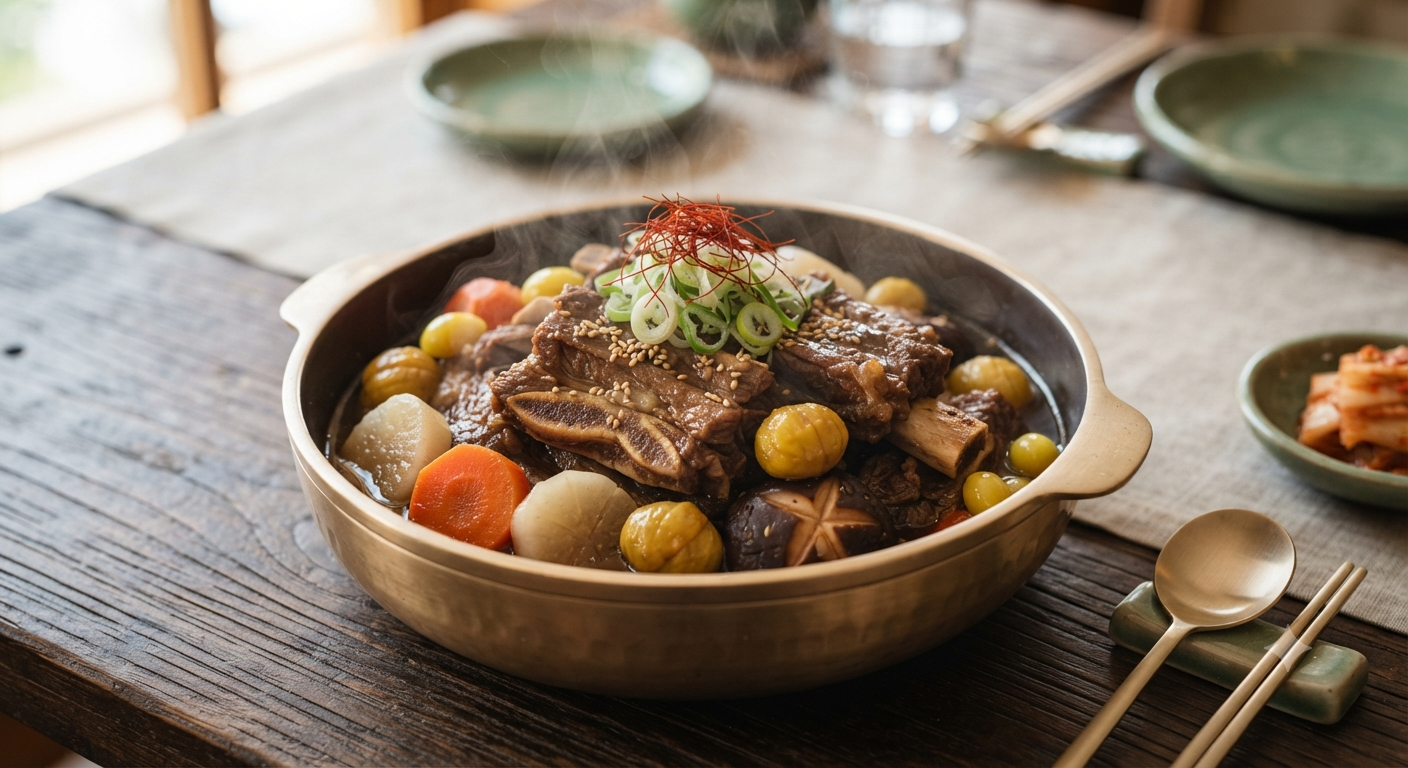
Galbijjim: Korean Braised Short Ribs with Deep, Glossy Flavor 🍖
Rich, tender, and gently sweet-savory, Galbijjim is one of Korea’s most comforting celebration dishes. This luxurious Korean braised short rib recipe slowly cooks beef until it is spoon-tender, surrounded by soft potatoes, carrots, radish, and a glossy soy-based sauce. Whether you are planning a festive family dinner or exploring authentic Korean home cooking, Galbijjim brings impressive flavor to the table without complicated techniques.
📜 The History of Galbijjim
Galbi means ribs, while jjim refers to a Korean cooking method in which ingredients are steamed or braised. Galbijjim has long been associated with special occasions in Korea, including weddings, birthdays, holidays, and ancestral gatherings. Historically, beef was a valuable ingredient, so a generous bowl of braised ribs represented hospitality and abundance.
Traditional Korean Galbijjim is made with beef short ribs simmered in a balanced sauce of soy sauce, garlic, sesame oil, fruit, and aromatics. Korean pear is especially prized because it adds delicate sweetness while naturally helping tenderize the meat. Today, this beloved dish appears everywhere from Seoul family kitchens to Korean barbecue restaurants worldwide.
🥘 Authentic Galbijjim Recipe
Ingredients
- 3 pounds bone-in beef short ribs, preferably Korean-cut flanken or English-cut ribs
- 1 medium Korean radish or daikon, cut into large chunks
- 2 medium carrots, cut into thick rounds
- 2 medium potatoes, peeled and cut into large pieces
- 1 small onion, cut into wedges
- 6 dried jujubes (Korean dates), optional
- 2 tablespoons toasted sesame seeds, for serving
For the Braising Sauce
- ¾ cup low-sodium soy sauce
- ⅓ cup brown sugar or Korean rice syrup
- ½ Korean pear, grated or blended
- 6 garlic cloves, minced
- 1 tablespoon grated fresh ginger
- 2 tablespoons mirin or rice wine
- 1 tablespoon toasted sesame oil
- 2½ cups water or unsalted beef stock
- ½ teaspoon black pepper
👩🍳 Step-by-Step Galbijjim Instructions
- Soak the ribs 💧: Place the short ribs in a large bowl, cover with cold water, and soak for 30 minutes. Drain and rinse well. This classic Korean step helps remove excess blood and creates a cleaner-tasting braising sauce.
- Parboil for a clear broth 🔥: Add ribs to a large pot and cover with fresh water. Bring to a boil for 8 to 10 minutes, then drain. Rinse the ribs and carefully wash away any foam from the pot.
- Mix the sauce 🥣: In a bowl, whisk together soy sauce, brown sugar, grated Korean pear, garlic, ginger, mirin, sesame oil, water or stock, and black pepper. The pear provides a signature natural sweetness and tenderizing effect.
- Begin the braise 🍲: Return the cleaned ribs to the pot and pour in the sauce. Bring to a gentle boil, then reduce heat to low. Cover partially and simmer for 60 minutes, occasionally skimming off fat.
- Add the vegetables 🥕: Add radish, carrots, potatoes, onion, and jujubes if using. Continue simmering for 35 to 45 minutes, until the ribs are fork-tender and the vegetables are soft but intact.
- Reduce and finish ✨: If the sauce seems thin, uncover the pot and simmer for 10 to 15 minutes until glossy and slightly reduced. Taste and adjust with a little soy sauce for saltiness or sugar for sweetness.
- Serve warm 🍚: Transfer Galbijjim to a large serving bowl, spoon the sauce over the ribs and vegetables, and finish with toasted sesame seeds. Serve with steamed rice, kimchi, and crisp Korean side dishes.
🌿 Health Benefits and Practical Tips
Galbijjim is a satisfying source of protein, iron, zinc, and vitamin B12, nutrients that support energy and normal red blood cell production. Carrots and radish add fiber and antioxidants, while garlic and ginger contribute bold flavor without needing excessive oil.
For a lighter version, chill the finished dish overnight and remove the hardened fat before reheating. Choose low-sodium soy sauce to better manage salt levels, and serve the rich ribs with plenty of vegetables and rice. Galbijjim often tastes even better the next day because the flavors have time to deepen.
❓ Galbijjim FAQ
What is the best cut of beef for Galbijjim?
Bone-in beef short ribs are the best choice because their connective tissue becomes tender and flavorful during slow braising. Korean-cut flanken ribs cook more quickly, while thick English-cut short ribs deliver a meatier, restaurant-style result.
Can I make Galbijjim ahead of time?
Yes. Galbijjim is an excellent make-ahead Korean dish. Prepare it up to two days in advance, refrigerate it in an airtight container, then gently reheat on the stovetop. Add a splash of water or stock if the sauce becomes too thick.
What can I use instead of Korean pear?
A sweet apple, such as Fuji or Honeycrisp, is the closest substitute. You can also use kiwi in a very small amount, but use caution: kiwi tenderizes beef quickly and can make the meat mushy if left too long.
Can Galbijjim be made in a pressure cooker?
Yes. Pressure-cook the cleaned ribs with the sauce for about 35 minutes, then release pressure naturally. Add the vegetables and cook for an additional 5 to 8 minutes. Finish uncovered to reduce the sauce if needed.
Is Galbijjim spicy?
Traditional Galbijjim is generally not spicy. Its flavor is savory, sweet, garlicky, and aromatic. For heat, serve it with sliced fresh chili or add a small spoonful of gochugaru, Korean red pepper flakes.
Recommended Ingredients 🌿
Bring authentic Korean flavor to your kitchen with fragrant sesame oil, Korean soy sauce, dried jujubes, and the freshest short ribs for a truly memorable Galbijjim.
Recommended Kitchen Tools 🍲
A heavy Dutch oven, sturdy tongs, and a fine skimmer make slow-braising Galbijjim easier, cleaner, and more enjoyable from start to finish.
* Disclaimer: As an Amazon Associate, I earn from qualifying purchases at no additional cost to you.
TAGS: #Galbijjim, #KoreanFood, #BraisedShortRibs, #KoreanRecipe, #ComfortFood
Leave a Reply