
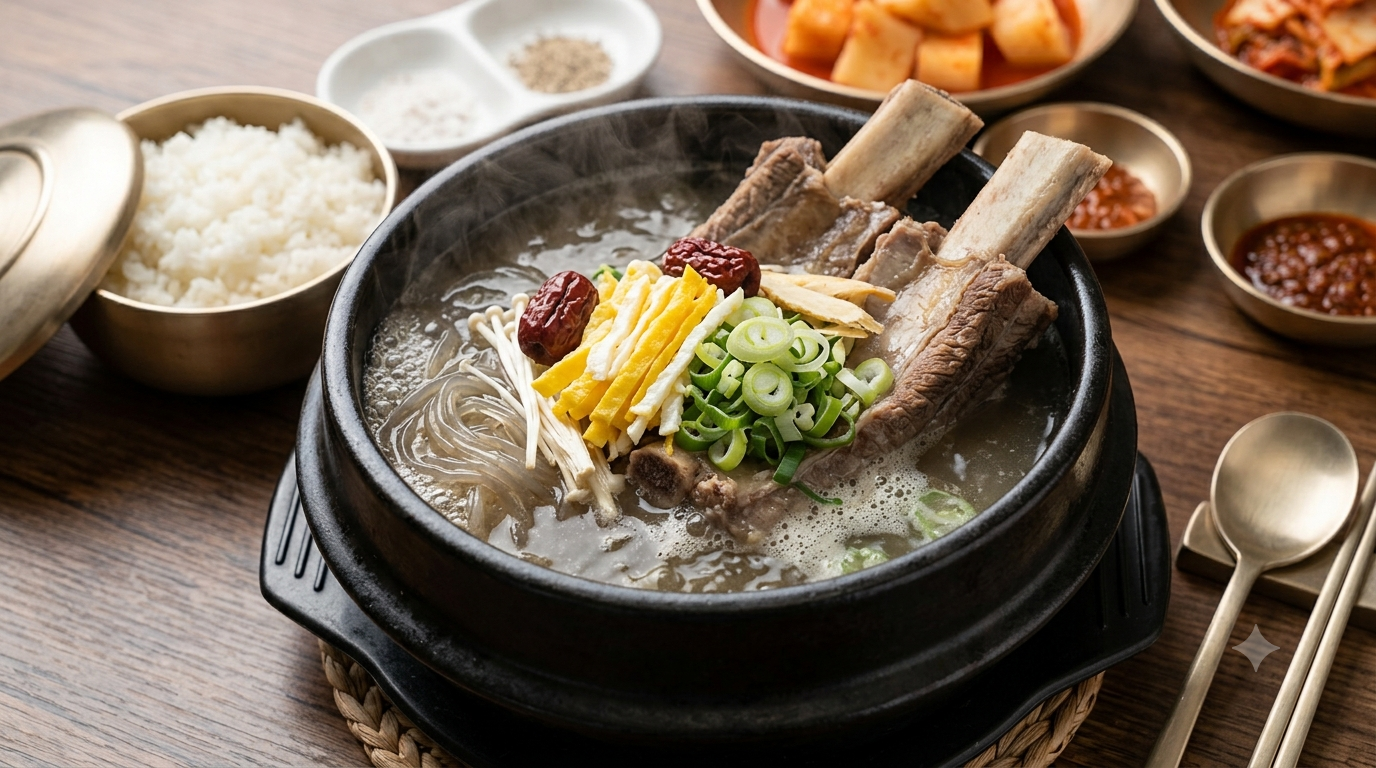
Galbitang: Clear and Nourishing Korean Beef Short Rib Soup with Tender Meat
When comfort calls for something deeply satisfying yet refreshingly light, Galbitang answers with a clear, savory broth and fall-apart tender beef short ribs. This beloved Korean soup is a celebration of patience: beef bones and ribs simmer slowly until their flavor turns the water into a clean, golden, nourishing bowl of comfort. 🍲
📜 The History of Galbitang
Galbitang (갈비탕) literally means “short rib soup” in Korean. While beef short ribs were historically considered a premium ingredient, this soup became associated with celebratory meals, family gatherings, and special occasions in Korea. Traditional versions were often served at restaurants specializing in galbi, where the same prized ribs used for grilling could be transformed into a soothing soup.
Unlike spicy Korean stews, Galbitang relies on restraint. Its signature is a clear, clean-tasting beef broth, typically seasoned lightly with Korean soup soy sauce, garlic, scallions, black pepper, and salt. Diners often season their own bowls at the table, then enjoy the soup with steamed rice and crisp kimchi.
🥘 Classic Galbitang Recipe
This home-style Galbitang recipe serves 4 and creates a fragrant, restaurant-worthy broth with tender Korean-style beef short ribs, daikon radish, and glass noodles.
Ingredients
- 3 pounds bone-in beef short ribs, cut Korean-style
- 12 cups cold water, plus more for soaking
- 1 medium Korean radish or daikon, peeled and cut into large chunks
- 1 small onion, halved
- 6 garlic cloves, lightly crushed
- 2 scallions, cut into 2-inch pieces, plus more for garnish
- 2 tablespoons Korean soup soy sauce (guk ganjang)
- 1 teaspoon salt, or to taste
- 1/2 teaspoon ground black pepper
- 4 ounces sweet potato glass noodles (dangmyeon), optional
- 2 eggs, thinly cooked into omelets and sliced, optional garnish
- Cooked short-grain rice and kimchi, for serving
👩🍳 Step-by-Step: How to Make Galbitang
- Soak the ribs. 💧 Place the short ribs in a large bowl and cover with cold water. Soak for 1 to 2 hours, changing the water once or twice. This classic step helps remove excess blood for a cleaner, clearer broth.
- Blanch the beef. Transfer the soaked ribs to a stockpot, cover with fresh water, and bring to a rapid boil for 5 minutes. Drain the ribs, rinse them thoroughly under cold water, and clean the pot to remove any foam or impurities.
- Build the broth. 🍲 Return the cleaned ribs to the pot. Add 12 cups of cold water, onion, garlic, and scallion pieces. Bring to a boil over high heat, then reduce to a gentle simmer.
- Simmer until tender. Cover partially and simmer for 1 1/2 to 2 hours. Skim off any foam or visible fat occasionally. The ribs are ready when the meat is tender and easily pulls away from the bone.
- Add the radish. Add the daikon or Korean radish during the final 30 to 40 minutes of cooking. It should become tender while adding subtle sweetness to the broth.
- Season lightly. Remove the onion and scallion pieces. Stir in Korean soup soy sauce, salt, and black pepper. Taste before adding more salt; Galbitang should be delicately seasoned, not overly salty.
- Prepare the noodles. Soak glass noodles in warm water for 15 minutes, then cook according to package directions. Divide them between serving bowls.
- Serve beautifully. ✨ Ladle hot broth, ribs, and radish over the noodles. Top with sliced scallions and optional egg strips. Serve immediately with steamed rice, kimchi, and a small dish of extra salt and pepper.
🌿 Health Benefits and Practical Tips
Galbitang offers a balanced combination of protein, iron, zinc, and collagen-rich connective tissue from slow-cooked beef ribs. Daikon contributes fiber and vitamin C, while garlic and scallions add aromatic flavor without requiring heavy sauces. Although beef broth can be rich, skimming fat during cooking and chilling leftovers before reheating makes it easier to remove excess surface fat.
- For the clearest broth: never skip soaking, blanching, and rinsing the ribs.
- For deeper flavor: simmer gently rather than boiling aggressively, which can cloud the broth.
- For a faster version: use a pressure cooker and cook the blanched ribs for about 35 to 40 minutes.
- For meal prep: make the broth one day ahead; its flavor improves overnight.
❓ Galbitang FAQ
What is the best cut of beef for Galbitang?
Bone-in beef short ribs cut across the bone in Korean-style pieces are the best choice. The bones, marrow, and connective tissue create Galbitang’s characteristic rich but clear broth. English-cut short ribs can also work, though they may need a longer cooking time.
Can I make Galbitang ahead of time?
Yes. Galbitang is excellent for make-ahead meals. Cool it completely, refrigerate it overnight, and remove the solidified fat from the surface before reheating. Store noodles separately so they do not absorb too much broth.
Can I substitute regular soy sauce for Korean soup soy sauce?
You can, but use less because regular soy sauce is darker and may make the broth look less clear. Start with 1 tablespoon of low-sodium soy sauce, then adjust with salt. Korean soup soy sauce provides the most authentic flavor and pale golden color.
Is Galbitang spicy?
No. Traditional Galbitang is a mild, non-spicy Korean beef soup. If you enjoy heat, serve it with kimchi or add sliced fresh chili peppers at the table.
What should I serve with Korean short rib soup?
Steamed short-grain rice, napa cabbage kimchi, cubed radish kimchi (kkakdugi), and simple seasoned vegetables are classic pairings. The bright acidity of kimchi is especially delicious with the savory broth.
🥬 Recommended Ingredients
Bring authentic Korean flavor to your Galbitang with fresh beef short ribs, Korean radish, glass noodles, and traditional guk ganjang.
🍳 Recommended Kitchen Tools
A large stockpot, fine skimmer, and traditional Korean soup bowls make slow-simmered Galbitang easier to prepare and more enjoyable to serve.
👉 Check Out Essential Cooking Tools on Amazon
* Disclaimer: As an Amazon Associate, I earn from qualifying purchases at no additional cost to you.
TAGS: #Galbitang, #KoreanFood, #BeefShortRibSoup, #KoreanRecipes, #ComfortFood
Leave a Reply