
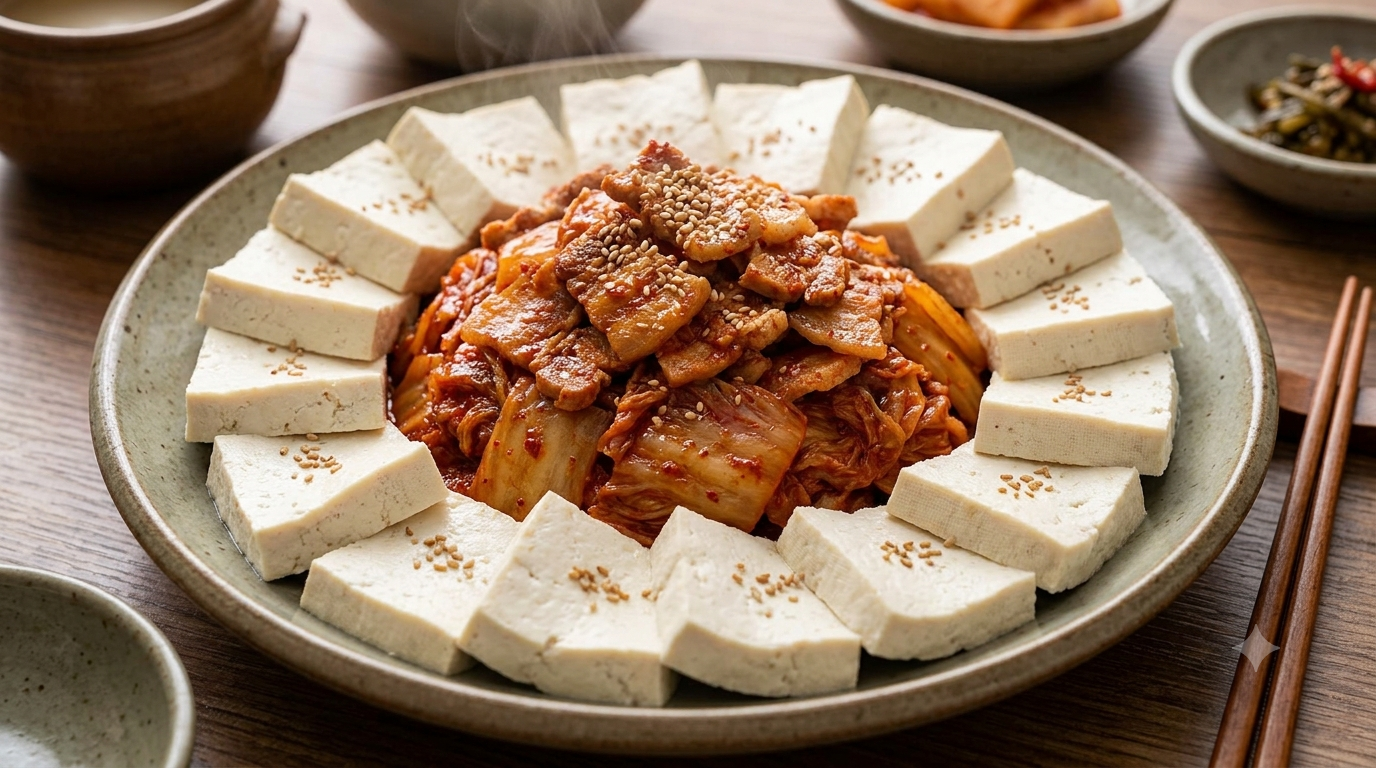
Dubu Kimchi: Warm Steamed Tofu with Spicy Stir-Fried Pork and Kimchi 🌶️
Few Korean comfort foods deliver such a satisfying contrast as dubu kimchi: silky, warm tofu served alongside fiery stir-fried kimchi and savory pork. Each bite balances cool, delicate soybean richness with tangy fermented cabbage, smoky gochugaru, and tender pork. It is bold enough for dinner, shareable enough for drinks, and surprisingly easy to make at home.
📜 The Korean History Behind Dubu Kimchi
Dubu kimchi (두부김치) is a beloved Korean anju dish—food traditionally enjoyed with drinks such as soju or makgeolli. While tofu has been part of Korean cooking for centuries, kimchi became the ideal partner because its bright fermentation cuts through tofu’s mild, creamy texture.
In Korean homes and casual pubs, dubu kimchi is often made with aged, well-fermented kimchi, which develops a deeper sourness and fuller flavor than fresh kimchi. Pork belly is a popular addition, although leaner pork, beef, mushrooms, or even tuna can be used. The dish is typically arranged with tofu around the edge of a platter and spicy kimchi pork piled in the center—simple, communal, and deeply comforting.
🛒 Ingredients for Authentic Dubu Kimchi
- 14 ounces (400 g) firm or medium-firm tofu
- 8 ounces (225 g) thinly sliced pork belly or pork shoulder
- 2 cups well-fermented napa cabbage kimchi, roughly chopped
- 1 small onion, thinly sliced
- 2 scallions, sliced
- 1 tablespoon neutral cooking oil
- 1 tablespoon gochujang (Korean red pepper paste)
- 1 teaspoon gochugaru (Korean red pepper flakes)
- 1 tablespoon soy sauce
- 1 teaspoon sugar or honey
- 1 teaspoon toasted sesame oil
- 1 teaspoon toasted sesame seeds
🍳 How to Make Dubu Kimchi Step by Step
-
Prepare the tofu 🥢
Drain the tofu and pat it dry. Cut it into thick, bite-sized rectangles. Bring a pot of water to a gentle simmer, add a pinch of salt, and warm the tofu for 4 to 5 minutes. This keeps it soft, warm, and less likely to break. -
Mix the spicy seasoning 🌶️
In a small bowl, combine gochujang, gochugaru, soy sauce, sugar, and sesame oil. This quick sauce adds the signature sweet, savory, and spicy depth of Korean pork kimchi stir-fry. -
Sear the pork 🔥
Heat oil in a large skillet over medium-high heat. Add the pork and cook for 4 to 5 minutes, stirring occasionally, until lightly browned and fragrant. Pork belly will release its own fat; if using a lean cut, keep the oil in the pan. -
Stir-fry kimchi and onion 🍲
Add the sliced onion and chopped kimchi to the skillet. Cook for 3 to 4 minutes until the onion softens and the kimchi begins to caramelize around the edges. -
Add the sauce
Pour in the prepared seasoning mixture and toss thoroughly. Stir-fry for another 2 to 3 minutes, allowing the sauce to cling to the pork and kimchi. Add half the scallions and stir once more. -
Plate and serve ✨
Drain the warmed tofu carefully and arrange it around a large serving plate. Spoon the spicy pork kimchi into the center. Finish with sesame seeds and the remaining scallions. Serve immediately with steamed rice, lettuce leaves, or Korean perilla leaves.
💚 Health Benefits and Smart Cooking Tips
Dubu kimchi offers a flavorful combination of protein, probiotics, and plant-based nutrients. Tofu provides complete plant protein, iron, and calcium when calcium-set tofu is used. Fermented kimchi may support gut health through beneficial bacteria, while garlic, scallions, and chili peppers contribute antioxidant compounds.
- Choose aged kimchi: Sour, mature kimchi gives this dish its richest restaurant-style flavor.
- Control the heat: Reduce gochugaru for a milder dish, or add extra for a more fiery Korean pub-style result.
- Keep tofu warm: Serve it soon after simmering; cold tofu does not create the same comforting contrast.
- Make it vegetarian: Replace pork with shiitake mushrooms, oyster mushrooms, or crumbled extra-firm tofu.
❓ Dubu Kimchi FAQ
What is the best pork cut for dubu kimchi?
Pork belly is the traditional favorite because its fat enriches the kimchi. Pork shoulder is an excellent, meatier alternative, while thinly sliced pork loin works well for a lighter version.
Can I make dubu kimchi ahead of time?
Yes. Prepare the pork kimchi stir-fry up to two days ahead and refrigerate it in an airtight container. Reheat it in a skillet with a splash of water. Warm the tofu just before serving for the best texture.
Can I use soft tofu instead of firm tofu?
You can use soft tofu, but handle it gently. Firm or medium-firm tofu is easier to slice, plate, and eat with the saucy pork kimchi mixture.
What can I serve with dubu kimchi?
Steamed short-grain rice, lettuce wraps, perilla leaves, cucumber salad, and Korean seaweed sheets are all excellent accompaniments. For a casual Korean-style spread, add pickled radish and a bowl of rice.
Is dubu kimchi gluten-free?
It can be. Use gluten-free tamari instead of regular soy sauce, and check that your gochujang and kimchi are certified gluten-free, as some brands contain wheat-based ingredients.
🥬 Recommended Ingredients
Bring home the vibrant flavor of Korea with authentic fermented kimchi, gochujang, gochugaru, and fragrant toasted sesame oil for your best dubu kimchi yet.
🍳 Recommended Kitchen Tools
A dependable skillet and a sturdy tofu-friendly spatula make it easy to build deeply caramelized kimchi flavor without breaking delicate tofu.
* Disclaimer: As an Amazon Associate, I earn from qualifying purchases at no additional cost to you.
TAGS: #DubuKimchi, #KoreanFood, #TofuRecipes, #KimchiRecipe, #SpicyPork
Leave a Reply