
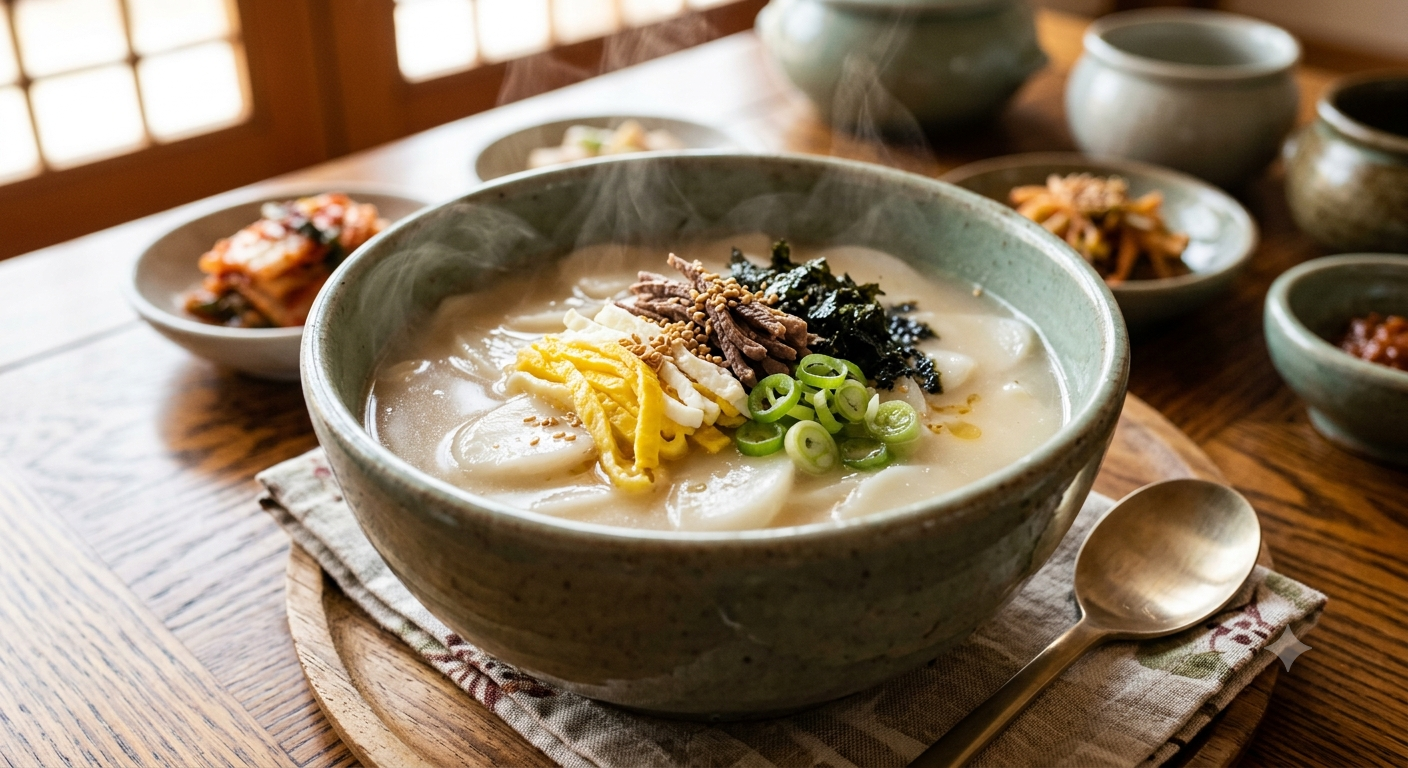
Few soups feel as hopeful as tteokguk, Korea’s beloved sliced rice cake soup. With chewy oval rice cakes floating in a clear, savory beef broth, this comforting bowl is traditionally enjoyed on New Year’s Day—but its gentle warmth makes it perfect for any chilly evening. Finished with silky egg ribbons, toasted seaweed, and fresh green onion, tteokguk is simple food with deep cultural meaning. 🍲
📜 The History and Meaning of Tteokguk
Tteokguk (떡국) has been part of Korean New Year celebrations for centuries. The dish is traditionally eaten during Seollal, the Korean Lunar New Year, when families gather to honor ancestors, share a meal, and welcome a fresh start. In Korean culture, people often jokingly ask, “How many bowls of tteokguk have you eaten?” as a playful way of asking someone’s age.
The soup’s oval garaetteok rice cake slices are said to resemble old Korean coins, symbolizing prosperity and good fortune. Their bright white color also represents purity and renewal. While versions vary by region and household, a clear beef broth remains one of the most classic and satisfying foundations for this iconic Korean comfort food.
🥣 Ingredients for Traditional Beef Tteokguk
- 12 ounces sliced Korean rice cakes for soup (tteokguk-tteok)
- 8 ounces beef brisket, flank steak, or sirloin, thinly sliced
- 6 cups beef broth or water
- 2 garlic cloves, minced
- 1 tablespoon soy sauce, plus more to taste
- 1 teaspoon toasted sesame oil
- 1 teaspoon fish sauce or Korean soup soy sauce (guk-ganjang), optional
- 2 eggs, separated
- 2 green onions, thinly sliced
- 1 sheet roasted seaweed, cut into thin strips
- Salt and black pepper, to taste
👩🍳 How to Make Tteokguk Step by Step
- Soak the rice cakes. Place the sliced rice cakes in a bowl of cool water for 15 to 20 minutes. This helps soften refrigerated or frozen rice cakes and prevents them from cooking unevenly. Drain well before using. 💧
- Season the beef. Toss the sliced beef with sesame oil, half the minced garlic, a pinch of salt, and black pepper. Let it sit for about 10 minutes while you prepare the remaining ingredients.
- Make a flavorful beef base. Heat a soup pot over medium heat. Add the seasoned beef and stir-fry for 2 to 3 minutes until lightly browned. This quick step creates a richer, more deeply savory broth. 🥩
- Simmer the broth. Pour in the beef broth or water, then add the remaining garlic, soy sauce, and optional fish sauce or Korean soup soy sauce. Bring to a gentle boil, skimming off any foam for a clear broth. Simmer for 10 minutes.
- Cook the rice cakes. Add the drained rice cake slices to the simmering broth. Cook for 4 to 6 minutes, stirring occasionally, until the slices are tender, glossy, and pleasantly chewy. Avoid overcooking, as they can become too soft.
- Create the egg garnish. For a traditional presentation, whisk egg whites and yolks separately. Cook each in a lightly oiled nonstick pan as thin omelets, then slice into delicate strips. For an easier method, gently stream beaten whole egg into the soup and let it set into ribbons. 🍳
- Finish and serve. Taste the broth and adjust with salt or soy sauce. Ladle the tteokguk into warm bowls and top with egg strips, green onions, and roasted seaweed. Serve immediately for the best texture.
🌿 Health Benefits and Smart Cooking Tips
Tteokguk is a nourishing meal built around simple ingredients. Beef provides protein, iron, zinc, and vitamin B12, while eggs add satisfying protein and essential nutrients. Green onions and garlic contribute aromatic flavor along with beneficial plant compounds. Rice cakes are naturally gluten-free when made from rice, though always check packaging for added ingredients or cross-contact information.
- For the clearest broth: simmer gently rather than boiling aggressively, and skim foam as needed.
- For frozen rice cakes: soak them in cool water until separated before adding them to the soup.
- For a lighter bowl: use lean beef and low-sodium broth, then season gradually.
- For extra comfort: add dumplings (mandu) for a heartier tteok mandu guk.
❓ Tteokguk FAQ
What is the best cut of beef for tteokguk?
Brisket is a traditional choice because it creates a rich, beefy flavor. Thinly sliced flank steak, sirloin, or shaved ribeye also work beautifully and cook quickly. Use lean, tender beef sliced across the grain for the best texture.
Can I make tteokguk ahead of time?
Yes, but store the broth and rice cakes separately when possible. Cooked rice cakes continue absorbing liquid and can become overly soft. Refrigerate the broth for up to 3 days, then reheat it and cook fresh or soaked rice cakes just before serving.
Can I use chicken broth instead of beef broth?
Absolutely. Chicken broth makes a lighter but still delicious tteokguk. You can also use anchovy-kelp broth for a traditional seafood-forward Korean flavor, or vegetable broth for a vegetarian version.
How do I keep Korean rice cakes from sticking together?
Soak the slices in cool water first, then add them gradually to simmering broth while stirring gently. Do not overcrowd the pot, and serve soon after cooking for their ideal chewy texture.
Is tteokguk gluten-free?
The rice cakes themselves are often gluten-free, but soy sauce and some packaged broths may contain wheat. Choose certified gluten-free soy sauce or tamari and verify every packaged ingredient if you need a fully gluten-free tteokguk.
🥢 Recommended Ingredients
Bring authentic Korean flavor to your kitchen with fresh sliced rice cakes, roasted seaweed, toasted sesame oil, and Korean soup soy sauce for a deeply satisfying bowl of tteokguk.
🍲 Recommended Kitchen Tools
A sturdy soup pot, fine ladle, sharp knife, and nonstick skillet make preparing clear broth and elegant egg garnishes easy and enjoyable.
👉 Check Out Essential Cooking Tools on Amazon
* Disclaimer: As an Amazon Associate, I earn from qualifying purchases at no additional cost to you.
TAGS: #Tteokguk, #KoreanFood, #RiceCakeSoup, #ComfortFood, #KoreanNewYear
Leave a Reply