
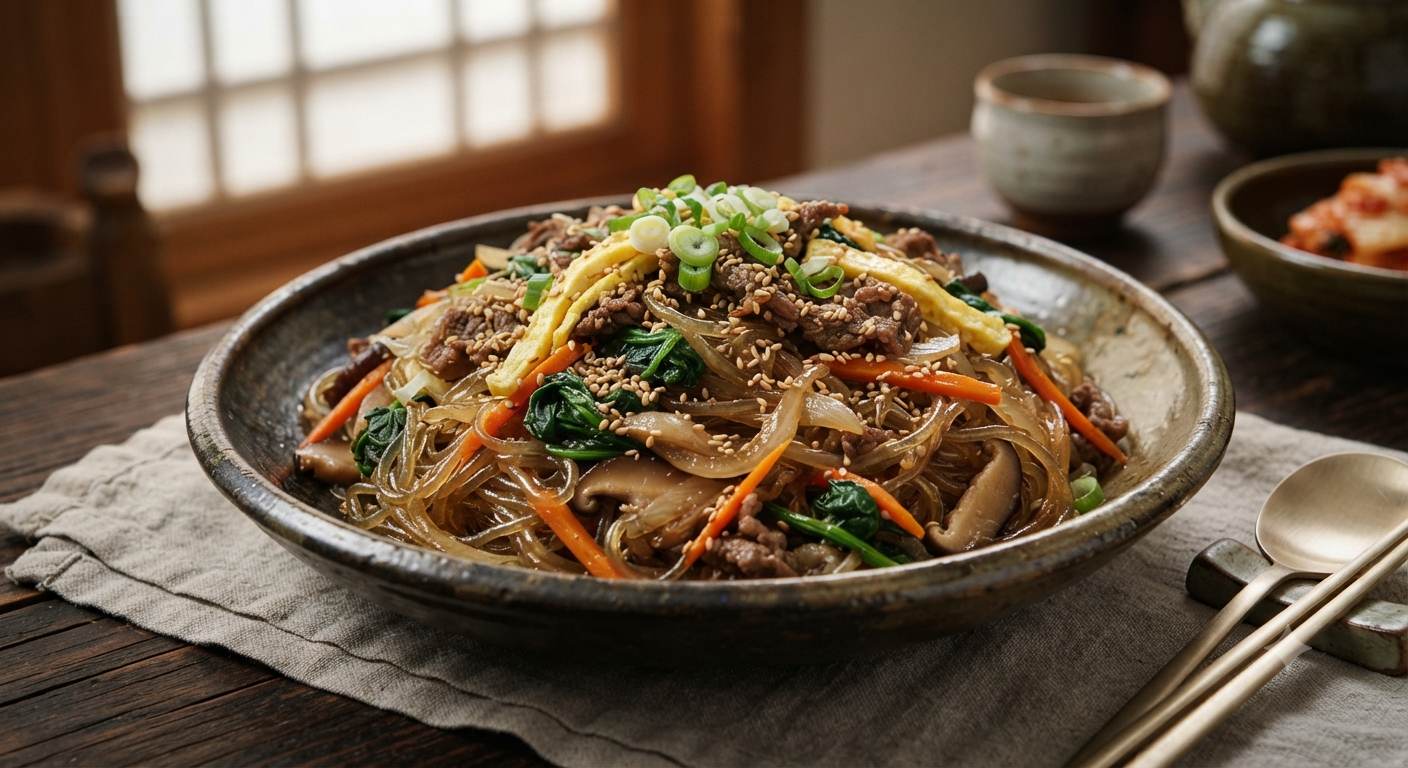
Glossy, colorful, and deeply satisfying, Japchae is one of the most beloved dishes in Korean cuisine. Made with bouncy sweet potato starch noodles, tender beef or tofu, and a rainbow of sautéed vegetables, this classic Korean glass noodle recipe delivers an unforgettable balance of savory soy sauce, nutty sesame oil, and subtle sweetness. Whether served warm at a family celebration or chilled as a make-ahead side dish, Japchae brings restaurant-quality Korean flavor straight to your kitchen.
📜 The History and Tradition of Japchae
The word Japchae means “mixed vegetables” in Korean. Its origins date back to Korea’s Joseon Dynasty, when it was reportedly created in the 17th century for King Gwanghaegun. Interestingly, the earliest version did not contain noodles at all; it was a colorful royal dish centered on stir-fried vegetables, mushrooms, and seasonings.
Sweet potato glass noodles, known as dangmyeon, became part of Japchae much later, around the early 20th century. Today, these translucent, chewy noodles are the dish’s signature ingredient. In homes and restaurants across South Korea, Japchae is often prepared for birthdays, holidays, wedding feasts, and celebratory gatherings. Its bright ingredients also symbolize abundance, harmony, and care.
🥢 Easy Traditional Japchae Recipe
This recipe makes about 4 servings as a main dish or 6 servings as a side. For the best texture, cook and season the ingredients separately before combining them—this classic technique keeps every color vivid and every vegetable flavorful.
Ingredients
- 8 ounces Korean sweet potato glass noodles (dangmyeon)
- 6 ounces thinly sliced beef, such as ribeye or sirloin, or firm tofu for a vegetarian Japchae
- 1 medium carrot, cut into thin matchsticks
- 1 red bell pepper, thinly sliced
- 1 small onion, thinly sliced
- 4 ounces spinach
- 4 ounces shiitake mushrooms, sliced
- 2 tablespoons neutral cooking oil
- 2 tablespoons toasted sesame seeds
For the Japchae sauce
- 4 tablespoons soy sauce
- 2 tablespoons brown sugar or honey
- 2 tablespoons toasted sesame oil
- 2 garlic cloves, minced
- 1 tablespoon water
👩🍳 Step-by-Step: How to Make Japchae
- Prepare the sauce 🥣Whisk the soy sauce, brown sugar, sesame oil, garlic, and water in a small bowl. Stir until the sugar dissolves. This sauce gives Japchae its iconic sweet, savory, sesame-rich flavor.
- Cook the glass noodles 🍜Bring a large pot of water to a boil. Add the sweet potato noodles and cook according to the package instructions, usually 6 to 8 minutes, until chewy but tender. Drain well, rinse briefly with cool water, and cut the noodles with kitchen scissors into shorter lengths if desired.
- Season the noodles ✨Transfer the warm noodles to a large mixing bowl. Toss with about half of the prepared sauce. Coating them while warm helps the noodles absorb the seasoning beautifully.
- Cook the protein 🥩Heat a little oil in a large skillet over medium-high heat. Stir-fry the beef for 2 to 3 minutes until browned and cooked through. If using tofu, pat it dry, cube it, and pan-sear until golden. Set aside.
- Sauté the vegetables 🌈In the same skillet, cook the onion, carrot, bell pepper, and shiitake mushrooms separately or in small batches. Add a pinch of salt to each batch. Cook only until tender-crisp so the vegetables retain their color and texture.
- Blanch the spinach 🥬Drop the spinach into boiling water for 20 to 30 seconds. Drain, rinse under cool water, and squeeze out excess moisture. This prevents watery Japchae.
- Combine and finish 🍱Add the cooked protein, vegetables, spinach, and remaining sauce to the bowl of noodles. Toss thoroughly with clean hands or tongs. Finish with toasted sesame seeds and an extra drizzle of sesame oil. Serve warm, at room temperature, or chilled.
🌿 Health Benefits and Smart Japchae Tips
Japchae can be a wonderfully balanced meal. Sweet potato starch noodles are naturally gluten-free, while spinach, carrots, peppers, and mushrooms contribute fiber, antioxidants, and essential vitamins. Sesame oil provides heart-friendly unsaturated fats, and adding lean beef, chicken, eggs, or tofu turns the dish into a more protein-rich meal.
For a lighter version, use extra vegetables and slightly fewer noodles. For a vegan Japchae recipe, replace beef with tofu or more mushrooms and choose a vegan-friendly soy sauce. If you need to manage sodium, use low-sodium soy sauce and taste before adding extra seasoning.
Best make-ahead tip: Japchae keeps well in an airtight container in the refrigerator for up to three days. Before serving leftovers, let them sit at room temperature for 15 minutes or warm them gently in a skillet with a splash of water. A final touch of sesame oil restores its delicious shine and aroma.
🍳
👉 Check Out Recommended Products on Amazon
* Disclaimer: As an Amazon Associate, I earn from qualifying purchases at no additional cost to you.
Tags: #Japchae, #KoreanFood, #GlassNoodles, #KoreanRecipe, #HealthyDinner
Leave a Reply