
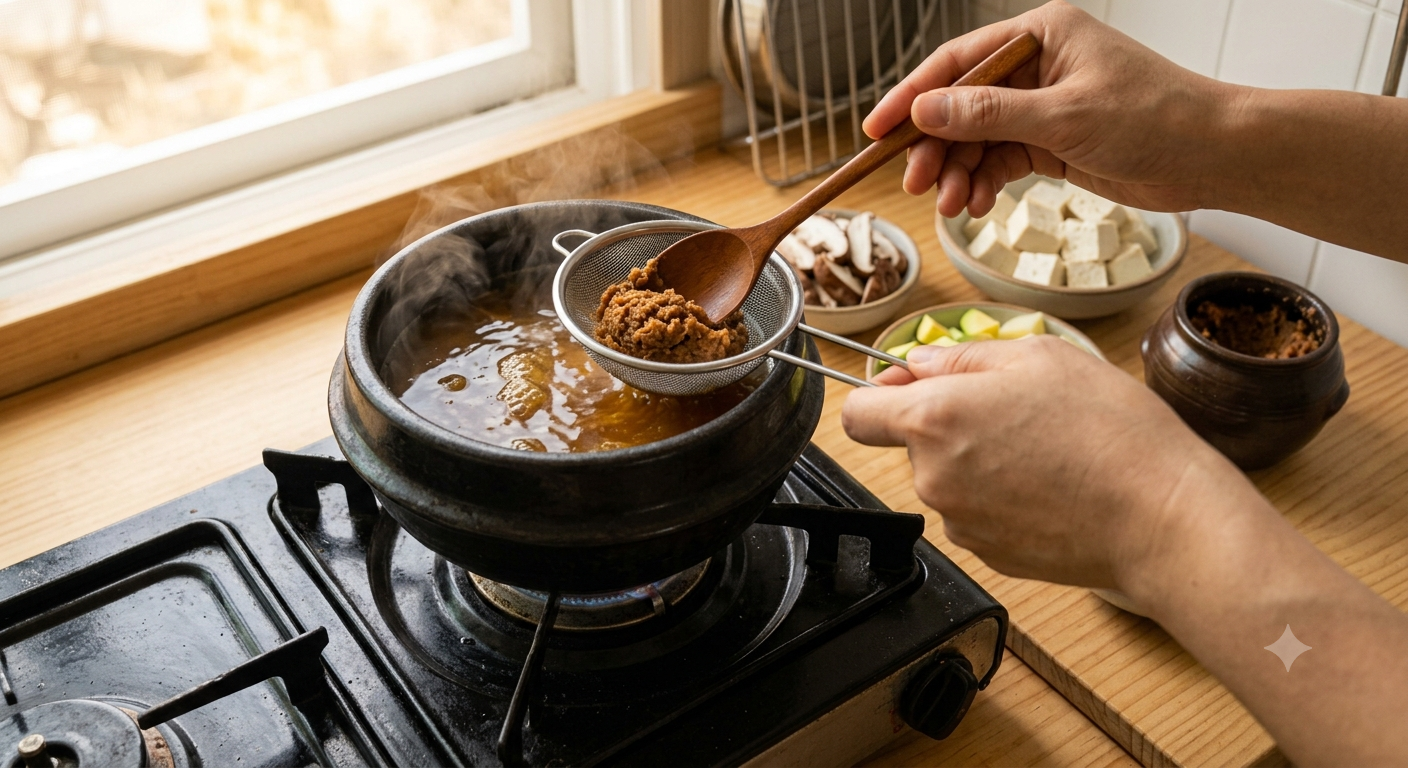
Few dishes deliver as much soul-soothing comfort as Doenjang Jjigae, Korea’s beloved fermented soybean paste stew. Savory, earthy, deeply aromatic, and wonderfully flexible, this bubbling stew transforms simple vegetables, tofu, and broth into a meal that tastes far more complex than its short ingredient list suggests. Served steaming-hot with rice and banchan, it is the kind of everyday Korean comfort food that makes a kitchen feel instantly welcoming.
📜 The History Behind Doenjang Jjigae
Doenjang Jjigae (된장찌개) comes from Korea’s long-standing tradition of fermenting soybeans. Doenjang, a rustic Korean soybean paste, is traditionally made by fermenting blocks of cooked soybeans called meju, then aging them in brine. The resulting paste has a bold, nutty, salty character with a distinctive fermented depth.
For centuries, Korean households have used doenjang as a practical pantry staple, especially during colder months when preserved foods were essential. While every family has its own version, the classic stew often includes zucchini, potato, onion, tofu, mushrooms, and green chile. Some cooks enrich it with seafood, pork belly, beef, or clams, but a vegetable-forward version remains one of the most popular and satisfying ways to enjoy this traditional Korean stew.
🛒 Ingredients for Classic Doenjang Jjigae
- 4 cups anchovy-kelp broth or vegetable broth
- 2 tablespoons Korean doenjang (fermented soybean paste)
- 1 teaspoon gochujang, optional for gentle heat
- 1 small potato, diced
- 1 small zucchini, diced
- 1/2 medium onion, chopped
- 4 ounces firm tofu, cubed
- 4 ounces mushrooms, sliced
- 1 garlic clove, minced
- 1 green onion, sliced
- 1 green chile or jalapeño, sliced, optional
- 1 teaspoon sesame oil, optional
- Steamed rice, for serving
👩🍳 How to Make Doenjang Jjigae Step by Step
- Prepare the broth 🥣
Pour the anchovy-kelp broth or vegetable broth into a medium pot or Korean stone bowl. Bring it to a gentle simmer over medium-high heat. A seaweed-based broth gives the stew an especially traditional, clean umami flavor. - Dissolve the soybean paste 🌰
Place the doenjang in a small sieve over the simmering broth. Use a spoon to press it through the sieve, breaking up any lumps. This creates a smoother broth while leaving behind larger soybean solids, if desired. - Add the hearty vegetables 🥔
Stir in the diced potato, onion, and garlic. Simmer for 8 to 10 minutes, until the potato begins to soften. For a slightly spicy, more vibrant broth, add the gochujang now. - Add zucchini and mushrooms 🍄
Add the zucchini and mushrooms. Continue simmering for about 5 minutes. The zucchini should be tender but still hold its shape, while the mushrooms add a savory, woodsy note. - Finish with tofu and fresh aromatics ✨
Gently add the tofu cubes, green onion, and sliced chile. Simmer for another 2 to 3 minutes. Avoid stirring aggressively so the tofu stays intact. - Taste and serve hot 🍚
Taste before adding salt; doenjang is naturally salty. Add a few drops of sesame oil for extra richness, if desired. Serve immediately with steamed rice and Korean side dishes.
🌿 Health Benefits and Smart Cooking Tips
Because it is made with fermented soybeans, doenjang provides plant-based protein and naturally occurring fermented-food compounds. Combined with tofu and vegetables, this stew can be a nourishing, balanced meal. It is also naturally easy to adapt for vegetarian and vegan diets when made with vegetable or kelp broth.
- Choose authentic doenjang: Korean doenjang is different from Japanese miso; it is generally earthier, chunkier, and more assertive.
- Control sodium: Start with less paste, then add more after tasting. Use unsalted homemade broth when possible.
- Make it heartier: Add thinly sliced pork belly, beef brisket, clams, shrimp, or canned tuna.
- Use seasonal vegetables: Radish, spinach, napa cabbage, Korean squash, and oyster mushrooms all work beautifully.
- Serve immediately: Doenjang Jjigae is best enjoyed piping hot, ideally while it is still gently bubbling.
❓ Doenjang Jjigae FAQ
What is the difference between doenjang and miso?
Both are fermented soybean pastes, but doenjang usually has a stronger, saltier, earthier flavor and a coarser texture than Japanese miso. For authentic Korean soybean paste stew, use Korean doenjang whenever possible.
Can I make Doenjang Jjigae vegetarian or vegan?
Yes. Use vegetable broth, mushroom broth, or kelp broth instead of anchovy stock. Check the label on your doenjang, as most traditional varieties are plant-based, but ingredients can vary by brand.
What meat is best for Doenjang Jjigae?
Thinly sliced pork belly is a popular choice because its richness balances the fermented soybean flavor. Beef brisket, shaved beef, and seafood such as clams or shrimp are also excellent additions.
Can I make this Korean stew ahead of time?
Yes. The broth develops even more flavor after resting overnight. Store it in an airtight container in the refrigerator for up to 3 days, then reheat gently. For the best tofu texture, add fresh tofu when reheating.
What can I substitute for zucchini?
Korean zucchini, yellow squash, eggplant, napa cabbage, radish, or green beans are all useful substitutes. Choose vegetables that can simmer without becoming overly soft.
🥢 Recommended Ingredients
Bring authentic Korean flavor to your table with fresh, high-quality doenjang, kelp broth ingredients, tofu, and gochujang for a deeply satisfying homemade stew.
🍲 Recommended Kitchen Tools
A traditional Korean stone bowl, or ddukbaegi, keeps Doenjang Jjigae hot from stove to table and creates that irresistible bubbling finish.
* Disclaimer: As an Amazon Associate, I earn from qualifying purchases at no additional cost to you.
TAGS: #DoenjangJjigae, #KoreanFood, #KoreanStew, #FermentedFoods, #ComfortFood
Leave a Reply