
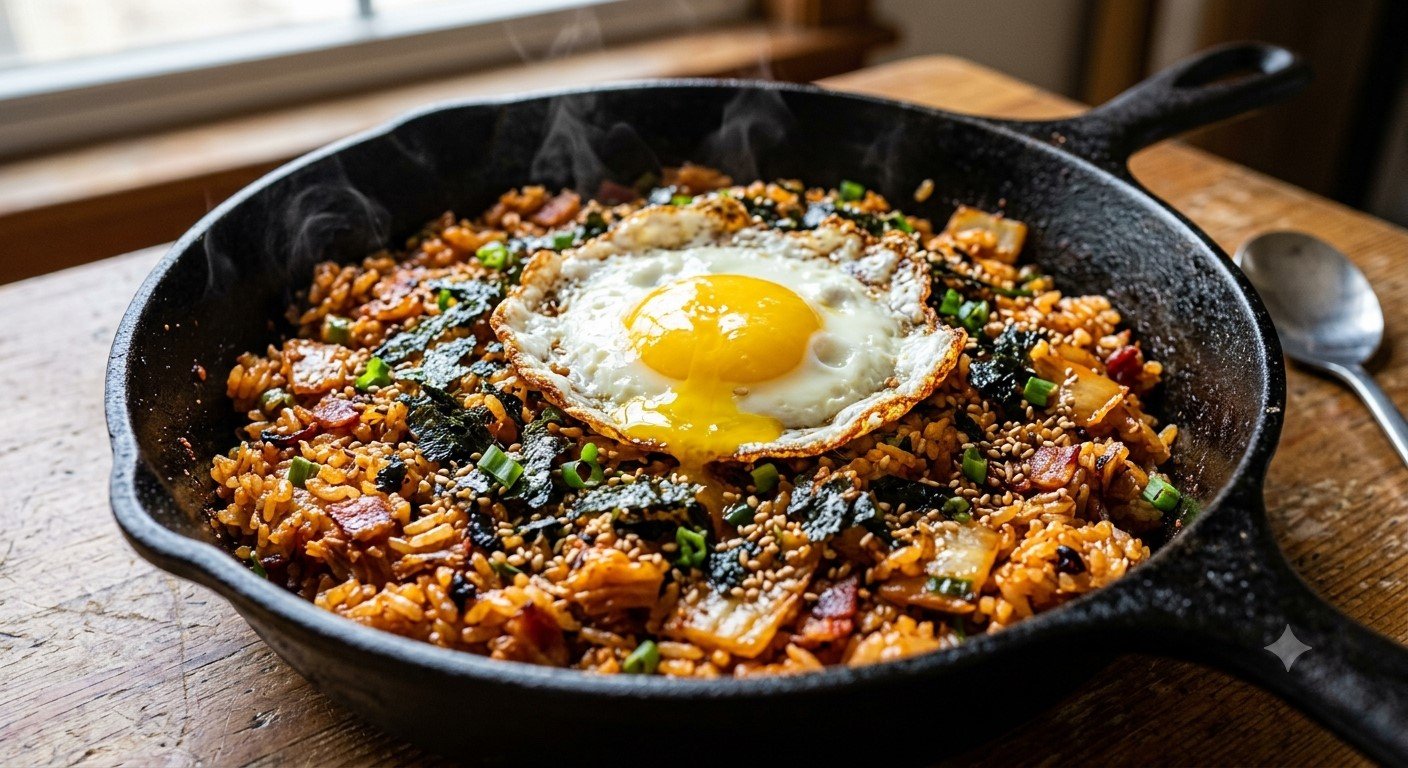
Bold, smoky, tangy, and irresistibly comforting, Kimchi Bokkeumbap is the Korean fried rice that turns humble leftovers into a restaurant-worthy meal. The magic lies in well-fermented kimchi, hot rice, and a skillet that creates those coveted crispy caramelized rice edges. Finish it with a runny fried egg, and every bite becomes spicy, savory, creamy, and deeply satisfying.
📜 History of Kimchi Bokkeumbap
Kimchi Bokkeumbap (김치볶음밥) literally means “kimchi stir-fried rice.” It is a beloved Korean home-style dish born from the practical, resourceful tradition of using leftover rice and aged kimchi. In Korean kitchens, rice is rarely wasted, and kimchi that has fermented for longer develops a sharper, richer flavor ideal for cooking.
While kimchi itself has roots stretching back centuries in Korea, kimchi fried rice became especially popular as a quick everyday meal during the modern era. Today, it is found everywhere—from family tables and school cafeterias to Korean snack bars known as bunsikjip. Its universal appeal comes from its flexibility: add pork belly, bacon, tuna, tofu, cheese, or simply enjoy it as a plant-forward bowl with a sunny fried egg.
🛒 Ingredients for Korean Kimchi Fried Rice
- 3 cups cold cooked short-grain rice, preferably day-old
- 1 1/2 cups well-fermented napa cabbage kimchi, chopped
- 2 tablespoons kimchi brine or kimchi juice
- 4 ounces pork belly, bacon, ham, tofu, or canned tuna
- 1 small onion, finely diced
- 2 green onions, sliced, divided
- 1 tablespoon gochujang (Korean red pepper paste)
- 1 teaspoon soy sauce
- 1 teaspoon toasted sesame oil
- 2 tablespoons neutral cooking oil, divided
- 2 eggs
- 1 teaspoon toasted sesame seeds
- Roasted seaweed strips, optional, for garnish
🔥 How to Make Kimchi Bokkeumbap Step by Step
- Prepare the rice. Break up cold rice with clean hands or a spoon so there are no large clumps. Day-old rice is the secret to fried rice with separate, chewy grains rather than a soft, sticky texture.
- Cook your protein 🥓 Heat a large nonstick or cast-iron skillet over medium-high heat. Add 1 tablespoon oil, then cook pork belly, bacon, ham, tofu, or tuna until heated through and lightly browned. Transfer to a plate if the pan becomes crowded.
- Sauté the aromatics. Add the remaining oil, followed by onion and the white parts of the green onions. Stir-fry for 2 to 3 minutes until fragrant and lightly softened.
- Caramelize the kimchi 🌶️ Add chopped kimchi and cook for 3 to 4 minutes. Let it sit against the hot pan briefly between stirs. This concentrates the flavor and mellows the raw acidity while building a savory, slightly smoky base.
- Add sauce and rice. Stir in gochujang, soy sauce, and kimchi brine. Add the cold rice and cooked protein. Toss and press the rice into the skillet until every grain is coated in the red-orange kimchi seasoning.
- Create the crispy edge ✨ Drizzle sesame oil around the perimeter of the pan. Spread the rice into an even layer and let it cook undisturbed for 2 to 4 minutes. The bottom and edges should turn lightly golden and crisp. For extra crunch, resist stirring too soon.
- Fry the eggs 🍳 In a separate pan, fry the eggs in a little oil until the whites are set and the yolks remain runny. A crisp-edged sunny-side-up egg is especially delicious here.
- Serve immediately. Divide the kimchi fried rice between bowls. Top each serving with a fried egg, green onion tops, sesame seeds, and optional roasted seaweed. Break the yolk over the hot rice just before eating.
🌿 Health Benefits and Smart Cooking Tips
Kimchi offers beneficial live cultures when unheated, plus fiber and vitamins from fermented vegetables. Although cooking reduces some probiotic activity, it still delivers the distinctive flavor and nutrients that make this dish so satisfying. Eggs provide protein, while adding tofu or lean pork can make the meal more filling.
- Use aged kimchi: Sour, mature kimchi makes the best fried rice because it has bolder flavor and more cooking-friendly acidity.
- Control the heat: Start with less gochujang if your kimchi is very spicy, then add more at the table.
- For a vegan version: Use tofu or mushrooms, skip the egg, and check that your kimchi contains no fish sauce or shrimp paste.
- For maximum crispiness: Use a wide heavy skillet and avoid overfilling it.
❓ Kimchi Bokkeumbap FAQ
What is the best rice for kimchi fried rice?
Cold, cooked Korean or Japanese short-grain rice is ideal because it stays pleasantly chewy. Medium-grain rice also works well. Avoid freshly steamed rice unless you spread it on a tray and chill it first.
Can I make Kimchi Bokkeumbap with fresh kimchi?
Yes, but aged kimchi is better. If your kimchi tastes mild and fresh, add a little extra kimchi brine, a small splash of rice vinegar, or another teaspoon of gochujang to deepen the flavor.
What meat is best in Korean kimchi fried rice?
Pork belly is a classic choice because its rendered fat enriches the rice. Bacon is an easy alternative, while canned tuna, diced ham, ground pork, chicken, shrimp, or beef all work well.
Can I make kimchi fried rice ahead of time?
Yes. Refrigerate cooled leftovers in an airtight container for up to 3 days. Reheat in a hot skillet with a teaspoon of oil to restore the crisp texture, then fry a fresh egg to serve on top.
How do I prevent kimchi fried rice from becoming soggy?
Use cold rice, drain excessively wet kimchi before chopping, cook over medium-high heat, and avoid stirring constantly. Giving the rice time to contact the pan is essential for a crisp finish.
Recommended Ingredients 🥬
Bring authentic Korean flavor to your kitchen with vibrant aged kimchi, savory gochujang, toasted sesame oil, and premium short-grain rice.
Recommended Kitchen Tools 🍳
A wide, heavy skillet makes all the difference when you want deeply flavored rice and those signature crispy golden edges.
👉 Check Out Essential Cooking Tools on Amazon
* Disclaimer: As an Amazon Associate, I earn from qualifying purchases at no additional cost to you.
TAGS: #KimchiBokkeumbap, #KoreanFriedRice, #KimchiRecipe, #KoreanFood, #EasyDinner
Leave a Reply