
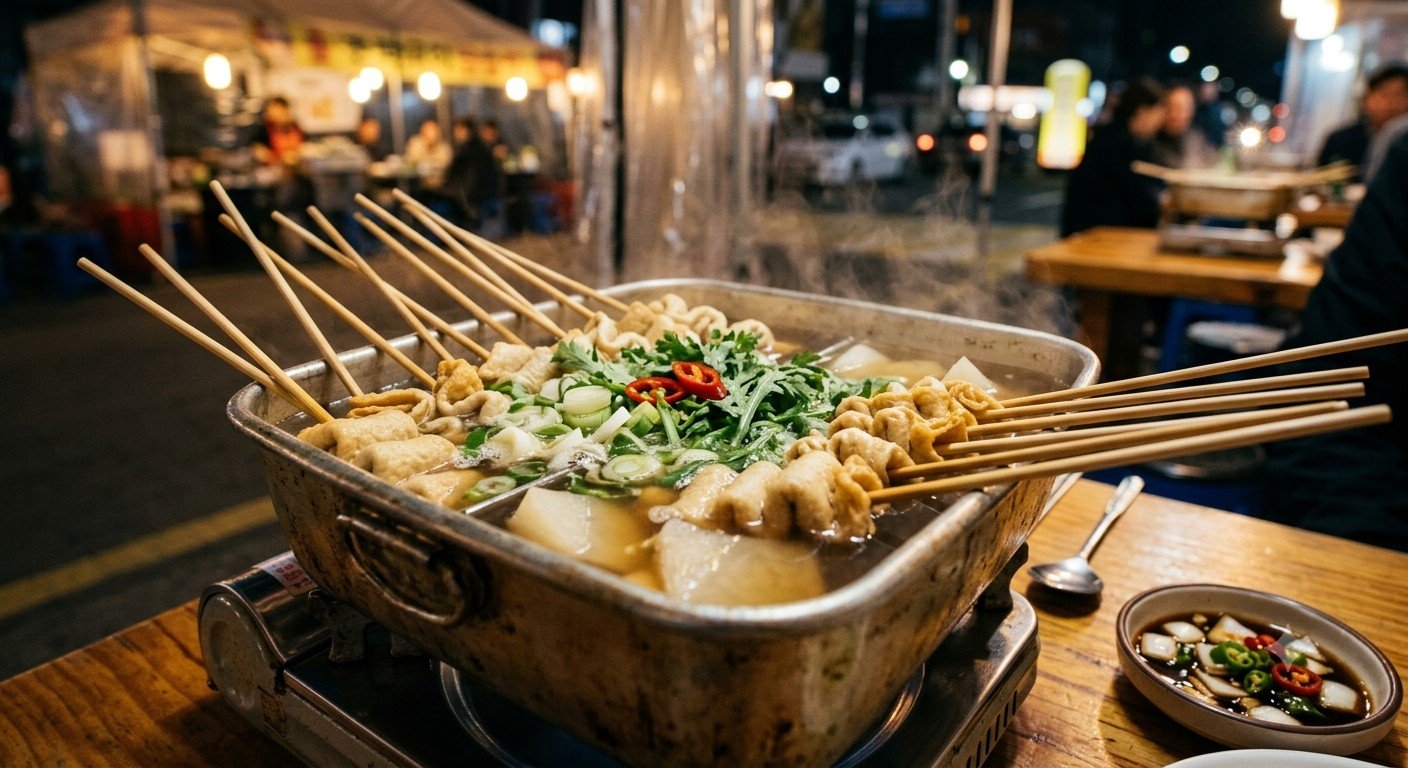
Few Korean street foods are as comforting as Eomuk-tang, a steaming bowl of savory broth filled with tender fish cake skewers. Served from bubbling street-stall pots across Korea, this simple soup delivers a deeply satisfying combination of umami-rich anchovy-kelp stock, springy eomuk, and bright scallion flavor. It is the kind of warming dish that turns a chilly afternoon into a cozy occasion. 🍢🍲
📜 The Traditional Story Behind Korean Eomuk-tang
Eomuk-tang, also called odeng-guk, is Korea’s beloved fish cake soup. Although fish cakes were influenced by Japanese oden, Korean eomuk developed its own distinct identity through flavorful seafood-based fish cakes and a clean, aromatic broth made with dried anchovies, kelp, radish, and sometimes dried shrimp.
It became especially popular as an affordable, filling Korean street food. Vendors traditionally thread folded fish cake sheets onto wooden skewers, then simmer them in large communal pots. Diners often enjoy the skewers with a cup of broth on the side, adding soy sauce, mustard, or chili for extra punch. Today, homemade Eomuk-tang remains a favorite easy Korean comfort meal for busy weeknights, late-night snacks, and cold-weather dinners.
🍲 Easy Eomuk-tang Recipe: Korean Fish Cake Soup
This recipe makes approximately 4 comforting servings. Use assorted Korean fish cakes for the best texture: folded sheets, balls, bars, and vegetable-studded varieties all work beautifully.
Ingredients
- 12 ounces Korean fish cakes (eomuk), assorted shapes
- 6 to 8 wooden skewers, soaked in water for 20 minutes
- 6 cups water
- 1 small Korean radish or daikon radish, cut into thick slices
- 8 to 10 dried anchovies, heads and innards removed
- 1 piece dried kelp (dashima), about 4 x 4 inches
- 2 garlic cloves, lightly crushed
- 1 tablespoon soup soy sauce or light soy sauce
- 1 teaspoon salt, plus more to taste
- 2 scallions, sliced
- Optional: Korean radish, mushrooms, chili slices, mustard, or dipping soy sauce
👩🍳 Step-by-Step Preparation
- Make the broth base. Add water, radish, dried anchovies, kelp, and garlic to a medium pot. Bring everything to a gentle boil over medium-high heat. 🌊
- Simmer for clean umami flavor. Once boiling, remove the kelp after 5 minutes so the broth does not become slimy or bitter. Continue simmering the anchovies and radish for 15 to 20 minutes.
- Strain and season. Remove the anchovies and garlic. Keep the softened radish in the pot, then season the broth with soup soy sauce and salt. Taste it: the flavor should be light, savory, and pleasantly seafood-forward.
- Prepare the fish cake skewers. Fold large fish cake sheets into loose zigzags and thread them onto soaked wooden skewers. Add fish balls or smaller pieces between folds if desired. Do not pack the skewers too tightly, as loose folds soak up more broth.
- Warm the eomuk. Slide the skewers into the simmering broth. Cook for 5 to 7 minutes, until the fish cakes are plump, hot, and tender. 🍢
- Finish and serve. Add sliced scallions during the final minute. Serve each bowl with one or two skewers, plenty of hot broth, radish slices, and optional dipping sauce.
💚 Health Benefits and Smart Cooking Tips
Eomuk-tang is a lighter comfort food compared with many fried snacks. Fish cakes provide protein, while the anchovy-and-kelp broth contributes minerals and satisfying umami without relying heavily on oil. Radish adds gentle sweetness, hydration, and a crisp vegetable element.
- Choose quality eomuk: Look for Korean fish cakes with a high fish content and fewer unnecessary fillers.
- Control sodium: Fish cakes and soy sauce can be salty, so season the broth gradually and taste before adding more salt.
- Boost the vegetables: Add napa cabbage, bok choy, mushrooms, or zucchini for a more complete meal.
- Keep it warm: Eomuk-tang is best served immediately, but the broth can stay on very low heat for relaxed sharing.
❓ Eomuk-tang FAQ
What is the best fish cake for Eomuk-tang?
Assorted Korean fish cakes are best for Eomuk-tang. Look for flat sheets for folding onto skewers, plus fish balls or rectangular bars for variety. Korean grocery stores often sell mixed eomuk packs specifically made for soup or oden-style dishes.
Can I make Korean fish cake soup ahead of time?
Yes. Prepare the anchovy-kelp broth up to 2 days ahead and refrigerate it in an airtight container. Reheat the broth and add the fish cake skewers just before serving, since eomuk tastes best when freshly warmed and springy.
Can I make Eomuk-tang without anchovies?
Absolutely. Use vegetable broth, kombu broth, or a light chicken broth instead. For a vegetarian-style version, choose plant-based fish cakes or replace them with tofu, mushrooms, and rice cakes.
Why should I remove kelp early from the broth?
Dried kelp releases savory glutamates quickly. Removing it after about 5 minutes gives the broth deep umami while preventing an overly strong, slippery, or bitter flavor.
What do you serve with Eomuk-tang?
Serve it with steamed rice, kimchi, pickled radish, or a small dipping sauce made with soy sauce, vinegar, sesame seeds, and Korean chili flakes. For an authentic street-food feel, enjoy the broth in a cup alongside the skewers.
🥢 Recommended Ingredients
Bring authentic Korean street-food flavor home with quality fish cakes, dried anchovies, kelp, and soup soy sauce for a beautifully savory Eomuk-tang broth.
🍲 Recommended Kitchen Tools
Make serving easy and authentic with sturdy wooden skewers, a deep soup pot, and a fine strainer for clear, flavorful broth.
👉 Check Out Essential Cooking Tools on Amazon
* Disclaimer: As an Amazon Associate, I earn from qualifying purchases at no additional cost to you.
TAGS: #EomukTang, #KoreanFood, #FishCakeSoup, #KoreanStreetFood, #ComfortFood
Leave a Reply