
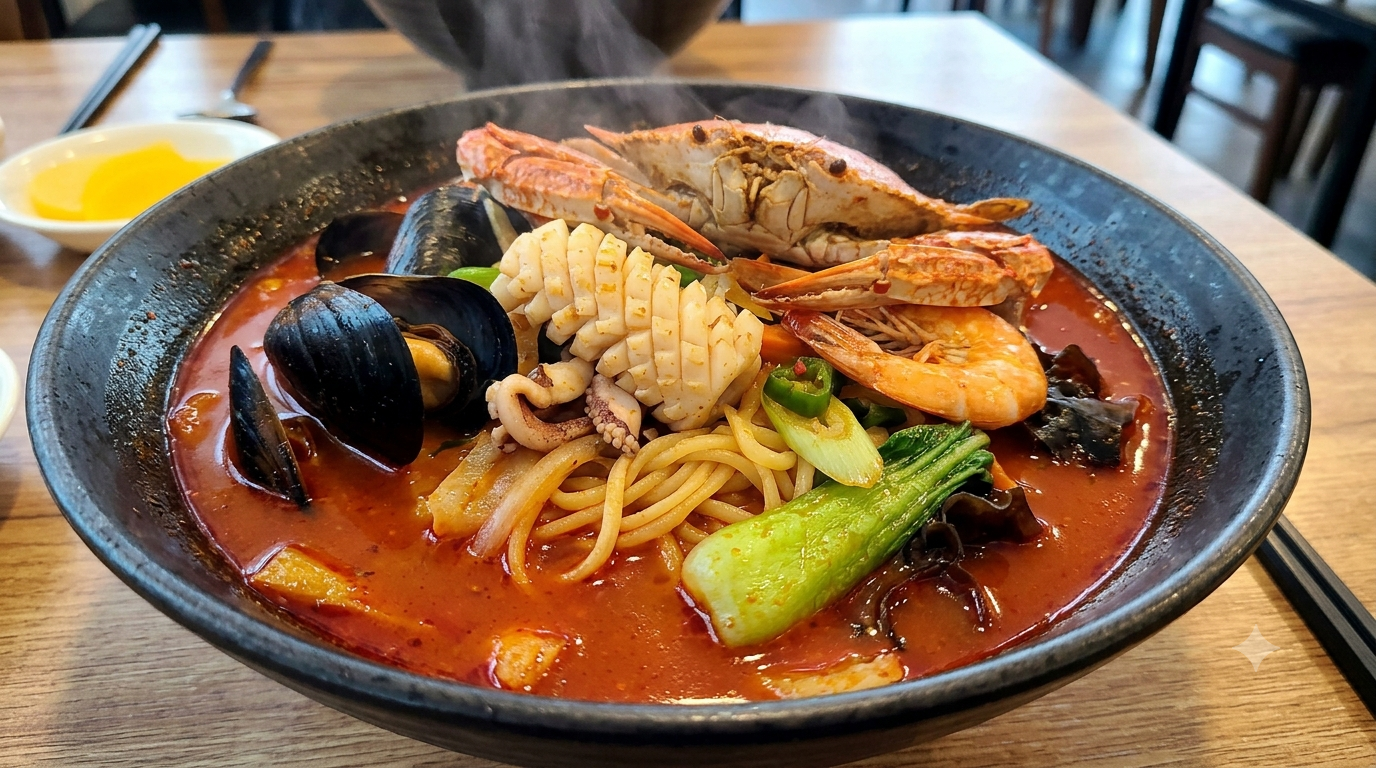
Jjamppong: Fiery Korean Spicy Seafood Noodle Soup with Smoky Flavor 🔥🍜
One spoonful of Jjamppong and you understand why this Korean spicy seafood noodle soup has such a devoted following. Its deeply red broth is fragrant with wok-fired aromatics, tender seafood, crisp vegetables, and springy noodles—all wrapped in a warming, smoky chile-garlic heat that wakes up every taste bud.
This easy homemade Jjamppong recipe captures the restaurant-style character of the dish without requiring a professional wok burner. Use fresh or frozen seafood, sturdy wheat noodles, and Korean chile flakes to create a satisfying bowl that is bold, brothy, and gloriously spicy.
📜 The History of Jjamppong
Jjamppong is a beloved example of Korean-Chinese cuisine, a culinary tradition developed by Chinese immigrant communities in Korea. While its name is often associated with Japanese champon-style noodle soups, Korean Jjamppong evolved into a distinctly different dish: hotter, redder, and more intensely seasoned.
By the mid-20th century, Korean Chinese restaurants had popularized Jjamppong alongside dishes such as jajangmyeon and tangsuyuk. The signature red broth comes from frying Korean chile flakes in oil with garlic, ginger, and vegetables—a technique that creates the dish’s iconic smoky aroma. Today, Jjamppong is a go-to comfort food in Korea, especially on chilly days or whenever a spicy noodle craving strikes.
🧾 Ingredients for Korean Seafood Jjamppong
- 10 ounces fresh wheat noodles, udon, or ramen-style noodles
- 2 tablespoons neutral oil, such as avocado or vegetable oil
- 1 tablespoon Korean chile oil (gochugireum), optional but recommended
- 1 small onion, thinly sliced
- 3 garlic cloves, minced
- 1 teaspoon grated ginger
- 2 tablespoons gochugaru (Korean red pepper flakes)
- 1 tablespoon soy sauce
- 1 teaspoon oyster sauce
- 4 cups seafood or chicken stock
- 1 cup napa cabbage, roughly chopped
- 1 small zucchini, sliced into half-moons
- 1 cup mushrooms, sliced
- 1 cup mixed seafood: shrimp, squid, mussels, or clams
- 2 green onions, cut into 2-inch pieces
- Salt and black pepper, to taste
- Optional garnish: toasted sesame oil, cilantro, or additional sliced green onion
👩🍳 How to Make Jjamppong Step by Step
- Cook the noodles. 🍜 Bring a pot of water to a boil and cook the noodles according to package directions until just tender. Drain, rinse briefly under cool water to stop cooking, and divide between two large serving bowls.
- Build the smoky base. 🔥 Heat a wok or heavy pot over medium-high heat. Add neutral oil and Korean chile oil. Stir-fry the onion for 2 minutes, then add garlic and ginger. Cook for 30 seconds until fragrant.
- Bloom the chile flakes. Add gochugaru and stir continuously for 15 to 20 seconds. Be careful not to burn it. This quick frying step creates the deep red, smoky flavor that defines great Jjamppong.
- Add sauce and vegetables. Stir in soy sauce and oyster sauce. Add napa cabbage, zucchini, and mushrooms, tossing for 2 to 3 minutes until the vegetables begin to soften.
- Simmer the broth. 🥣 Pour in the stock and bring it to a lively simmer. Cook for 5 minutes so the broth takes on the flavor of the vegetables and spices.
- Cook the seafood. Add shrimp, squid, mussels, clams, or your chosen seafood. Simmer for 3 to 5 minutes, until shrimp are pink, squid is tender, and shellfish have opened. Discard any unopened mussels or clams.
- Finish and serve. Add green onions and season with salt and black pepper. Ladle the fiery seafood broth over the noodles. Finish with a few drops of sesame oil if desired, then serve immediately while steaming hot. 🌶️
💚 Health Benefits and Helpful Tips
Jjamppong can be a nourishing one-bowl meal. Seafood provides protein, iodine, selenium, and omega-3 fatty acids, while cabbage, zucchini, mushrooms, and onions contribute fiber and plant-based nutrients. Gochugaru contains capsaicin, the compound responsible for its warming heat.
- Control the spice: Start with 1 tablespoon gochugaru for a milder broth, then add more to taste.
- Use frozen seafood wisely: Thaw it overnight and pat it dry before cooking to avoid watering down the broth.
- For richer flavor: Use seafood stock or add a spoonful of Korean soup soy sauce.
- For a vegetarian version: Replace seafood with tofu, king oyster mushrooms, and vegetable stock.
- Eat it fresh: Store broth and noodles separately if making ahead; noodles absorb broth quickly.
❓ Jjamppong FAQ
What seafood is best for Jjamppong?
A combination of shrimp, squid, mussels, and clams creates the most authentic seafood Jjamppong flavor. However, shrimp and squid alone make an excellent, accessible version.
Can I make Jjamppong ahead of time?
Yes. Make the spicy broth up to two days ahead and refrigerate it in an airtight container. Cook the noodles fresh and reheat the broth gently before serving. Add delicate seafood only when reheating for the best texture.
What noodles should I use for Korean Jjamppong?
Fresh Chinese-style wheat noodles are traditional, but udon, ramen noodles, or thick egg noodles work well. Choose noodles with enough chew to stand up to the robust broth.
Can I substitute gochugaru with regular red pepper flakes?
You can, but the result will be sharper and less traditionally Korean. Gochugaru has a fruitier, mildly smoky flavor and a softer heat, making it the best choice for authentic Jjamppong.
How do I make Jjamppong less spicy?
Reduce the gochugaru, skip the chile oil, and add a little extra stock. A side of plain rice can also help balance the heat without changing the broth.
🥬 Recommended Ingredients
Bring authentic Korean heat and depth to your homemade Jjamppong with fresh gochugaru, Korean chile oil, quality seafood stock, and pantry-ready noodles.
🍳 Recommended Kitchen Tools
A carbon-steel wok or heavy-bottomed soup pot helps develop the quick, smoky stir-fried flavor that makes spicy seafood Jjamppong unforgettable.
* Disclaimer: As an Amazon Associate, I earn from qualifying purchases at no additional cost to you.
TAGS: #Jjamppong, #KoreanFood, #SeafoodNoodleSoup, #SpicySoup, #KoreanChineseCuisine
Leave a Reply