
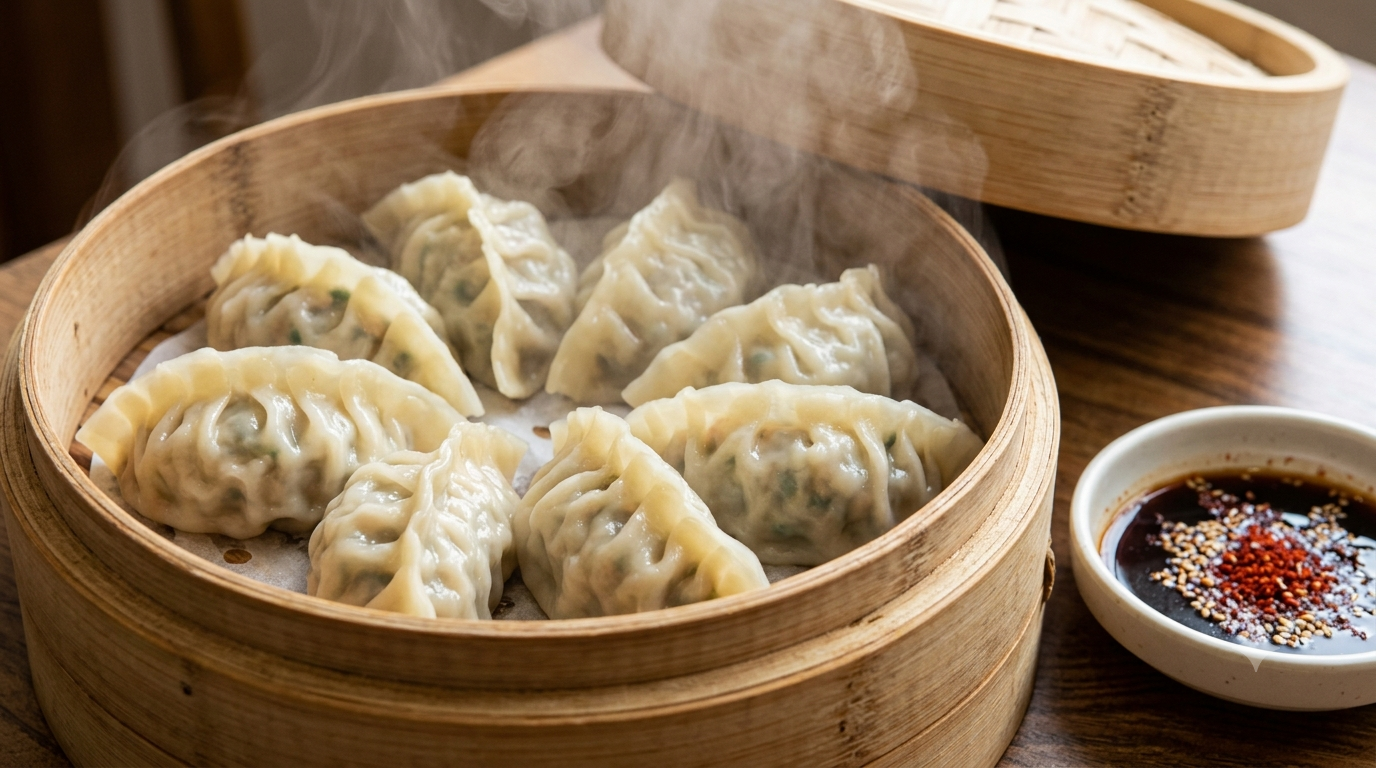
Homemade Korean Mandu: Juicy Dumplings with a Comforting Story 🥟
Few foods are as universally comforting as a warm dumpling, but Korean mandu brings something especially memorable to the table: a tender wrapper, a savory filling, and endless ways to cook it. Steamed, pan-fried, boiled, or dropped into soup, mandu is the kind of meal that turns a simple gathering into a feast.
This easy homemade mandu recipe makes flavorful pork and vegetable Korean dumplings with tofu, kimchi, and aromatic sesame oil. Serve them crisp-bottomed with a tangy dipping sauce, or freeze a batch for quick weeknight comfort food.
📜 The History of Korean Mandu
Mandu is believed to have arrived on the Korean Peninsula through Central Asian and Mongolian trade routes during the Goryeo Dynasty, although its exact origins remain debated. Over centuries, Korea made the dumpling entirely its own. Regional recipes developed across the country, from large northern-style dumplings filled with beef and tofu to spicy kimchi mandu popular in Seoul and beyond.
Today, mandu is a beloved everyday food and an important holiday dish, especially during Seollal, the Korean Lunar New Year. Families often enjoy mandu in tteokguk, a rice-cake soup said to symbolize another year of life. This recipe celebrates that tradition with a practical, flavor-packed filling you can make in any home kitchen.
🧺 Ingredients for Korean Mandu
- 30 round dumpling wrappers, store-bought or homemade
- 8 ounces ground pork
- 1 cup napa cabbage, finely chopped
- 1/2 cup well-fermented kimchi, finely chopped
- 1/2 block firm tofu, drained and crumbled
- 2 scallions, finely sliced
- 2 garlic cloves, minced
- 1 tablespoon soy sauce
- 1 teaspoon toasted sesame oil
- 1 teaspoon grated fresh ginger
- 1/2 teaspoon black pepper
- 1/2 teaspoon kosher salt, plus more as needed
- Neutral oil for pan-frying
Quick Mandu Dipping Sauce 🥢
- 2 tablespoons soy sauce
- 1 tablespoon rice vinegar
- 1 teaspoon toasted sesame oil
- 1 teaspoon gochugaru or red pepper flakes, optional
- 1 sliced scallion and toasted sesame seeds, optional
👩🍳 How to Make Korean Mandu Step by Step
- Salt and squeeze the cabbage. Place the chopped napa cabbage in a bowl, sprinkle with salt, and let it sit for 10 minutes. Squeeze out as much moisture as possible using clean hands or a kitchen towel. This step keeps your mandu filling from becoming watery.
- Prepare the filling 🥬 In a large bowl, combine the ground pork, squeezed cabbage, kimchi, crumbled tofu, scallions, garlic, ginger, soy sauce, sesame oil, and black pepper. Mix gently until evenly combined. Avoid overmixing, which can make the filling dense.
- Test the seasoning. Cook a teaspoon of filling in a small skillet until fully done. Taste it, then add a pinch more salt, soy sauce, or pepper if needed. This is the easiest way to create perfectly seasoned mandu.
- Fill the wrappers 🥟 Place one dumpling wrapper in your palm. Add about 1 tablespoon of filling to the center. Moisten the wrapper edge with water, fold it in half, and press firmly to seal. Create small pleats if desired, but a tightly sealed half-moon shape works beautifully.
- Pan-fry for crispy bottoms 🔥 Heat 1 tablespoon neutral oil in a nonstick skillet over medium heat. Arrange mandu in a single layer and fry for 2 to 3 minutes, until the bottoms turn golden.
- Steam and finish. Carefully add 1/3 cup water to the skillet and immediately cover. Steam for 6 to 8 minutes, until the pork is cooked through and the wrappers are tender. Uncover and cook for 1 to 2 minutes more to re-crisp the bottoms.
- Serve hot. Whisk the dipping sauce ingredients together. Serve the mandu immediately with sauce, kimchi, cucumber salad, or a bowl of steamed rice.
🌿 Health Benefits and Smart Cooking Tips
Korean mandu can be a balanced meal when filled with lean protein and vegetables. Pork provides protein and essential B vitamins, while napa cabbage and kimchi add fiber. Fermented kimchi may also contribute beneficial probiotics, though cooking reduces some live cultures. Tofu adds plant-based protein and creates a softer, juicier texture.
- For a lighter mandu: Use ground chicken, turkey, or extra-firm tofu instead of pork.
- For gluten-free mandu: Choose certified gluten-free wrappers and tamari instead of regular soy sauce.
- For extra crispness: Let the pan-fried dumplings sit uncovered for one minute before serving.
- For meal prep: Freeze uncooked mandu in a single layer, then transfer to a freezer bag for up to 2 months.
❓ Korean Mandu FAQ
What is the best meat for Korean mandu?
Ground pork is a classic choice because it stays juicy and flavorful. Ground beef, chicken, turkey, or a pork-and-beef blend also work well. For traditional northern Korean-style mandu, beef and tofu are especially popular.
Can I make mandu ahead of time?
Yes. Assemble the dumplings, place them on a parchment-lined tray, and freeze until firm. Transfer them to an airtight container or freezer bag. Cook frozen mandu directly from the freezer; simply add 2 to 3 extra minutes during steaming.
How do I keep mandu wrappers from breaking?
Keep wrappers covered with a lightly damp towel while shaping. Do not overfill them, and press out trapped air before sealing. If a wrapper feels dry, brush the edge with a little water before folding.
Can I cook Korean mandu without pan-frying?
Absolutely. Steam mandu for 10 to 12 minutes, boil them until they float and cook for another 2 minutes, or add them to Korean dumpling soup. Pan-frying simply adds the irresistible golden crispy bottom.
What can I substitute for kimchi in mandu?
If you prefer a mild filling, replace kimchi with extra napa cabbage, chopped zucchini, shiitake mushrooms, or garlic chives. Add a small splash of rice vinegar and a pinch of chili flakes if you still want a little tang and heat.
🌱 Recommended Ingredients
Make every bite taste more authentic with fresh kimchi, toasted sesame oil, quality soy sauce, and Korean dumpling wrappers.
🍳 Recommended Kitchen Tools
A reliable nonstick skillet, bamboo steamer, mixing bowls, and a sturdy spatula make homemade mandu easier to shape and cook perfectly.
👉 Check Out Essential Cooking Tools on Amazon
* Disclaimer: As an Amazon Associate, I earn from qualifying purchases at no additional cost to you.
TAGS: #KoreanMandu, #KoreanDumplings, #KimchiRecipe, #AsianCooking, #HomemadeDumplings
Leave a Reply