
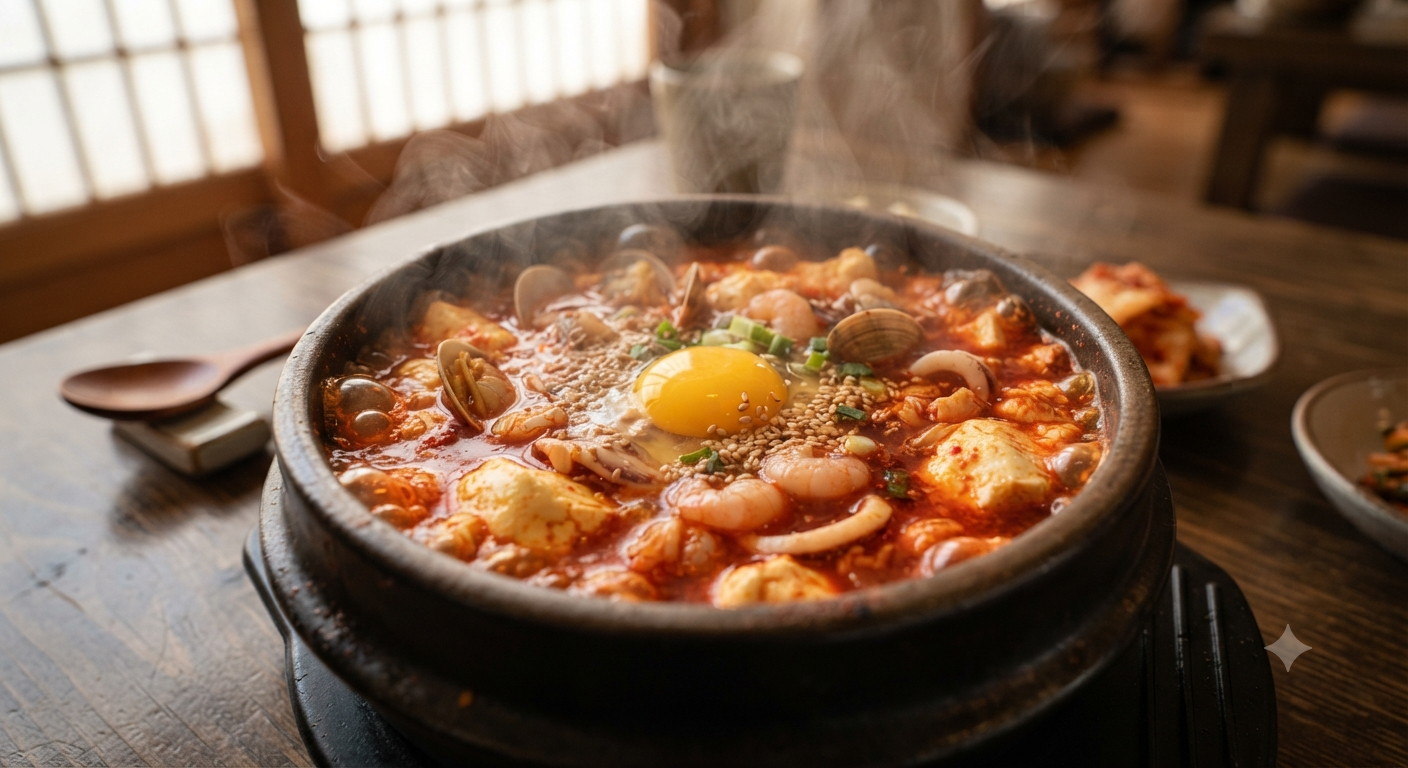
Few dishes deliver comfort as quickly as Soft Tofu Stew. Silky tofu, a spicy-savory broth, tender vegetables, and a just-cooked egg come together in one bubbling bowl. Known in Korea as sundubu jjigae, this warming stew is a favorite for busy weeknights, cold weather, and anyone craving a deeply flavorful meal that feels nourishing rather than heavy.
This easy Korean soft tofu stew recipe uses accessible ingredients while keeping the bold, restaurant-style character of traditional sundubu jjigae. Serve it with steamed rice and a few simple Korean side dishes for an unforgettable homemade meal.
📜 The History of Sundubu Jjigae
Soft tofu has a long place in Korean food culture, where tofu has been enjoyed for centuries as an affordable, versatile source of plant-based protein. The word sundubu refers to extra-soft, unpressed tofu with a delicate, custard-like texture. Unlike firm tofu, it is not tightly compacted, allowing it to absorb the flavors of the broth beautifully.
Jjigae means stew in Korean, and sundubu jjigae became especially popular in modern Korean dining through neighborhood restaurants that served individual earthenware bowls of bubbling stew. Regional and household variations are common: some versions feature pork belly, others use clams or shrimp, while vegetarian recipes rely on mushrooms, zucchini, and seaweed stock.
Today, Korean soft tofu stew is enjoyed far beyond Korea, from Seoul’s traditional eateries to home kitchens in London, Los Angeles, Sydney, and Singapore. Its appeal is simple: intense flavor, flexible ingredients, and a satisfying texture in every spoonful.
🛒 Ingredients for Soft Tofu Stew
- 1 tablespoon neutral oil or toasted sesame oil
- 2 cloves garlic, finely minced
- 1 tablespoon Korean red pepper flakes (gochugaru)
- 120 g pork belly, ground pork, shrimp, or sliced mushrooms
- 1 small zucchini, sliced
- 1/2 small onion, thinly sliced
- 2 cups anchovy-kelp, chicken, vegetable, or seafood stock
- 1 tablespoon soy sauce
- 1 teaspoon fish sauce or extra soy sauce
- 1 tube or package soft tofu (about 350 g)
- 1 egg
- 2 green onions, sliced
- Salt and black pepper, to taste
👩🍳 How to Make Soft Tofu Stew Step by Step
- Build the aromatic base 🔥Heat the oil in a small pot or Korean stone bowl over medium heat. Add garlic and cook for about 20 seconds until fragrant. Stir in the gochugaru carefully; it should sizzle gently without burning. This step creates the stew’s signature deep red, aromatic broth.
- Add your protein or mushrooms 🍤Add pork, seafood, or mushrooms and cook for 2 to 3 minutes. If using pork, break it apart and cook until lightly browned. Seafood should only be partly cooked at this stage because it will finish in the broth.
- Simmer the vegetables 🥒Add the onion and zucchini, then pour in the stock. Stir in soy sauce and fish sauce. Bring the mixture to a lively simmer and cook for 5 to 7 minutes, until the zucchini is tender but not mushy.
- Gently add the soft tofu 🥄Spoon the soft tofu into the pot in large, tender pieces. Avoid stirring aggressively; preserving those soft tofu curds is essential for the classic sundubu texture. Simmer for another 3 minutes.
- Finish with an egg 🥚Crack an egg directly into the center of the stew. Cover the pot for 1 to 2 minutes, depending on whether you prefer a runny or firmer yolk. Sprinkle with green onions and season with salt or pepper if needed.
- Serve immediately 🍚Bring the stew to the table while bubbling hot. Serve with steamed short-grain rice, kimchi, and roasted seaweed. For the most authentic experience, let the egg yolk melt into the spicy broth just before eating.
🌿 Health Benefits and Smart Cooking Tips
Soft tofu stew can be a balanced meal, especially when filled with vegetables and served with moderate portions of rice. Tofu provides plant-based protein, iron, and calcium, while garlic, green onions, and zucchini contribute valuable antioxidants and micronutrients. If made with mushrooms or seafood, the dish remains protein-rich without feeling overly heavy.
For a vegetarian soft tofu stew, use vegetable or kombu stock, mushrooms, and soy sauce instead of fish sauce. Want less heat? Start with 1 teaspoon of gochugaru and add more after tasting. For a richer restaurant-style broth, include kimchi and a teaspoon of kimchi brine. Most importantly, choose genuine soft or silken tofu—firm tofu will not create the silky, spoonable texture that makes this Korean stew so special.
Quick tip: Leftover stew can be refrigerated for up to two days, but add a fresh egg only when reheating and serving.
🍳 Make Every Pajeon Extra Crispy
A reliable nonstick skillet, quality toasted sesame oil, and a sharp kitchen knife make preparing Seafood Pajeon faster, easier, and more delicious. Explore practical Korean cooking essentials and pantry staples for your next homemade feast.
👉 Check Out Recommended Products on Amazon
* Disclaimer: As an Amazon Associate, I earn from qualifying purchases at no additional cost to you.
TAGS: #SoftTofuStew, #SundubuJjigae, #KoreanFood, #TofuRecipes, #ComfortFood
Leave a Reply