
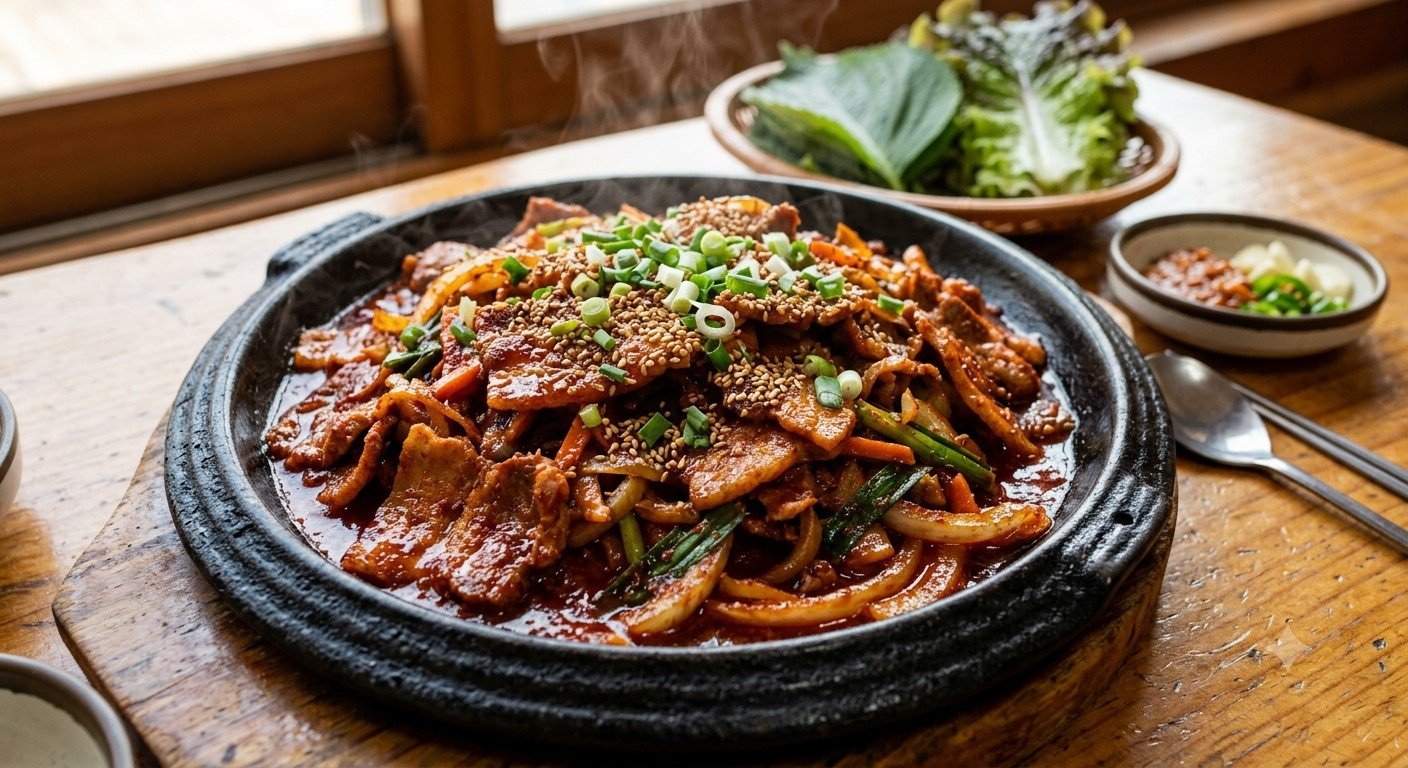
There is something irresistible about Jeyuk Bokkeum: thin slices of pork sizzling in a glossy red sauce that is spicy, savory, sweet, and deeply aromatic. This beloved Korean stir-fry delivers restaurant-worthy flavor in under 40 minutes, making it an ideal weeknight dinner for anyone craving bold Korean comfort food.
📜 The History of Jeyuk Bokkeum
Jeyuk Bokkeum (제육볶음) translates roughly to “stir-fried pork” in Korean. It is a popular everyday dish throughout South Korea, especially in casual restaurants, school cafeterias, and home kitchens. Its signature red color and warming heat come from gochujang, Korea’s fermented red chili paste, along with gochugaru chili flakes.
Traditionally, Korean cooks marinate pork in a balance of spicy chili paste, soy sauce, garlic, ginger, sesame oil, and a touch of sweetness. The pork is then stir-fried quickly at high heat with onions and vegetables. Served with steamed rice, crisp lettuce leaves, and kimchi, Jeyuk Bokkeum is a classic example of how Korean cuisine layers heat, umami, and freshness in one satisfying meal.
🍳 Jeyuk Bokkeum Recipe: Ingredients
- 1½ pounds thinly sliced pork shoulder or pork belly
- 1 medium onion, thinly sliced
- 1 small carrot, cut into thin matchsticks
- 2 green onions, cut into 2-inch pieces
- 1 tablespoon neutral cooking oil
- 1 tablespoon toasted sesame seeds, for garnish
For the Spicy Korean Marinade 🌶️
- 3 tablespoons gochujang (Korean red chili paste)
- 1 tablespoon gochugaru (Korean red pepper flakes)
- 2 tablespoons soy sauce
- 1½ tablespoons honey or brown sugar
- 1 tablespoon rice wine or mirin
- 1 tablespoon sesame oil
- 4 garlic cloves, minced
- 1 teaspoon freshly grated ginger
- ½ teaspoon black pepper
🔥 How to Make Korean Spicy Stir-Fried Pork
- Slice the pork. Cut pork shoulder or pork belly into thin, bite-size strips. Slightly freezing the pork for 15 to 20 minutes first makes slicing easier and more even.
- Mix the marinade 🥣 In a large bowl, whisk together gochujang, gochugaru, soy sauce, honey, rice wine, sesame oil, garlic, ginger, and black pepper until smooth.
- Marinate for deeper flavor. Add the pork to the bowl and toss thoroughly until every piece is coated in the red marinade. Let it rest for at least 20 minutes, or refrigerate for up to 8 hours.
- Heat the pan 🔥 Place a large skillet, wok, or cast-iron pan over medium-high heat. Add the neutral oil and allow it to shimmer.
- Stir-fry the pork. Add the marinated pork in a single layer, working in batches if necessary. Cook for 5 to 7 minutes, stirring often, until browned at the edges and cooked through.
- Add vegetables 🧅 Stir in the onion and carrot. Cook for 3 to 4 minutes until tender-crisp, then add the green onions for the final minute.
- Finish and serve. Sprinkle with sesame seeds and serve immediately with hot rice, kimchi, lettuce wraps, or perilla leaves. For an authentic Korean table, add a spoonful of ssamjang on the side.
🌿 Health Benefits and Smart Cooking Tips
Jeyuk Bokkeum is rich in protein, iron, and B vitamins from pork, while garlic, ginger, and chili peppers contribute flavorful plant compounds. Gochujang also provides fermented depth, allowing you to use less heavy sauce or added fat.
- Choose pork shoulder for a balanced, juicy result with less richness than pork belly.
- Control the heat: Use less gochugaru for a milder dish, or add an extra teaspoon for a fiery version.
- Avoid crowding the pan: High heat and space are essential for caramelized edges rather than steamed pork.
- Balance the meal: Serve with brown rice, shredded cabbage, cucumber salad, or lettuce wraps for extra fiber and freshness.
❓ Jeyuk Bokkeum FAQ
What is the best cut of pork for Jeyuk Bokkeum?
Pork shoulder, also called Boston butt, is the best all-around choice because it stays tender and flavorful during stir-frying. Pork belly creates a richer, fattier result, while pork loin can work if sliced very thinly and cooked quickly.
Can I make Jeyuk Bokkeum ahead of time?
Yes. The pork can marinate in the refrigerator for up to 8 hours, making it an excellent make-ahead Korean dinner. Cooked leftovers keep well for 3 days in an airtight container and reheat beautifully in a skillet.
What can I substitute for gochujang?
For the closest alternative, combine miso paste, sriracha, a little honey, and a pinch of chili powder. However, authentic gochujang has a fermented, savory-sweet character that is difficult to duplicate exactly, so it is worth seeking out.
Is Jeyuk Bokkeum very spicy?
It is usually medium to hot, but the spice level is flexible. Reduce the gochugaru and use a mild gochujang for a gentler version. Serve with rice and lettuce wraps to soften the heat naturally.
What should I serve with Korean spicy pork?
Steamed short-grain rice, kimchi, lettuce leaves, cucumber salad, and Korean pickled radish are classic choices. A cold beer, barley tea, or sparkling water with citrus also pairs well with the dish’s savory heat.
Recommended Ingredients 🌶️
Bring authentic Korean flavor to your kitchen with fresh gochujang, gochugaru, sesame oil, and pantry staples selected for this spicy pork recipe.
Recommended Kitchen Tools 🍳
A spacious wok, heavy skillet, or cast-iron pan helps create the high-heat caramelization that makes Jeyuk Bokkeum especially delicious.
👉 Check Out Essential Cooking Tools on Amazon
* Disclaimer: As an Amazon Associate, I earn from qualifying purchases at no additional cost to you.
TAGS: #JeyukBokkeum, #KoreanFood, #SpicyPork, #Gochujang, #EasyDinner
Leave a Reply