
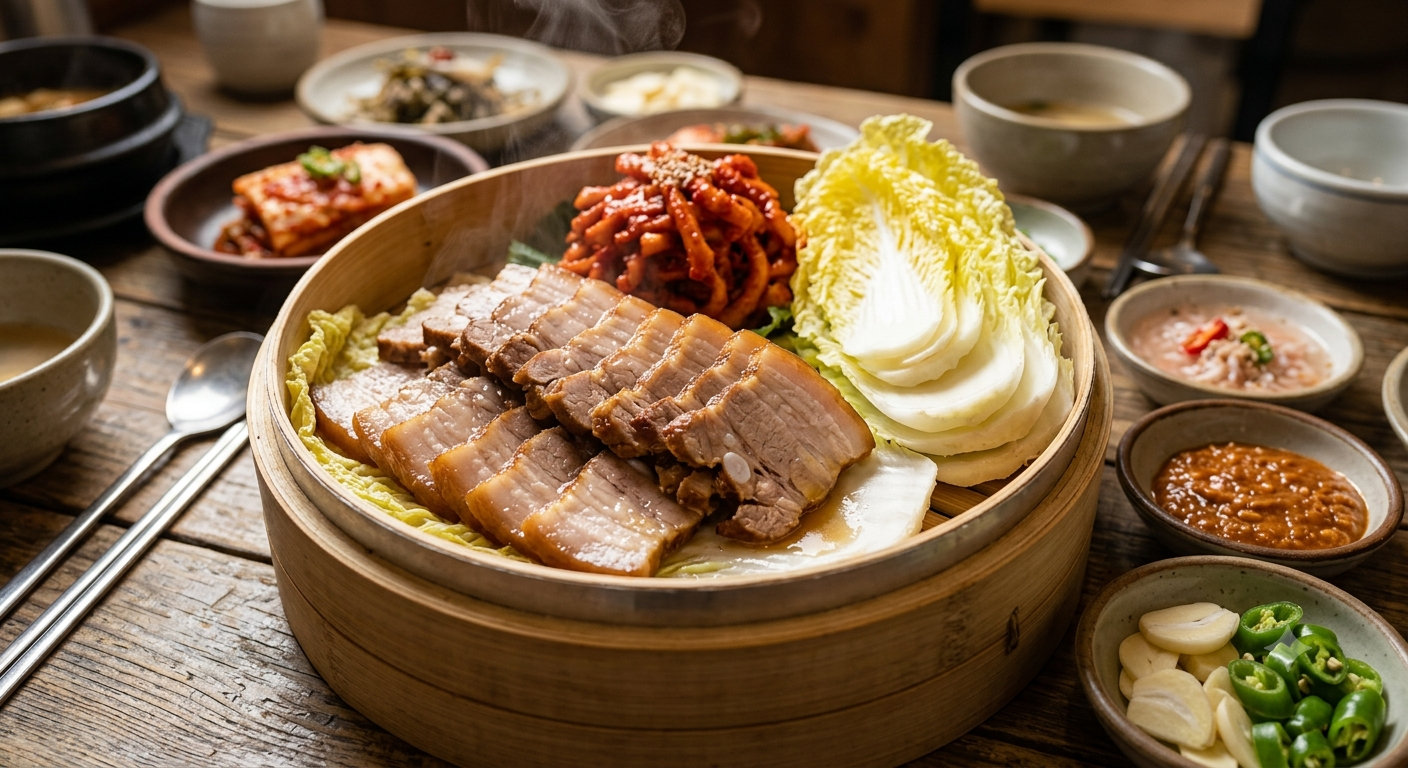
Bossam: Korean Boiled Pork Wraps with Fresh Oyster Kimchi 🥬
Silky, tender pork belly wrapped in crisp napa cabbage, bright kimchi, and savory fermented sauces: Bossam is one of Korea’s most comforting and celebratory shared dishes. The name means “wrapped” or “bundled,” and every bite delivers a satisfying contrast of rich pork, refreshing vegetables, spicy kimchi, and aromatic garlic.
This approachable Korean bossam recipe creates restaurant-style results at home with gently simmered pork and a vibrant serving platter. It is ideal for family dinners, weekend gatherings, or anyone craving an authentic Korean pork belly meal.
📜 The History of Bossam
Bossam has deep roots in Korean home cooking and communal dining culture. Traditionally, pork was simmered with aromatics such as ginger, garlic, soybean paste, coffee, and onion to remove excess richness while keeping the meat exceptionally tender. The cooked pork was then sliced and wrapped in baechu kimchi (napa cabbage kimchi), salted cabbage leaves, or fresh lettuce.
In Korea, bossam is especially associated with kimjang season, the late-autumn tradition of preparing large batches of kimchi for winter. Freshly made kimchi, often called geotjeori, is commonly served with bossam because its crisp, lively flavor beautifully balances the pork. Today, you can find bossam throughout Seoul and beyond, from casual neighborhood restaurants to festive family tables.
🛒 Ingredients for Authentic Bossam
- 2 pounds pork belly, skin-on or skinless
- 1 small onion, halved
- 8 garlic cloves, lightly crushed
- 1-inch piece fresh ginger, sliced
- 2 tablespoons doenjang (Korean soybean paste)
- 2 tablespoons instant coffee or brewed coffee
- 2 tablespoons rice wine or mirin
- 1 tablespoon brown sugar
- 1 teaspoon whole black peppercorns
- 1 napa cabbage, separated into leaves, or butter lettuce
- 1 cup napa cabbage kimchi
- ½ cup ssamjang (Korean dipping paste)
- Steamed rice, sliced raw garlic, green chilies, and salted shrimp sauce for serving
🍲 How to Make Bossam Step by Step
- Prepare the pork. Rinse the pork belly under cold water and pat it dry. If using a very large slab, cut it into two pieces so it fits comfortably in your pot.
- Build the aromatic broth. Place the pork in a large, heavy-bottomed pot. Add onion, garlic, ginger, doenjang, coffee, rice wine, brown sugar, and peppercorns. Pour in enough water to cover the pork by about 1 inch.
- Bring to a gentle simmer. 🔥 Bring the pot to a boil over medium-high heat. Once boiling, reduce the heat to low. Skim away any foam that rises to the surface for a cleaner broth and pork flavor.
- Simmer until tender. Cover partially and cook for 75 to 90 minutes. The pork is ready when a chopstick or knife slides in easily, but the meat still holds its shape. Avoid a hard boil, which can make the pork greasy and less delicate.
- Rest before slicing. ⏳ Transfer the pork to a cutting board and let it rest for 10 minutes. This short resting period helps retain its flavorful juices.
- Prepare the wraps. Rinse and dry napa cabbage or lettuce leaves. Arrange them on a platter with kimchi, ssamjang, sliced garlic, chilies, rice, and salted shrimp sauce.
- Slice and serve. 🥢 Slice the pork belly against the grain into thin, bite-sized pieces. To assemble a bossam wrap, layer a cabbage leaf with pork, kimchi, a small spoonful of ssamjang, and rice if desired. Fold, wrap, and enjoy immediately.
🌿 Health Benefits and Practical Bossam Tips
Bossam can be a wonderfully balanced meal when served with plenty of vegetables. Pork provides protein, iron, zinc, and B vitamins, while napa cabbage, lettuce, garlic, and kimchi add fiber and valuable plant nutrients. Fermented kimchi may also support a diverse gut microbiome, although it can be high in sodium.
- Choose quality pork: Pork belly is classic, but pork shoulder offers a leaner, equally flavorful alternative.
- Do not skip the doenjang: Korean soybean paste adds deep umami and helps create the signature bossam aroma.
- Serve pork warm: Bossam tastes best when the slices are warm and tender, paired with cool, crisp vegetables.
- Balance the richness: Add fresh radish kimchi, cucumber sticks, or perilla leaves for extra freshness.
❓ Bossam FAQ
What is the best cut of pork for bossam?
Pork belly is the traditional and most popular cut for bossam because its layers of fat and meat become buttery when simmered. For a less rich option, use pork shoulder (Boston butt) and simmer it until fork-tender.
Can I make bossam ahead of time?
Yes. Cook the pork up to two days ahead, cool it in some of its cooking liquid, and refrigerate it in an airtight container. Reheat gently in the broth or steam slices briefly before serving. Prepare fresh cabbage leaves and wraps just before eating.
What can I substitute for doenjang in bossam?
The closest substitute is Japanese miso paste, preferably a darker variety. Use the same amount, but expect a slightly sweeter and milder flavor. Doenjang remains the best choice for an authentic Korean bossam taste.
Do I need coffee for Korean boiled pork belly?
No, but coffee is a traditional home-cooking trick that can help reduce porky aromas and add subtle depth. Use instant coffee, brewed coffee, or simply omit it if preferred; ginger, garlic, and doenjang will still create a delicious broth.
What do you eat with bossam?
Bossam is typically served with napa cabbage kimchi, ssamjang, salted shrimp sauce, garlic, green chilies, steamed rice, and sometimes oysters. Freshly made kimchi and radish kimchi are especially delicious partners.
🥬 Recommended Ingredients
Bring authentic Korean flavor to your table with fresh pork belly, quality doenjang, ssamjang, and vibrant napa cabbage kimchi.
🍲 Recommended Kitchen Tools
A sturdy Dutch oven or large stockpot, sharp slicing knife, and serving platter make homemade bossam easier, neater, and more enjoyable.
👉 Check Out Essential Cooking Tools on Amazon
* Disclaimer: As an Amazon Associate, I earn from qualifying purchases at no additional cost to you.
TAGS: #Bossam, #KoreanFood, #PorkBelly, #KoreanRecipe, #Kimchi
Leave a Reply