
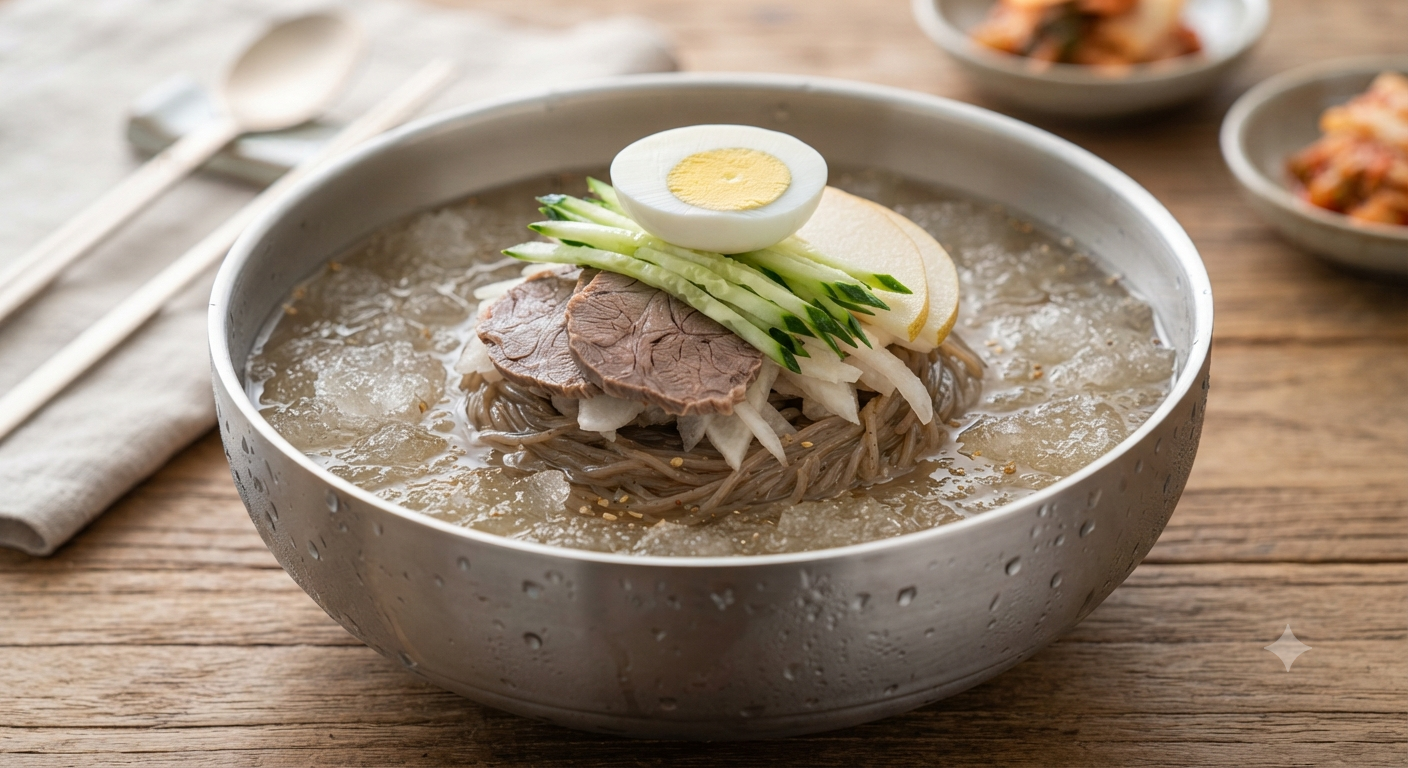
Naengmyeon: Refreshing Korean Cold Noodles for Hot Summer Days 🍜❄️
Few dishes deliver summer relief as beautifully as naengmyeon, Korea’s famously icy cold noodle soup. With chewy buckwheat noodles, a brisk tangy broth, crisp cucumber, tender beef, and a cool half-boiled egg, this dish is a complete sensory reset in a bowl. One slurp brings savory, sour, sweet, and deeply refreshing flavors together—perfect for humid afternoons or whenever you crave something lighter than a steaming bowl of soup.
📜 The History of Naengmyeon
Naengmyeon originated in northern Korea, particularly the regions around Pyongyang and Hamhung. Historically, it was enjoyed during winter rather than summer, when naturally chilled broth and ice were readily available. Pyongyang naengmyeon is known for its clear, mild beef-based broth and buckwheat noodles, while Hamhung naengmyeon often features chewy potato or sweet-potato starch noodles tossed in a spicy red sauce.
Today, mul naengmyeon—the chilled broth version—is beloved across Korea and around the world. Restaurants often serve it in a cold metal bowl with floating ice, making it one of the most iconic Korean summer foods.
🥣 Easy Mul Naengmyeon Recipe
This home-friendly recipe makes two satisfying servings of classic Korean cold noodle soup. For the most authentic result, chill every component thoroughly before assembling.
Ingredients
- 2 portions Korean naengmyeon noodles (buckwheat or starch noodles)
- 4 cups chilled beef broth or Korean naengmyeon broth
- 2 tablespoons Korean radish kimchi brine or dongchimi liquid
- 1 tablespoon rice vinegar
- 1 to 2 teaspoons sugar, to taste
- 1 teaspoon soy sauce
- 1 small cucumber, thinly julienned
- 1 small Korean radish or daikon, thinly sliced and lightly pickled
- 4 thin slices cooked beef brisket or bulgogi-style beef
- 1 hard-boiled egg, halved
- 1 tablespoon toasted sesame seeds
- Yellow mustard and extra vinegar, for serving
- Ice cubes, optional but highly recommended
👩🍳 Step-by-Step: How to Make Naengmyeon
- Chill the broth thoroughly ❄️
In a large bowl or jug, combine the beef broth, kimchi brine, rice vinegar, sugar, and soy sauce. Stir until the sugar dissolves. Taste and adjust for a balanced sweet-sour-savory flavor. Refrigerate for at least 1 hour, or place in the freezer for 20 to 30 minutes until very cold but not frozen solid. - Prepare the toppings 🥒
Julienne the cucumber and slice the pickled radish. Arrange the cooked beef, egg halves, sesame seeds, and toppings on a plate. Keep everything chilled until serving. - Cook the noodles carefully 🍜
Bring a large pot of water to a rapid boil. Add the naengmyeon noodles and cook according to the package instructions, usually 2 to 4 minutes. Stir gently to prevent the noodles from clumping. - Rinse until icy cold 💧
Drain the noodles immediately and rinse them under cold running water. Rub and lift the noodles with your hands to remove excess starch. Finish with an ice-water rinse for the signature springy texture. - Shape the noodle nest
Divide the drained noodles between two deep bowls. Twist them into neat mounds, which makes the dish easier to eat and gives it a restaurant-style presentation. - Assemble and serve ✨
Pour the ice-cold broth over the noodles. Top with cucumber, pickled radish, beef, egg, and sesame seeds. Add a few ice cubes if desired. Serve immediately with yellow mustard and vinegar on the side.
🌿 Health Benefits and Smart Serving Tips
Naengmyeon can be a refreshing balanced meal when made with quality ingredients. Buckwheat noodles may provide fiber, magnesium, and plant compounds, while cucumber and radish add hydration and crunch. Lean beef contributes protein, and the egg offers satisfying nutrients.
- Watch the sodium: Packaged broth can be salty, so dilute it with unsalted beef broth or cold water if needed.
- Use real buckwheat noodles: Look for noodles with a higher buckwheat content for a nuttier flavor and more traditional character.
- Make it vegetarian: Replace beef broth with chilled kombu-shiitake stock and omit the beef topping.
- Serve immediately: The noodles soften as they sit, so assemble only when everyone is ready to eat.
❓ Naengmyeon FAQ
What is the difference between mul naengmyeon and bibim naengmyeon?
Mul naengmyeon is served in a cold, clear, tangy broth. Bibim naengmyeon is a brothless version mixed with a spicy gochujang-based sauce. Both use chewy Korean cold noodles, but mul naengmyeon is more cooling and subtly flavored.
What are the best noodles for authentic naengmyeon?
Traditional Pyongyang-style naengmyeon uses thin noodles made with buckwheat flour, often blended with starch for elasticity. Hamhung-style noodles are typically made with potato or sweet-potato starch and have a chewier bite. Choose buckwheat noodles for a milder, nuttier bowl.
Can I make naengmyeon broth ahead of time?
Yes. The broth is ideal for making ahead because it needs to be very cold. Prepare it up to two days in advance, store it in an airtight container, and keep it refrigerated. For an extra-frosty bowl, partially freeze the broth until small ice crystals form.
Can I substitute the beef in naengmyeon?
Absolutely. Try sliced chicken, tofu, roasted mushrooms, or skip the protein entirely. A vegetarian broth with cucumber, radish, pear, and egg still creates a deliciously authentic-style cold noodle bowl.
Why are my naengmyeon noodles too soft?
Overcooking is usually the cause. Cook the noodles only until just tender, then rinse them aggressively in cold water. The ice-water rinse is essential for preserving the firm, bouncy naengmyeon texture.
🥬 Recommended Ingredients
Bring authentic Korean flavor to your table with premium buckwheat noodles, chilled naengmyeon broth, toasted sesame seeds, and quality kimchi brine.
🍲 Recommended Kitchen Tools
A deep noodle bowl, fine-mesh strainer, large stockpot, and sharp julienne slicer make homemade naengmyeon faster, cleaner, and more enjoyable to prepare.
👉 Check Out Essential Cooking Tools on Amazon
* Disclaimer: As an Amazon Associate, I earn from qualifying purchases at no additional cost to you.
TAGS: #Naengmyeon, #KoreanFood, #ColdNoodles, #SummerRecipes, #KoreanCuisine
Leave a Reply