
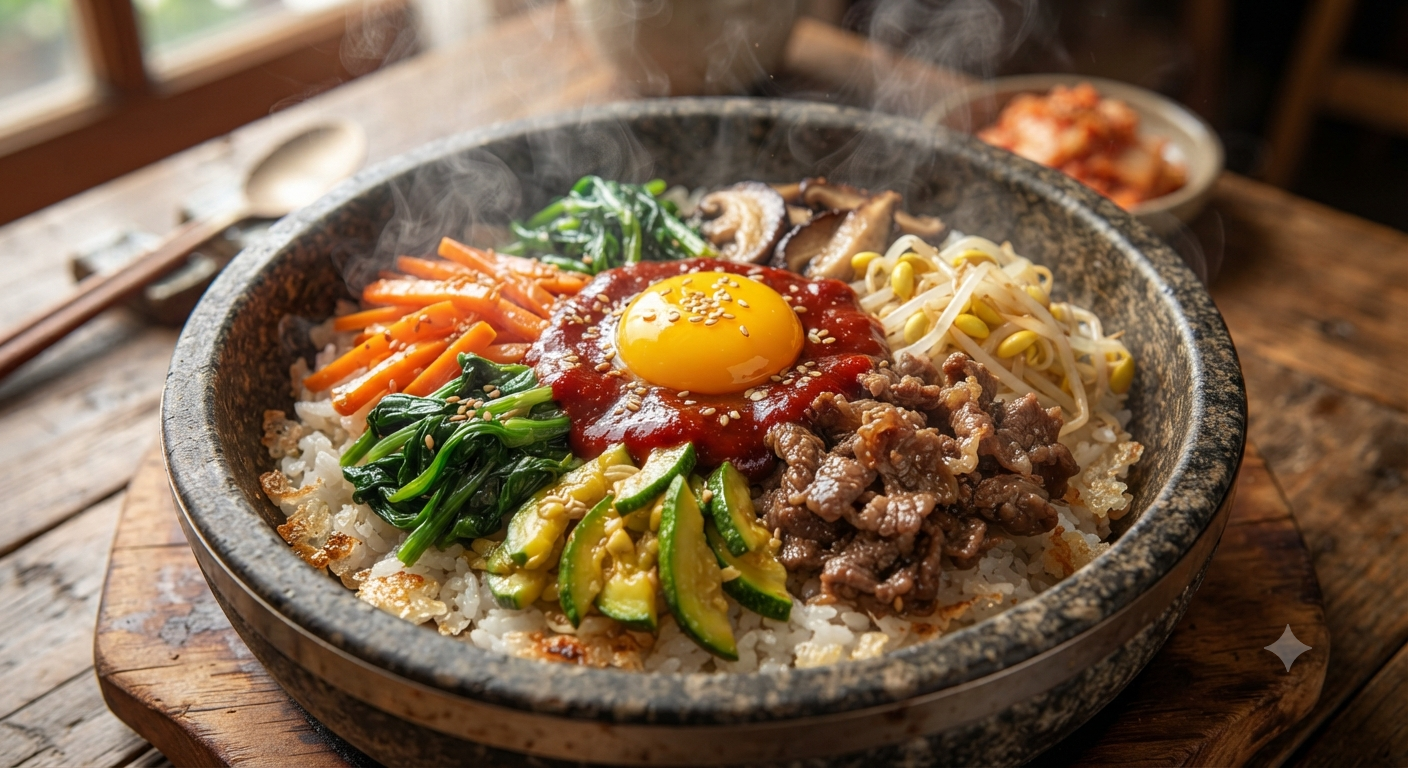
Few dishes capture the spirit of Korean cooking as beautifully as bibimbap, a vibrant rice bowl layered with seasoned vegetables, savory protein, spicy gochujang, and a sunny egg. Its name literally means “mixed rice,” but bibimbap is far more than a simple bowl: it is a delicious celebration of color, texture, and balance. Whether served in a warm bowl or sizzling in a stone pot, this authentic Korean bibimbap recipe is easy to customize for weeknight dinners, meal prep, or a memorable Korean-inspired feast.
📜 The History of Bibimbap
Bibimbap has deep roots in Korean culinary history. While its exact origins are debated, historians commonly connect the dish to the Joseon Dynasty, when leftover side dishes, known as banchan, were mixed with rice to create a practical and nourishing meal. Another tradition links bibimbap with ancestral rites, when families combined ceremonial foods after memorial gatherings rather than wasting them.
Today, bibimbap is enjoyed throughout South Korea and around the world. The city of Jeonju is particularly famous for its luxurious version, Jeonju bibimbap, often made with premium rice, beef tartare or cooked beef, and a generous selection of vegetable toppings. The iconic dolsot bibimbap is served in a heated stone bowl, creating an irresistible layer of crispy golden rice at the bottom.
🥢 Easy Homemade Bibimbap Recipe
This recipe makes two generous bowls. The best part? You can adjust the vegetables and protein according to what is fresh, seasonal, or already in your refrigerator.
Ingredients
- 2 cups cooked short-grain rice, warm
- 200 g thinly sliced beef, tofu, chicken, or mushrooms
- 1 small zucchini, cut into thin matchsticks
- 1 carrot, cut into thin matchsticks
- 2 cups spinach
- 1 cup bean sprouts
- 1 cup shiitake mushrooms, sliced
- 2 eggs
- 2 tablespoons sesame oil
- 2 tablespoons soy sauce
- 2 cloves garlic, minced
- Sesame seeds and sliced green onion, for garnish
Quick Gochujang Sauce
- 2 tablespoons gochujang Korean chili paste
- 1 tablespoon sesame oil
- 1 tablespoon rice vinegar
- 1 teaspoon honey or sugar
- 1 teaspoon sesame seeds
👩🍳 Step-by-Step Preparation
- Cook the rice 🍚: Prepare short-grain rice according to package instructions. Keep it warm and slightly sticky, as this creates the classic bibimbap texture.
- Mix the sauce 🌶️: Stir together gochujang, sesame oil, rice vinegar, honey, and sesame seeds in a small bowl. Taste and add a little water if you prefer a thinner sauce.
- Season the protein 🥩: Toss the beef, tofu, chicken, or mushrooms with 1 tablespoon soy sauce, half the garlic, and a few drops of sesame oil. Cook in a hot skillet until browned and fully cooked. Set aside.
- Prepare the vegetables 🥬: Cook each vegetable separately in a lightly oiled pan. Sauté zucchini and carrots for 2 to 3 minutes until tender-crisp. Cook mushrooms with the remaining soy sauce and garlic. Blanch spinach and bean sprouts briefly, then drain well and season with a little sesame oil and salt.
- Fry the eggs 🍳: Fry two eggs until the whites are set but the yolks remain runny. A soft yolk adds a rich, silky finish when everything is mixed together.
- Build the bowls 🌈: Divide warm rice between two large bowls. Arrange the vegetables and protein in neat sections around the rice, creating a colorful presentation. Place one fried egg in the center of each bowl.
- Finish and mix ✨: Add a spoonful of gochujang sauce, sprinkle with sesame seeds and green onion, then drizzle lightly with sesame oil. Before eating, mix everything thoroughly so every bite gets a little rice, sauce, vegetables, and protein.
💚 Health Benefits and Smart Bibimbap Tips
Bibimbap is often considered one of the healthiest Korean meals because it combines fiber-rich vegetables, satisfying carbohydrates, protein, and healthy fats in one bowl. Spinach and carrots provide vitamins A and C, mushrooms offer antioxidants, and sesame oil contributes heart-friendly unsaturated fats. Using brown rice, quinoa, or cauliflower rice can add even more fiber or suit different dietary preferences.
For a vegetarian bibimbap, use crispy tofu, tempeh, or extra mushrooms instead of meat. For a vegan version, skip the egg and add avocado, edamame, or marinated tofu. If you are watching sodium, use reduced-sodium soy sauce and serve the gochujang sauce on the side. Most importantly, keep the toppings colorful: a wider range of colors usually means a broader mix of nutrients.
Pro tip: Do not rush the mixing stage. Bibimbap becomes truly special when the spicy sauce, runny egg yolk, fragrant sesame oil, and crisp vegetables are fully combined into one comforting, flavor-packed bowl.
🍳 Make Every Pajeon Extra Crispy
A reliable nonstick skillet, quality toasted sesame oil, and a sharp kitchen knife make preparing Seafood Pajeon faster, easier, and more delicious. Explore practical Korean cooking essentials and pantry staples for your next homemade feast.
👉 Check Out Recommended Products on Amazon
* Disclaimer: As an Amazon Associate, I earn from qualifying purchases at no additional cost to you.
TAGS: #Bibimbap, #KoreanFood, #KoreanRecipe, #HealthyDinner, #Gochujang
Leave a Reply