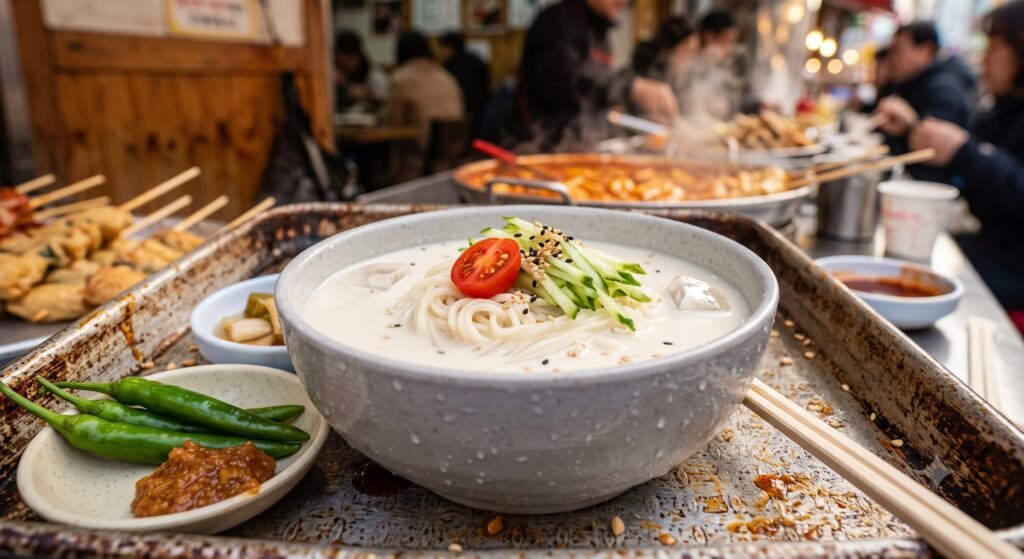
Kongguksu: Refreshing Korean Chilled Soy Milk Noodle Soup with Creamy Nutty Depth
When summer heat calls for something cool, silky, and deeply satisfying, Kongguksu answers with a bowl of pure comfort. This beloved Korean chilled noodle soup combines thin wheat noodles with a creamy soy milk broth that is nutty, lightly savory, and wonderfully refreshing. Topped with crisp cucumber, tomato, and a few ice cubes, it is a simple dish with remarkable depth. 🥢❄️
📜 The History of Kongguksu
Kongguksu (콩국수) literally means “soybean noodles” in Korean: kong means soybean, while guksu means noodles. The dish has long been enjoyed in Korea as a cooling seasonal meal, especially during boknal, the hottest days of the Korean summer.
Traditionally, dried soybeans are soaked, cooked, and blended with water until smooth, creating a naturally creamy broth without dairy. In many Korean homes, families add toasted sesame seeds, pine nuts, or walnuts for a richer texture. The final seasoning is intentionally minimal—often just salt—allowing the clean, earthy flavor of soybeans to shine. Today, Kongguksu remains a staple at Korean noodle shops and home kitchens, prized for its nourishing simplicity and cool, velvety finish.
🍜 Authentic Kongguksu Recipe
This easy homemade Kongguksu recipe serves 2 and delivers a chilled, restaurant-style bowl with a creamy, nutty soy broth.
Ingredients
- 1 cup dried soybeans
- 3 to 3½ cups cold water, plus more for soaking
- 2 tablespoons toasted sesame seeds
- 1 tablespoon pine nuts or walnuts, optional
- ½ teaspoon fine sea salt, plus more to taste
- 7 ounces Korean somyeon (thin wheat noodles)
- ½ small cucumber, julienned
- 1 small tomato, sliced or cut into wedges
- 2 hard-boiled eggs, halved
- Ice cubes, for serving
👩🍳 Step-by-Step: How to Make Kongguksu
-
Soak the soybeans overnight. 🫘 Rinse the dried soybeans thoroughly, place them in a large bowl, and cover with plenty of cold water. Soak for 8 to 12 hours. The beans will expand significantly, so use extra water.
-
Cook the soybeans. Drain the soaked beans and transfer them to a pot. Cover with fresh water, bring to a boil, then reduce the heat and simmer for 20 to 25 minutes, until tender. Skim off foam as needed. Drain and rinse under cold water.
-
Remove soybean skins for a smoother broth. Gently rub the cooked soybeans between your hands in a bowl of water. The loose skins will float to the surface. Discard the skins. This step is optional, but it gives your Korean soy milk noodle soup a silkier texture.
-
Blend the chilled soy broth. 🥛 Add the cooked soybeans, 3 cups of cold water, toasted sesame seeds, optional pine nuts, and salt to a high-speed blender. Blend for 1 to 2 minutes until exceptionally smooth. Add a little more cold water if you prefer a thinner broth.
-
Chill thoroughly. Refrigerate the soy milk broth for at least 30 minutes. For the coldest, most refreshing result, place the blender jar in the refrigerator while you prepare the toppings.
-
Cook and rinse the noodles. 🍜 Bring a large pot of water to a boil. Cook somyeon according to package directions, usually 3 to 4 minutes. Stir often to prevent sticking. Drain immediately and rinse under very cold running water, rubbing the noodles gently until they are springy and cool.
-
Assemble the bowls. Divide the cold noodles between two bowls. Pour the chilled soy milk broth over the noodles. Add cucumber, tomato, egg halves, and a few ice cubes.
-
Season and enjoy. ✨ Serve immediately with extra salt on the side. Korean diners often season Kongguksu to taste, so begin lightly and adjust until the nutty soy flavor feels balanced.
💚 Health Benefits and Smart Serving Tips
Kongguksu is naturally rich in plant-based protein, fiber, iron, and beneficial unsaturated fats. Soybeans also provide isoflavones, naturally occurring compounds associated with heart-conscious eating patterns. Because the broth is dairy-free, this dish can be an excellent creamy noodle option for people avoiding milk products.
- For extra creaminess: Add a few pine nuts, cashews, or walnuts while blending.
- For a gluten-free bowl: Replace somyeon with rice noodles or chilled buckwheat noodles.
- For better texture: Rinse cooked noodles very well in cold water; this removes excess starch and keeps them pleasantly chewy.
- For a quicker version: Use unsweetened plain soy milk, but blend it with sesame seeds and cooked soybeans if possible for authentic body and flavor.
❓ Kongguksu FAQ
What does Kongguksu taste like?
Kongguksu tastes mild, creamy, nutty, and clean rather than sweet. The soy broth has an earthy richness, while cucumber and tomato add freshness. Salt is essential because it brings out the natural flavor of the blended soybeans.
Can I make Kongguksu ahead of time?
Yes. Prepare the soy milk broth up to 2 days ahead and store it in an airtight container in the refrigerator. Shake or stir before serving, as natural separation may occur. Cook the noodles just before eating for the best texture.
Can I use store-bought soy milk for Kongguksu?
Yes, but choose unsweetened, unflavored soy milk. For a richer result, blend it with toasted sesame seeds, pine nuts, and a small handful of cooked soybeans. Avoid vanilla or sweetened soy milk, which will change the dish’s savory character.
What noodles are best for Korean cold soy milk noodles?
Thin Korean wheat noodles called somyeon are the traditional choice. They cook quickly and hold the creamy broth beautifully. Soba, rice noodles, or very thin spaghetti can work in a pinch, though the texture will be different.
Why is my Kongguksu broth grainy?
A grainy broth usually means the soybeans were not blended long enough or their skins were left on. Use a strong blender, blend longer than you think necessary, and strain the broth through a fine-mesh sieve if you want an ultra-smooth finish.
🥬 Recommended Ingredients
Bring authentic Korean flavor to your kitchen with quality dried soybeans, toasted sesame seeds, and delicate somyeon noodles for the creamiest homemade Kongguksu.
🔪 Recommended Kitchen Tools
A powerful blender is the secret to a smooth, luxurious soy broth. Explore reliable tools that make soaking, blending, and noodle prep easier.
👉 Check Out Essential Cooking Tools on Amazon
* Disclaimer: As an Amazon Associate, I earn from qualifying purchases at no additional cost to you.
TAGS: #Kongguksu, #KoreanFood, #ColdNoodles, #SoybeanRecipe, #SummerRecipes