Bungeoppang: Crispy Korean Fish-Shaped Pastry with Sweet Red Bean Paste 🐟
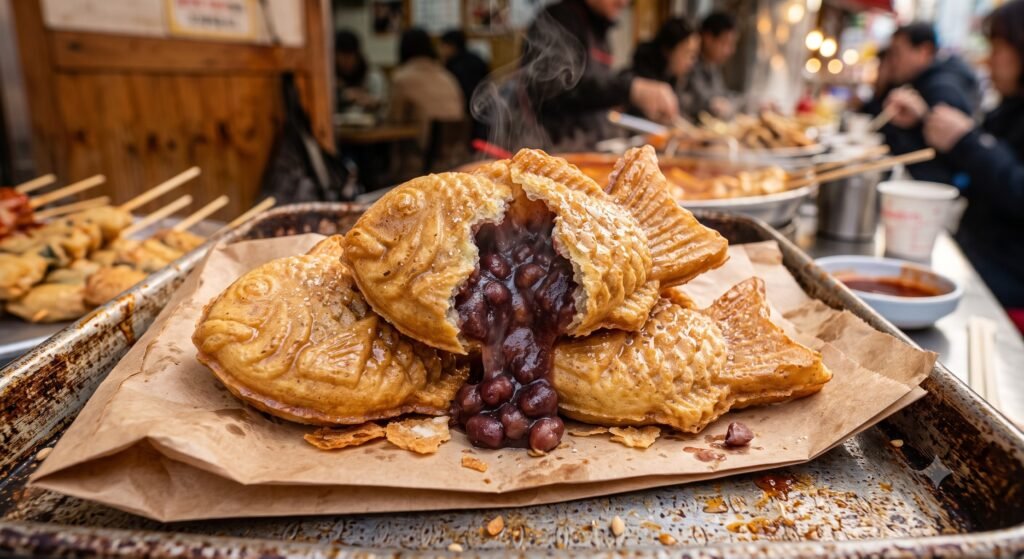
Few Korean street foods are as instantly charming as bungeoppang: a warm, fish-shaped pastry with a crisp golden shell and a comforting center of sweet red bean paste. Despite its playful appearance, this beloved winter snack delivers serious texture—lightly crisp at the edges, tender inside, and filled with earthy, gently sweet pat (red bean filling)..
Whether you remember buying one from a steaming Seoul street cart or are discovering it for the first time, homemade bungeoppang is a delicious way to bring classic Korean street-food flavor into your kitchen..
📜 The History of Korean Bungeoppang
Bungeoppang literally means “carp bread,” named after its fish-like shape rather than its ingredients. The pastry is closely related to Japanese taiyaki, which became known in Korea during the early twentieth century. Korean vendors adapted the treat using local tastes and made the sweet red bean filling especially popular.
By the postwar years, bungeoppang had become an affordable and familiar snack sold from portable stalls throughout South Korea. Today, it remains a nostalgic winter favorite, particularly in cities such as Seoul, Busan, and Incheon, where the aroma of batter sizzling in cast-iron molds signals a fresh batch nearby. While red bean remains the classic filling, modern vendors also offer custard, chocolate, pizza-style fillings, and even ice cream.
🧾 Ingredients for Classic Bungeoppang
- 1 cup all-purpose flour
- 2 tablespoons granulated sugar
- 1 teaspoon baking powder
- ¼ teaspoon salt
- 1 large egg
- ¾ cup milk
- 1 tablespoon neutral oil, plus more for greasing
- ¾ cup Korean sweet red bean paste (pat anggeum)
Equipment: A fish-shaped waffle pan or bungeoppang mold is essential for the traditional look. A taiyaki pan works beautifully, too.
👩🍳 How to Make Crispy Bungeoppang Step by Step
- Prepare the batter 🥣
In a medium bowl, whisk together flour, sugar, baking powder, and salt. In a separate bowl, whisk the egg, milk, and oil. Pour the wet mixture into the dry ingredients and stir until smooth. The batter should be pourable, similar to pancake batter. Let it rest for 10 minutes. - Heat and grease the mold 🔥
Preheat your fish-shaped pan over medium-low heat. Lightly brush both sides with oil. Proper preheating helps create the crisp, evenly browned exterior that makes bungeoppang irresistible. - Add the first layer of batter 🐟
Pour enough batter into each fish cavity to cover the bottom, including the tail and head. Do not overfill; the batter will spread once the mold is closed. - Fill with sweet red bean paste 🍥
Spoon about 1 to 1½ tablespoons of red bean paste into the center of each fish. Keep the filling away from the edges so the pastry seals properly. For a classic street-food experience, use smooth Korean-style red bean paste. - Seal with more batter
Add a small amount of batter over the filling, covering it completely. Close the mold firmly and cook for 2 to 3 minutes. - Flip and cook until golden ✨
Carefully flip the pan and cook for another 2 to 3 minutes. Check one pastry: it should be deep golden brown, crisp around the edges, and cooked through. Adjust the heat if it browns too quickly. - Serve hot and fresh 😋
Remove the bungeoppang from the mold and trim any excess batter, if needed. Enjoy immediately while the shell is crisp and the filling is warm.
🌿 Health Benefits and Smart Serving Tips
Traditional bungeoppang is a treat, but its red bean filling offers a few nutritional advantages. Adzuki beans provide plant-based protein, fiber, iron, and potassium. The fiber can help support fullness and steady digestion, especially compared with fillings made entirely from refined sugar.
- Use low-sugar red bean paste for a lighter homemade version.
- Replace up to half the all-purpose flour with whole-wheat flour for extra fiber.
- Keep the heat at medium-low; high heat burns the shell before the center cooks.
- Serve with unsweetened barley tea, green tea, or a warm latte.
- For the crispiest result, eat bungeoppang right after cooking rather than stacking it.
❓ Bungeoppang FAQ
What is the difference between bungeoppang and taiyaki?
Bungeoppang is the Korean fish-shaped pastry inspired by Japanese taiyaki. Both are often filled with sweet red bean paste, but bungeoppang commonly has a lighter, pancake-like batter, while taiyaki may have a denser waffle-style texture.
Can I make bungeoppang without a fish-shaped pan?
Yes. You can use a regular waffle maker, sandwich press, or small skillet to make red bean-filled cakes. The taste will be similar, although you will miss the traditional fish shape.
What can I use instead of sweet red bean paste?
Popular bungeoppang filling substitutions include pastry cream, Nutella, sweet potato puree, black sesame paste, mozzarella cheese, or apple-cinnamon filling. Use thick fillings so they do not leak from the pastry.
Can I make bungeoppang ahead of time?
Yes. Cooked bungeoppang can be refrigerated for up to 2 days or frozen for up to 1 month. Reheat in an oven, air fryer, or dry skillet until hot and crisp. Avoid microwaving if possible, as it softens the shell.
Why is my bungeoppang not crispy?
The most common causes are an underheated mold, too much batter, or stacking the pastries while hot. Preheat the pan fully, use a thin layer of batter, and place cooked pastries on a wire rack for a minute before serving.
🌱 Recommended Ingredients
Bring authentic Korean street-food flavor to your kitchen with smooth, sweet, bakery-ready red bean paste and quality pantry staples.
🍳 Recommended Kitchen Tools
A reliable fish-shaped waffle pan makes it easy to achieve the signature crisp shell, adorable shape, and evenly cooked filling of homemade bungeoppang.
👉 Check Out Essential Cooking Tools on Amazon
* Disclaimer: As an Amazon Associate, I earn from qualifying purchases at no additional cost to you.
TAGS: #Bungeoppang, #KoreanStreetFood, #RedBeanPaste, #KoreanDessert, #Taiyaki