Tteok-kkochi: Crispy Korean Street Food Rice Cake Skewers with Sweet & Spicy Glaze
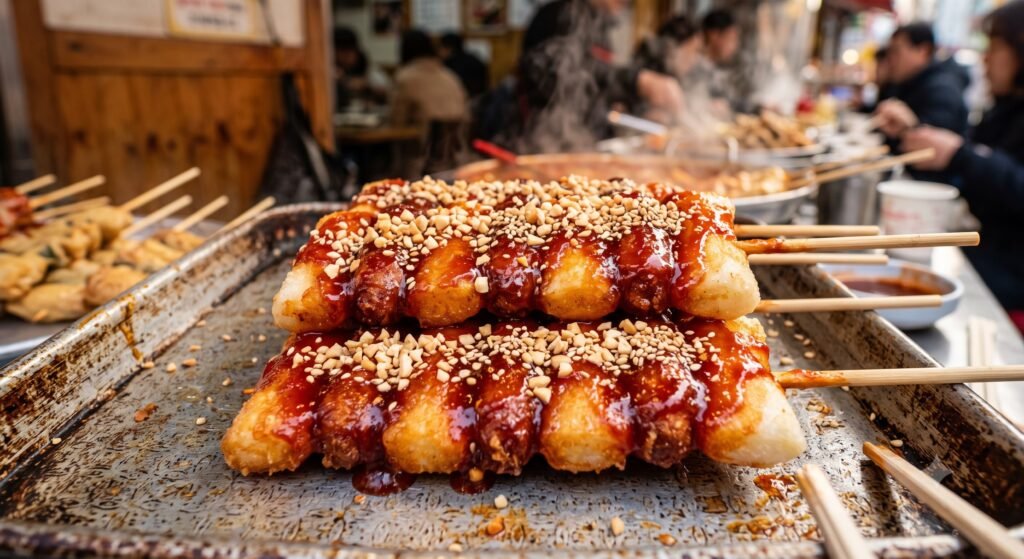
Few Korean street foods are as instantly comforting as tteok-kkochi: chewy rice cake skewers pan-fried until crisp at the edges, then lacquered in a glossy sweet, spicy, and savory sauce. Served hot from bustling market stalls in Seoul, these irresistible skewers deliver the perfect contrast of crunchy outside, bouncy center, and bold gochujang glaze..
📜 The Story Behind Korean Tteok-kkochi
Tteok-kkochi (떡꼬치) literally means “rice cake skewer” in Korean. It became especially popular as an affordable snack sold near schools, markets, and street-food carts throughout South Korea. The dish traditionally uses cylindrical garaetteok rice cakes, which are threaded onto bamboo sticks, fried or grilled, and brushed with a sauce that balances ketchup-like sweetness with the fermented heat of gochujang.
While modern Korean street vendors may offer cheese, soy-garlic, or extra-spicy versions, the classic sweet-and-spicy glaze remains the most beloved. This homemade recipe captures that nostalgic Korean snack-bar flavor with ingredients that are easy to find in international grocery stores or online.
🛒 Ingredients for Sweet & Spicy Tteok-kkochi
- 1 pound Korean cylindrical rice cakes (garaetteok or tteokbokki rice cakes)
- 6 to 8 bamboo skewers, soaked in water for 15 minutes
- 2 tablespoons neutral cooking oil
- 2 tablespoons gochujang (Korean red chili paste)
- 2 tablespoons ketchup
- 1 tablespoon soy sauce
- 1 tablespoon honey, rice syrup, or brown sugar
- 2 tablespoons water
- 1 teaspoon minced garlic
- 1 teaspoon toasted sesame oil
- 1 tablespoon toasted sesame seeds
- Optional: chopped scallions, crushed peanuts, or shredded mozzarella
🍢 How to Make Crispy Tteok-kkochi Step by Step
- Soften the rice cakes. If using refrigerated or frozen rice cakes, soak them in warm water for 10 to 15 minutes until flexible. Fresh rice cakes can usually be used immediately. Drain and pat dry thoroughly so they crisp instead of steaming.
- Thread the skewers. 🍡 Slide 3 to 4 rice cakes onto each soaked bamboo skewer. Leave a small amount of space between pieces so heat can circulate evenly during frying.
- Make the glaze. 🌶️ In a small bowl, whisk together gochujang, ketchup, soy sauce, honey, water, and garlic. The ketchup adds familiar sweetness, while gochujang gives the sauce its signature Korean fermented depth.
- Fry until golden. 🔥 Heat the oil in a wide skillet over medium heat. Add the skewers in a single layer and cook for 6 to 8 minutes, turning carefully every 1 to 2 minutes, until the rice cakes are lightly golden and crisp around the edges.
- Glaze the skewers. Lower the heat. Brush or spoon the sweet-spicy sauce over both sides of each skewer. Cook for 1 to 2 minutes, turning once, until the glaze bubbles and clings to the rice cakes.
- Finish and serve. ✨ Remove from the pan, drizzle with sesame oil, and scatter sesame seeds over the top. Add scallions, peanuts, or mozzarella if desired. Serve immediately while the outside is crisp and the center is deliciously chewy.
💚 Health Benefits & Smart Cooking Tips
Rice cakes are naturally gluten-free when made from rice alone, making tteok-kkochi a useful snack option for many gluten-conscious eaters. Gochujang contains fermented ingredients that bring complex flavor, while sesame seeds contribute small amounts of healthy fats, minerals, and plant-based protein.
- Control the heat: Use less gochujang and a little extra ketchup for a mild, kid-friendly glaze.
- For better crispness: Dry the rice cakes well before pan-frying and avoid overcrowding the skillet.
- Try an air fryer: Air-fry lightly oiled skewers at 390°F (200°C) for 8 to 10 minutes, then brush with warm sauce.
- Serve as a Korean snack platter: Pair with kimchi, Korean fried chicken, fish cakes, or cold barley tea.
❓ Tteok-kkochi FAQ
What type of rice cake is best for tteok-kkochi?
Long cylindrical garaetteok or tteokbokki rice cakes are best because they are easy to skewer and develop a crisp exterior while staying chewy inside. Avoid thin sliced rice cakes, which can break apart in the pan.
Can I make tteok-kkochi ahead of time?
You can prepare the sauce up to three days ahead and keep it refrigerated. For the best texture, fry and glaze the skewers just before serving. Leftovers can be reheated in an air fryer or skillet, though fresh tteok-kkochi is chewiest and crispiest.
What can I substitute for gochujang?
There is no exact substitute for gochujang’s fermented flavor, but you can combine sriracha or chili garlic sauce with a little miso paste and honey. The result will be tasty, though less traditionally Korean.
Are Korean rice cake skewers vegan?
Most plain rice cakes are vegan, and this recipe is vegan if you use sugar or rice syrup instead of honey. Always check packaged rice cakes, as some brands may contain additives or non-vegan ingredients.
Why are my rice cakes hard after cooking?
Rice cakes can become firm when cold or overcooked. Soak refrigerated or frozen rice cakes in warm water first, cook over medium heat, and serve immediately for the ideal soft and chewy texture.
Recommended Ingredients 🛒
Bring authentic Korean street-food flavor home with fresh garaetteok rice cakes, quality gochujang, and toasted sesame seeds.
Recommended Kitchen Tools 🍳
A sturdy nonstick skillet, heat-safe tongs, and durable bamboo skewers make these crispy rice cake skewers easy to cook and serve.
* Disclaimer: As an Amazon Associate, I earn from qualifying purchases at no additional cost to you.
TAGS: #TteokKkochi, #KoreanStreetFood, #RiceCakeSkewers, #Gochujang, #KoreanRecipes