
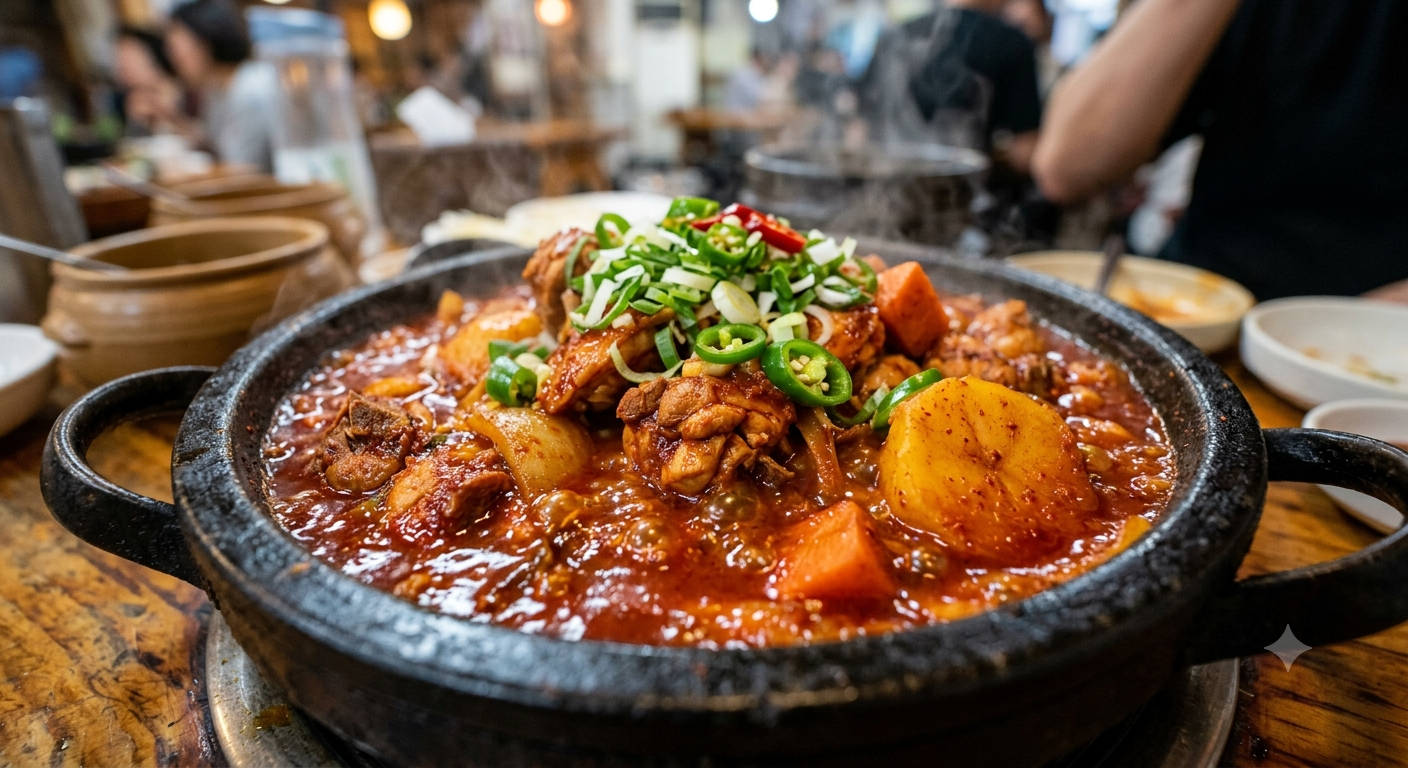
Few dishes capture the bold, comforting spirit of Korean home cooking like dakbokkeumtang. This fiery braised chicken stew combines tender chicken, soft potatoes, sweet vegetables, and a deeply savory red chile broth that warms you from the inside out. Also known as Korean spicy braised chicken, it is the kind of one-pot meal that turns an ordinary dinner into a memorable feast.
📜 The History and Tradition of Dakbokkeumtang
Dakbokkeumtang (닭볶음탕) is a beloved Korean comfort dish traditionally made by simmering chicken with potatoes, carrots, onions, and a chile-forward sauce. Its name roughly translates to “stir-fried chicken stew,” although the dish is primarily braised until the chicken becomes exceptionally tender.
Historically, chicken was often reserved for family gatherings, celebrations, and nourishing meals at home. Over time, dakbokkeumtang became a popular everyday dish throughout South Korea, especially during cooler months. The recipe reflects the classic Korean balance of spice, sweetness, garlic, and umami, usually created with gochujang, gochugaru, soy sauce, and sesame oil.
Today, this hearty Korean chicken stew is commonly served family-style with steamed rice, kimchi, and crisp vegetable side dishes called banchan.
🛒 Ingredients for Spicy Korean Braised Chicken Stew
- 2 pounds bone-in chicken thighs or drumsticks, cut into serving pieces
- 1 tablespoon neutral cooking oil
- 1 medium onion, cut into large chunks
- 3 medium potatoes, peeled and cut into bite-size pieces
- 1 medium carrot, cut into thick rounds
- 3 scallions, cut into 2-inch pieces
- 4 garlic cloves, minced
- 1 tablespoon grated fresh ginger
- 2 tablespoons gochujang (Korean red chile paste)
- 2 tablespoons gochugaru (Korean red chile flakes)
- 3 tablespoons soy sauce
- 1 tablespoon sugar or honey
- 1 tablespoon rice wine or mirin
- 2 1/2 cups chicken stock or water
- 1 teaspoon sesame oil
- 1 teaspoon toasted sesame seeds, optional
🍲 How to Make Dakbokkeumtang Step by Step
- Prepare the chicken. Pat the chicken dry with paper towels. If desired, briefly blanch the pieces in boiling water for 2 minutes, then drain and rinse. This classic Korean technique helps create a cleaner, clearer braising broth.
- Make the spicy sauce 🌶️. In a small bowl, mix the gochujang, gochugaru, soy sauce, sugar, rice wine, garlic, and ginger. Stir until smooth and fragrant.
- Brown the chicken. Heat the oil in a large Dutch oven or heavy pot over medium-high heat. Add the chicken and cook for 4 to 5 minutes, turning occasionally, until lightly browned.
- Add the aromatics and sauce. Add the onion and prepared sauce to the pot. Stir for about 1 minute, coating the chicken well. The sauce should smell rich, garlicky, and slightly smoky.
- Braise until tender ⏲️. Pour in the chicken stock. Bring to a boil, then reduce the heat to medium-low. Cover and simmer for 20 minutes.
- Add vegetables. Add the potatoes and carrots. Continue simmering uncovered for 20 to 25 minutes, or until the potatoes are fork-tender and the chicken reaches an internal temperature of 165°F (74°C).
- Finish and serve. Stir in the scallions and sesame oil during the final 2 minutes of cooking. Sprinkle with sesame seeds, then serve hot with fluffy steamed rice. For extra heat, add a pinch of gochugaru at the table.
💚 Health Benefits and Smart Cooking Tips
Dakbokkeumtang offers a satisfying balance of protein, vegetables, and warming spices. Chicken provides high-quality protein, while potatoes and carrots add filling carbohydrates, potassium, and fiber. Garlic and ginger contribute bold flavor without relying on excessive fat, and Korean chile peppers contain capsaicin, a natural compound associated with metabolism-supporting heat.
- Control the spice: Use 1 tablespoon of gochugaru for a milder stew, or add extra chile flakes for restaurant-style heat.
- Choose bone-in chicken: Bones add body and deeper flavor to the braising liquid.
- Do not over-stir: Stir gently after adding potatoes so they keep their shape.
- Serve with rice: Steamed short-grain rice softens the spice and soaks up the flavorful sauce.
❓ Dakbokkeumtang FAQ
What is the best chicken cut for dakbokkeumtang?
Bone-in chicken thighs and drumsticks are the best choices because they stay juicy during braising and create a richer broth. You can use boneless thighs, but reduce the cooking time so the meat does not dry out.
Can I make Korean spicy braised chicken ahead of time?
Yes. Dakbokkeumtang tastes even better the next day because the chile, garlic, and soy flavors deepen overnight. Store it in an airtight container in the refrigerator for up to 3 days, then reheat gently on the stovetop with a splash of water or stock.
What can I substitute for gochujang?
For the most authentic flavor, use gochujang. If unavailable, combine miso paste with a little sriracha or another chile paste, though the flavor will be less sweet and fermented. Add a small pinch of sugar to balance the substitute.
Can I make dakbokkeumtang less spicy?
Absolutely. Reduce the gochugaru by half and use a mild gochujang. Adding extra potatoes, onions, or a little more stock also softens the heat without sacrificing the stew’s savory character.
What should I serve with dakbokkeumtang?
Serve this Korean chicken stew with steamed rice, kimchi, cucumber salad, sautéed spinach, or roasted seaweed. A cold, crunchy side dish provides a delicious contrast to the hot, rich braise.
🥬 Recommended Ingredients
Bring authentic Korean flavor to your kitchen with fresh gochujang, aromatic gochugaru, sesame oil, and premium pantry staples for this comforting dakbokkeumtang recipe.
🍳 Recommended Kitchen Tools
A sturdy Dutch oven or heavy braising pot helps the chicken cook evenly and gives this Korean spicy chicken stew its rich, concentrated sauce.
👉 Check Out Essential Cooking Tools on Amazon
* Disclaimer: As an Amazon Associate, I earn from qualifying purchases at no additional cost to you.
TAGS: #Dakbokkeumtang, #KoreanFood, #SpicyChicken, #KoreanStew, #ComfortFood
Leave a Reply