
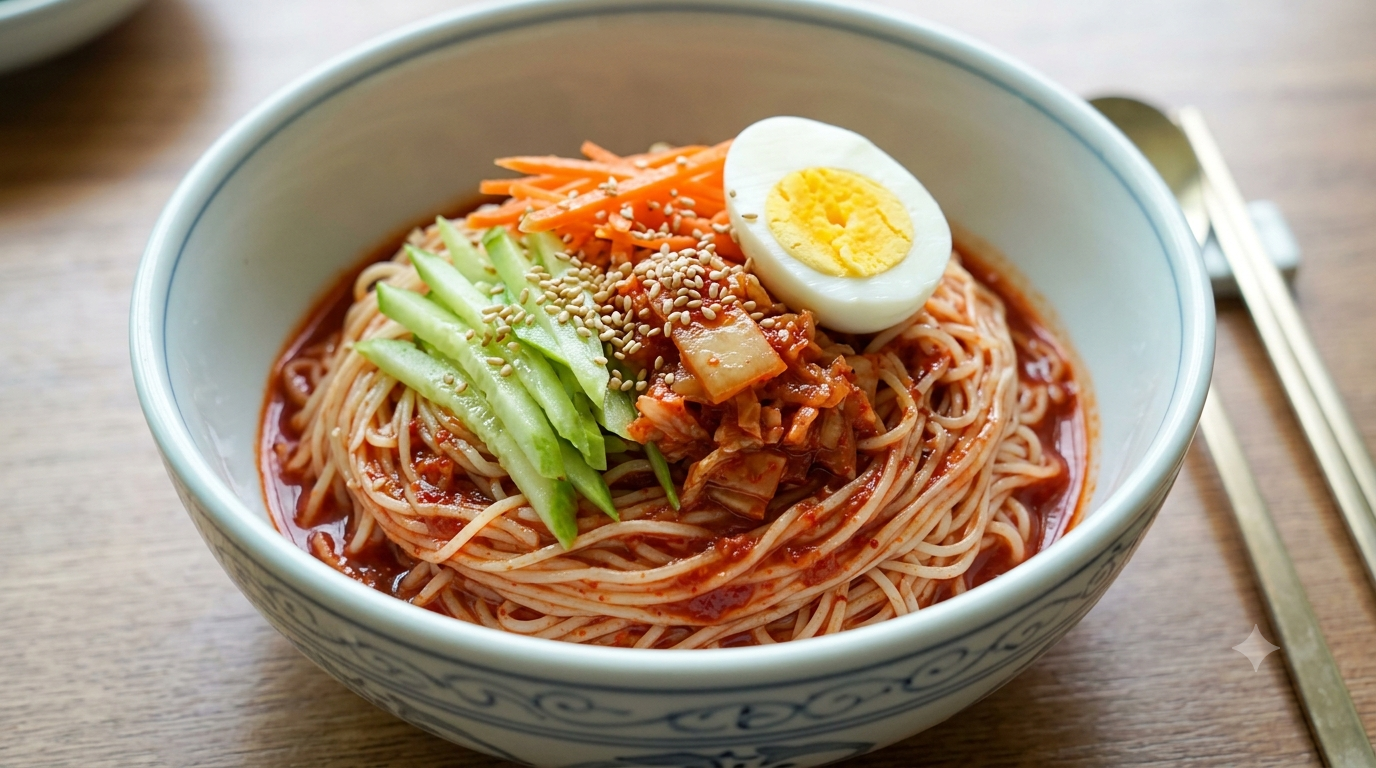
Bibim Guksu: Sweet, Tangy, and Spicy Korean Cold Mixed Noodles 🌶️🍜
When summer heat calls for something bright, bold, and instantly refreshing, Bibim Guksu answers with a lively kick. This beloved Korean cold noodle dish combines thin wheat noodles with a glossy red sauce that is sweet, tangy, savory, and spicy all at once. Finished with crisp cucumber, chewy egg, and toasted sesame seeds, it is the kind of fast, flavor-packed meal that makes an ordinary weekday feel like a Korean summer feast.
Ready in about 20 minutes, Korean spicy cold noodles are ideal for hot weather lunches, easy dinners, barbecue side dishes, or a satisfying late-night bowl. The secret is balance: spicy gochujang, sharp vinegar, a little sugar, and nutty sesame oil create a sauce that clings beautifully to chilled noodles.
📜 The History and Tradition of Bibim Guksu
Bibim means “mixed” in Korean, while guksu means “noodles.” Bibim Guksu is part of Korea’s wide family of mixed noodle dishes, valued for their flexibility, affordability, and bold seasoning. Although cold noodle traditions are especially associated with dishes such as naengmyeon, Bibim Guksu is generally simpler and more accessible, typically made with thin wheat noodles known as somyeon.
Its flavor profile reflects classic Korean pantry staples: fermented chili paste, sesame oil, garlic, soy sauce, and vinegar. In Korean homes, the dish is often prepared during warmer months when lighter meals feel especially welcome. It is also a smart way to use fresh seasonal vegetables, kimchi, or leftover protein. Today, Bibim Guksu is enjoyed around the world as a quick introduction to the vivid, craveable flavors of Korean cuisine.
🧾 Ingredients for Authentic Bibim Guksu
- 7 ounces (200 g) somyeon or thin wheat noodles
- 2 tablespoons gochujang (Korean red chili paste)
- 1 tablespoon gochugaru (Korean red pepper flakes), optional
- 1 tablespoon rice vinegar or apple cider vinegar
- 1 tablespoon soy sauce
- 1 to 1½ tablespoons sugar or honey
- 1 tablespoon sesame oil
- 1 garlic clove, finely grated or minced
- 1 teaspoon toasted sesame seeds
- 1 small cucumber, julienned
- 1 hard-boiled egg, halved
- Kimchi, shredded lettuce, sliced pear, or roasted seaweed, optional
🍜 How to Make Bibim Guksu Step by Step
- Prepare the toppings 🥒
Julienne the cucumber and prepare your hard-boiled egg. If using kimchi, squeeze out excess liquid and chop it into bite-size pieces. Set everything aside in the refrigerator so the final bowl stays cool and crisp. - Mix the spicy bibim sauce 🌶️
In a large mixing bowl, whisk together gochujang, optional gochugaru, vinegar, soy sauce, sugar, sesame oil, garlic, and sesame seeds. Taste the sauce. Add more sugar for sweetness, vinegar for tang, or gochujang for a deeper spicy flavor. - Cook the noodles ⏲️
Bring a large pot of water to a boil. Add the somyeon noodles and cook according to package instructions, usually 3 to 4 minutes. Stir early to prevent the noodles from clumping. - Rinse until ice-cold ❄️
Drain the noodles in a fine mesh strainer, then rinse thoroughly under very cold running water. Rub the noodles gently between your hands to remove excess starch. For the most refreshing texture, rinse once more with ice water. - Drain very well
Shake off as much water as possible. Watery noodles will dilute the sauce, so this small step makes a major difference in achieving a restaurant-style Bibim Guksu. - Toss and serve ✨
Add the chilled noodles to the sauce and toss until every strand is coated in red, glossy seasoning. Divide into bowls and top with cucumber, egg, kimchi, extra sesame seeds, and roasted seaweed if desired. Serve immediately.
💚 Health Benefits and Smart Cooking Tips
Bibim Guksu can be a balanced meal when paired with vegetables and protein. Cucumber adds hydration and crunch, while eggs provide protein and essential nutrients. Gochujang contains fermented ingredients and delivers a satisfying depth of flavor, meaning you can create a bold dish without relying heavily on rich sauces.
- Control the heat: Start with less gochujang if you are sensitive to spice, then adjust gradually.
- Add protein: Top with grilled chicken, bulgogi beef, tofu, canned tuna, or shredded rotisserie chicken.
- Keep it cold: Chill serving bowls for 10 minutes before plating, especially on hot days.
- Make it vegan: Use maple syrup or sugar instead of honey and replace the egg with tofu or edamame.
- Use the right noodle: Thin somyeon gives the dish its classic light, springy texture.
❓ Bibim Guksu FAQ
What noodles are best for Bibim Guksu?
Somyeon, thin Korean wheat noodles, are the traditional choice for Bibim Guksu. Japanese somen noodles are the closest substitute. Avoid thick pasta, as it will not hold the light, spicy sauce in the same way.
Can I make Bibim Guksu ahead of time?
You can make the sauce and prep toppings up to one day ahead. However, cook and rinse the noodles just before serving for the best texture. If necessary, store cooked noodles separately with a few drops of sesame oil, then toss with the sauce right before eating.
How do I make Bibim Guksu less spicy?
Reduce the gochujang to 1 tablespoon and skip the gochugaru. Add a little extra sugar, honey, grated pear, or apple juice to soften the heat while maintaining the dish’s signature sweet-tangy flavor.
Can I use kimchi in spicy Korean cold noodles?
Yes. Kimchi adds acidity, crunch, and fermented depth. Finely chop well-drained kimchi and toss it directly into the noodles, or use it as a topping for a more layered presentation.
What should I serve with Bibim Guksu?
Serve it with Korean barbecue, mandu dumplings, grilled fish, crispy tofu, or a simple bowl of chilled broth. For a quick summer meal, Bibim Guksu is also delicious on its own with a generous topping of cucumber and egg.
Recommended Ingredients 🛒
Bring authentic Korean flavor to your kitchen with fresh somyeon noodles, quality gochujang, toasted sesame oil, and Korean chili flakes for the most vibrant Bibim Guksu.
Recommended Kitchen Tools 🍳
A reliable pot and a stainless-steel mesh strainer are essential for boiling and thoroughly chilling noodles, giving your Bibim Guksu its signature springy texture.
👉 Check Out Essential Cooking Tools on Amazon
* Disclaimer: As an Amazon Associate, I earn from qualifying purchases at no additional cost to you.
TAGS: #BibimGuksu, #KoreanFood, #ColdNoodles, #Gochujang, #EasyKoreanRecipes
Leave a Reply