
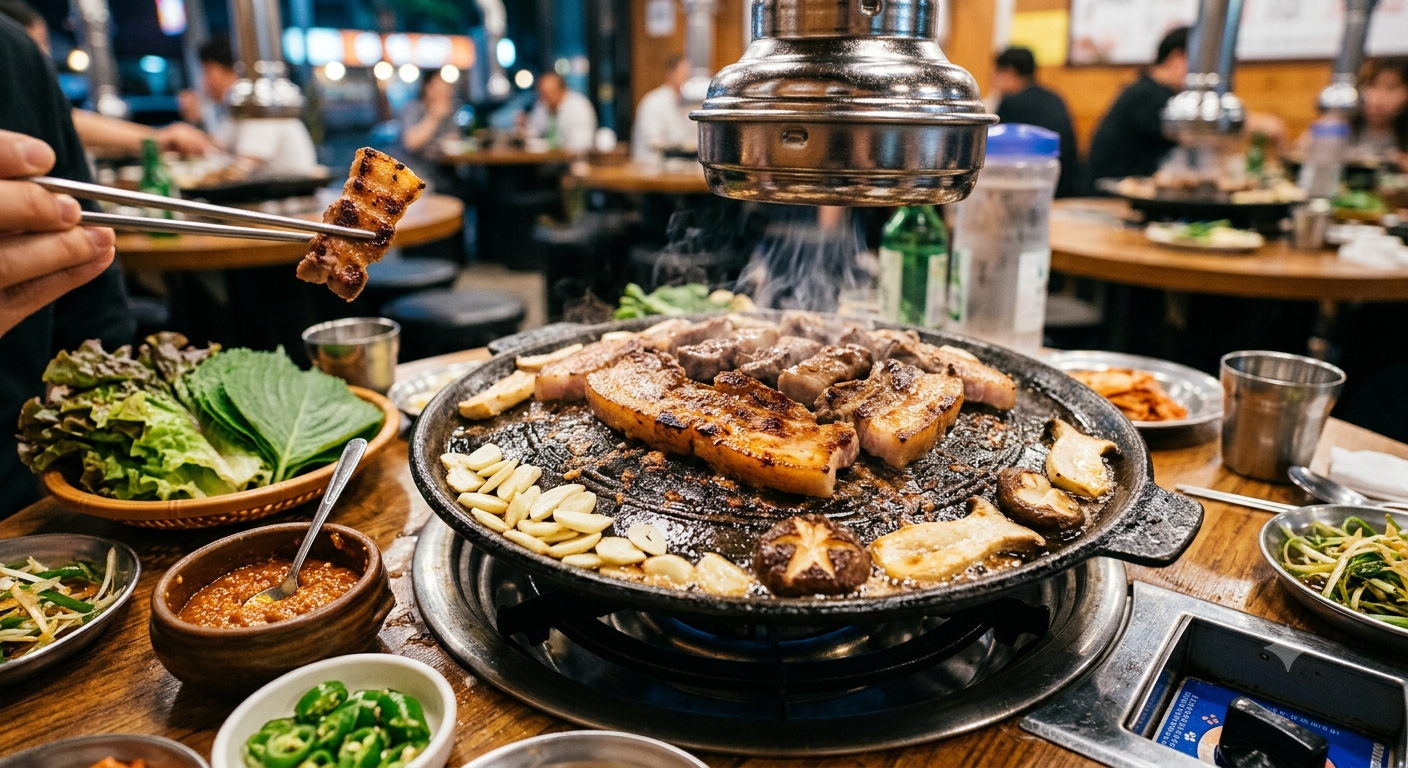
Few dishes create a table-side moment as irresistible as samgyeopsal, Korea’s beloved grilled pork belly. Thick, juicy slices of unseasoned pork belly hit a hot grill, releasing a savory aroma that invites everyone to gather, wrap, dip, and share. More than a simple barbecue dish, samgyeopsal is a social ritual: crisp lettuce, sharp garlic, spicy kimchi, fragrant sesame oil, and perfectly grilled pork all come together in one memorable bite.
In Korean, samgyeopsal literally means “three-layered flesh,” referring to the visible layers of meat and fat in pork belly. It is one of the most popular foods for a Korean barbecue night at home, especially when served with steamed rice, fresh vegetables, and chilled drinks.
📜 The History and Culture of Samgyeopsal
Although pork has long been part of Korean cuisine, modern samgyeopsal culture rose dramatically in South Korea during the late 20th century. As pork production became more accessible, pork belly developed a reputation as an affordable, filling, and delicious cut that was ideal for communal dining.
Unlike many Korean meat dishes that are marinated before cooking, traditional samgyeopsal is usually grilled without a marinade. This allows diners to enjoy the rich, clean flavor of the pork itself. The magic happens at the table, where each person creates a custom wrap called ssam using lettuce or perilla leaves, grilled pork, rice, garlic, ssamjang sauce, and kimchi.
Today, samgyeopsal is a cornerstone of Korean barbecue, enjoyed in restaurants across Seoul and around the world. It is especially associated with celebrations, office dinners, family meals, and relaxed weekends with friends.
🛒 Ingredients for Classic Samgyeopsal
- 1½ pounds (700 g) thick-cut pork belly, sliced into grill-friendly strips
- 1 tablespoon neutral cooking oil, if needed
- 1 cup napa cabbage kimchi
- 6 to 8 garlic cloves, peeled and sliced
- 1 small onion, sliced
- 1 head red leaf lettuce or butter lettuce
- Perilla leaves, optional but highly recommended
- Steamed Korean short-grain rice
- Sesame oil, mixed with a pinch of salt and black pepper
- Ssamjang (Korean soybean-chili dipping paste)
- Sliced green chili or jalapeño, optional
🍳 How to Cook Samgyeopsal Step by Step
- Prepare the table 🥬
Wash and dry the lettuce and perilla leaves thoroughly. Arrange them on a platter with sliced garlic, onion, kimchi, ssamjang, sesame oil dip, rice, and chilies. Samgyeopsal is best when every side dish is ready before grilling begins. - Heat your grill or skillet 🔥
Use a Korean barbecue grill pan, cast-iron skillet, griddle, or outdoor grill. Heat it over medium-high heat. Pork belly releases plenty of fat, so you usually do not need much extra oil. - Grill the pork belly 🥓
Place the pork belly slices on the hot surface in a single layer. Cook for about 3 to 4 minutes per side until deeply golden and crisp at the edges. Use kitchen scissors or tongs to cut the pork into bite-size pieces as it cooks. - Cook the kimchi and garlic alongside 🌶️
Move the pork slightly aside and add kimchi, garlic, and onion to the rendered pork fat. Grill until the kimchi caramelizes, the garlic softens, and the onion becomes lightly charred. This step adds a smoky, restaurant-style flavor. - Check doneness carefully ✅
Cook pork until it reaches an internal temperature of 145°F (63°C), then let it rest briefly. The slices should be browned, juicy, and pleasantly crisp—not dry. - Build your perfect ssam wrap ✨
Place a lettuce leaf in your hand. Add a small spoonful of rice, one or two pieces of pork, grilled kimchi, garlic, and a dab of ssamjang. Fold into a compact wrap and enjoy in one bite.
🌿 Health Benefits and Smart Serving Tips
Samgyeopsal is rich in protein, vitamin B12, zinc, and iron, nutrients that support energy production, muscle maintenance, and immune health. Pork belly is also higher in fat than leaner cuts, which gives it its famous tenderness and flavor. For a more balanced meal, pair it generously with leafy greens, kimchi, mushrooms, cucumber salad, and brown or mixed-grain rice.
Fermented kimchi contributes beneficial probiotics, while garlic and perilla leaves add bold flavor without requiring extra salt. To lighten the meal, serve smaller portions of pork and make vegetables the foundation of each wrap. You can also drain excess rendered fat from the pan during cooking for a less greasy finish.
Pro tip: Buy pork belly cut about ¼ to ½ inch thick. Thin slices can overcook quickly, while thick slices stay juicy and develop the ideal contrast between crisp edges and tender centers.
TAGS: #Samgyeopsal, #KoreanBBQ, #PorkBelly, #KoreanFood, #EasyRecipes
Leave a Reply