Rabokki: Ultimate Korean Spicy-Sweet Ramen and Chewy Rice Cake Mashup 🍜🌶️
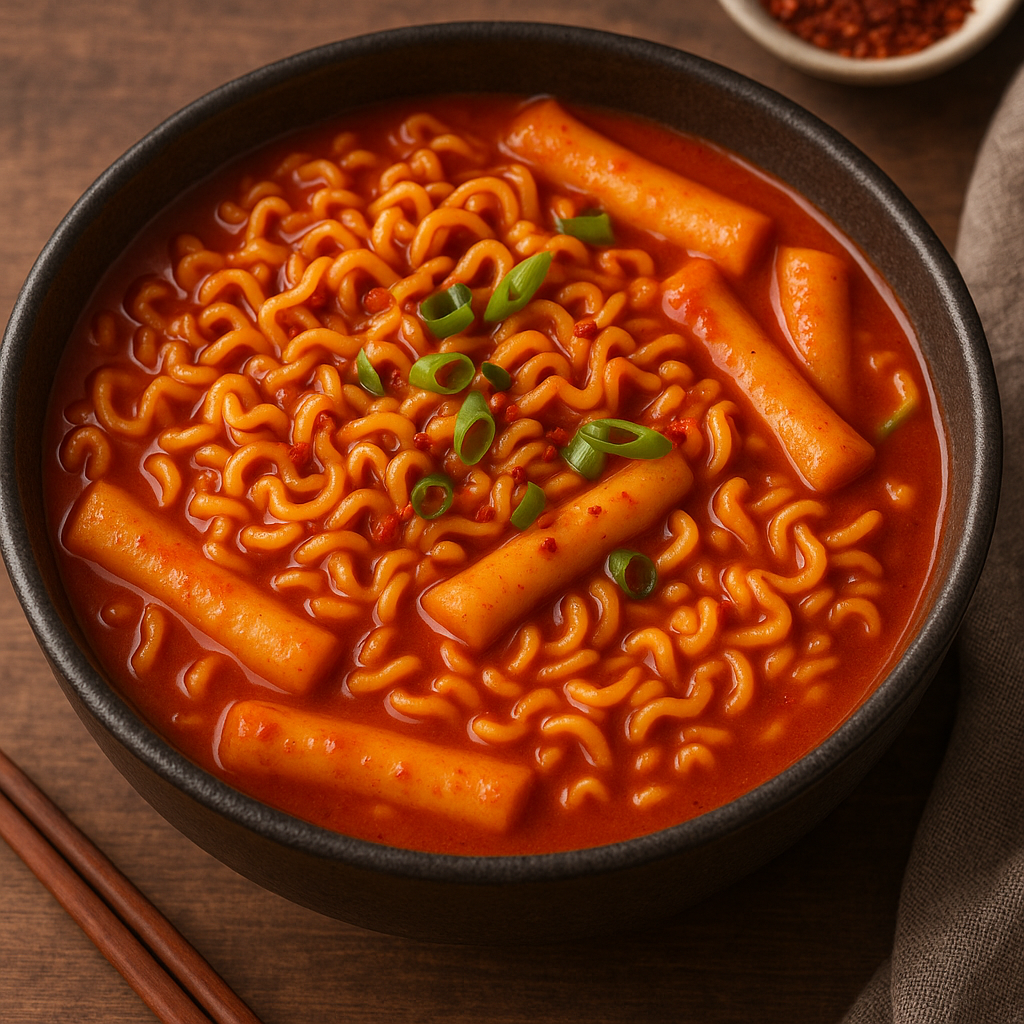
When chewy Korean rice cakes meet springy ramen noodles in a glossy, fiery-sweet sauce, the result is rabokki—a comforting Korean street-food classic that deserves a place in every spicy-food lover’s kitchen. This easy rabokki recipe combines the bold flavor of tteokbokki with the instant satisfaction of ramen, creating a one-pan meal that is savory, sweet, spicy, and deeply satisfying.
📜 The Story Behind Korean Rabokki
Rabokki is a beloved Korean fusion dish whose name blends ramyeon (Korean instant ramen) and tteokbokki (spicy stir-fried rice cakes). Tteokbokki itself has roots in Korea’s royal cuisine, although the modern red, spicy version became widely popular in Seoul after the Korean War, when affordable ingredients such as gochujang—Korean fermented chili paste—were used to create a filling snack.
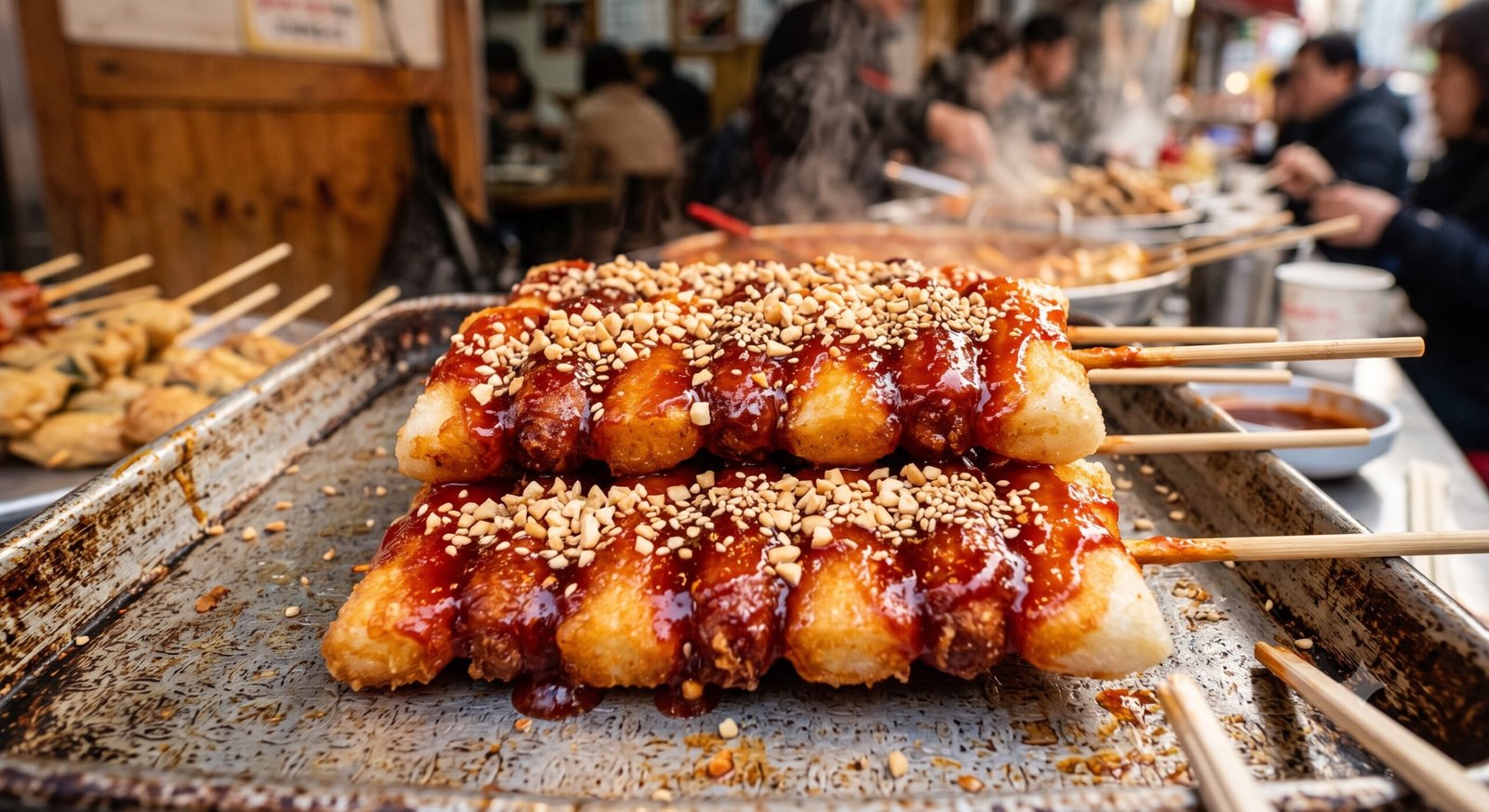
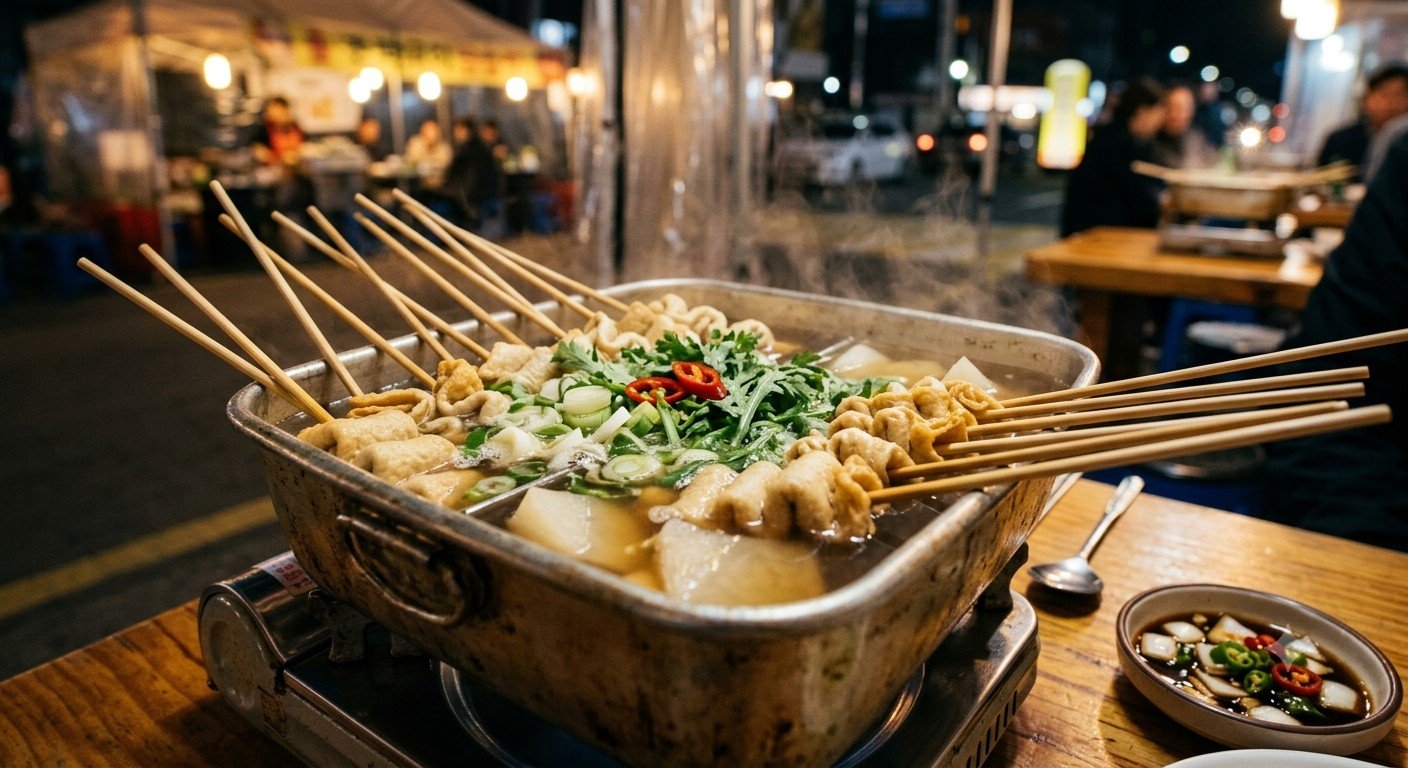
As Korea’s bustling pojangmacha street stalls and snack bars evolved, cooks began adding instant ramen noodles to tteokbokki sauce. The result was rabokki: a heartier, more playful dish that is now served throughout South Korea, from casual markets in Seoul to home kitchens worldwide. It is especially popular as an after-school snack, late-night comfort food, or easy shared meal.
🛒 Ingredients for Easy Homemade Rabokki
- 1 pound Korean cylindrical rice cakes (tteok)
- 2 packs Korean instant ramen noodles, seasoning packets reserved or discarded
- 3 cups anchovy-kelp stock, vegetable broth, or water
- 2 tablespoons gochujang
- 1 tablespoon gochugaru (Korean red pepper flakes), optional
- 1 tablespoon soy sauce
- 1 tablespoon sugar or rice syrup
- 2 cloves garlic, finely minced
- 1/2 small onion, thinly sliced
- 1/2 cup fish cakes, sliced into bite-size pieces
- 1 hard-boiled egg, halved, optional
- 1 green onion, sliced
- 1 teaspoon toasted sesame seeds
- Shredded mozzarella cheese, optional
👩🍳 How to Make Rabokki Step by Step
- Soak the rice cakes. If using refrigerated or frozen tteok, rinse them under cool water and soak for 10 minutes. This helps the rice cakes soften evenly and become beautifully chewy rather than tough.
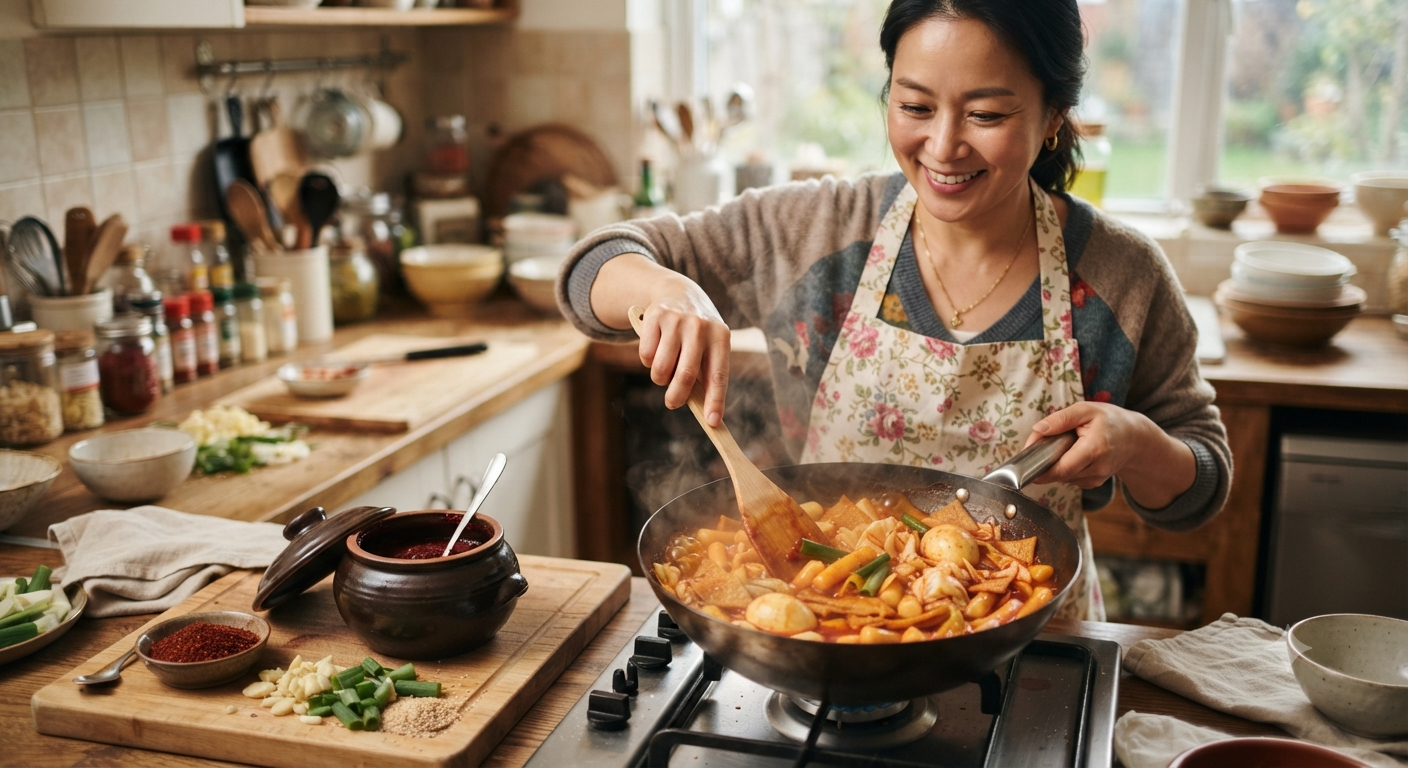
- Make the spicy-sweet sauce 🌶️. In a wide skillet or shallow pot, whisk together the stock, gochujang, gochugaru, soy sauce, sugar, and minced garlic. Stir until the chili paste is mostly dissolved.
- Add the tteok and aromatics. Bring the sauce to a gentle boil over medium-high heat. Add the drained rice cakes, sliced onion, and fish cakes. Simmer for 6 to 8 minutes, stirring often so the sauce does not stick.
- Cook until glossy ✨. As the sauce reduces, it will become thick, red, and shiny. The rice cakes should be soft and tender with a bouncy center. Add a splash of water or broth if the sauce thickens too quickly.
- Add the ramen noodles 🍜. Break the ramen blocks in half and add them directly to the pot. Press the noodles gently into the sauce. Cook for 3 to 4 minutes, turning once, until just tender.
- Finish and serve. Top your rabokki with sliced green onion, sesame seeds, and a halved hard-boiled egg. For a creamy street-food twist, add mozzarella during the final minute and cover until melted. Serve immediately while the noodles are springy and the sauce is hot.
💚 Health Benefits and Smart Rabokki Tips
Rabokki is comfort food first, but it also offers a few nutritional positives. Rice cakes are naturally gluten-free, while gochujang is a fermented ingredient that brings complex umami flavor. Adding fish cakes, eggs, tofu, cabbage, mushrooms, or spinach can make the dish more balanced and satisfying.
- Control the spice: Use less gochugaru for a milder rabokki, or add extra gochujang for a deeper heat.
- Make it vegetarian: Use vegetable broth and replace fish cakes with tofu, mushrooms, or extra cabbage.
- Choose stock for better flavor: Korean anchovy-kelp stock gives the most traditional street-food taste, but vegetable broth works well.
- Eat it fresh: Ramen absorbs sauce quickly, so rabokki tastes best immediately after cooking.
- Build a Korean snack spread: Serve with kimchi, Korean fried chicken, seaweed rolls, or crisp radish pickles.
❓ Rabokki FAQ
What is the difference between rabokki and tteokbokki?
Tteokbokki is the classic Korean dish made primarily with rice cakes in spicy red sauce. Rabokki includes ramen noodles, making it a more filling hybrid of tteokbokki and Korean ramyeon.
Can I make rabokki ahead of time?
You can prepare the sauce, slice the vegetables, and boil the eggs up to two days ahead. However, cook the ramen noodles just before serving. Pre-cooked noodles become soft and absorb too much sauce during storage.
What can I substitute for Korean rice cakes?
For the authentic chewy texture, Korean tteok is best. If unavailable, use thick udon noodles, gnocchi, or sliced rice-cake sticks from another Asian cuisine. The texture will differ, but the spicy-sweet sauce will still be delicious.
How do I keep rice cakes from getting hard?
Soak refrigerated or frozen rice cakes before cooking, then simmer them in enough liquid until tender. If leftovers become firm, reheat them gently with a few tablespoons of water or broth.
Can I add protein to rabokki?
Absolutely. Fish cakes and eggs are classic choices, but sliced beef, chicken, dumplings, tofu, sausage, or seafood all work well. Add cooked proteins near the end so they do not overcook.
🥢 Recommended Ingredients
Bring authentic Korean street-food flavor to your kitchen with fresh rice cakes, gochujang, gochugaru, fish cakes, and quality ramen noodles.
🍲 Recommended Kitchen Tools
A wide Korean ramen pot or shallow skillet helps the sauce reduce evenly while giving the noodles and rice cakes plenty of room to cook.
👉 Check Out Essential Cooking Tools on Amazon
* Disclaimer: As an Amazon Associate, I earn from qualifying purchases at no additional cost to you.
TAGS: #Rabokki, #KoreanFood, #Tteokbokki, #SpicyRamen, #EasyDinner