Bugeo-guk: Nourishing Korean Dried Pollack Soup with Gentle Savory Comfort
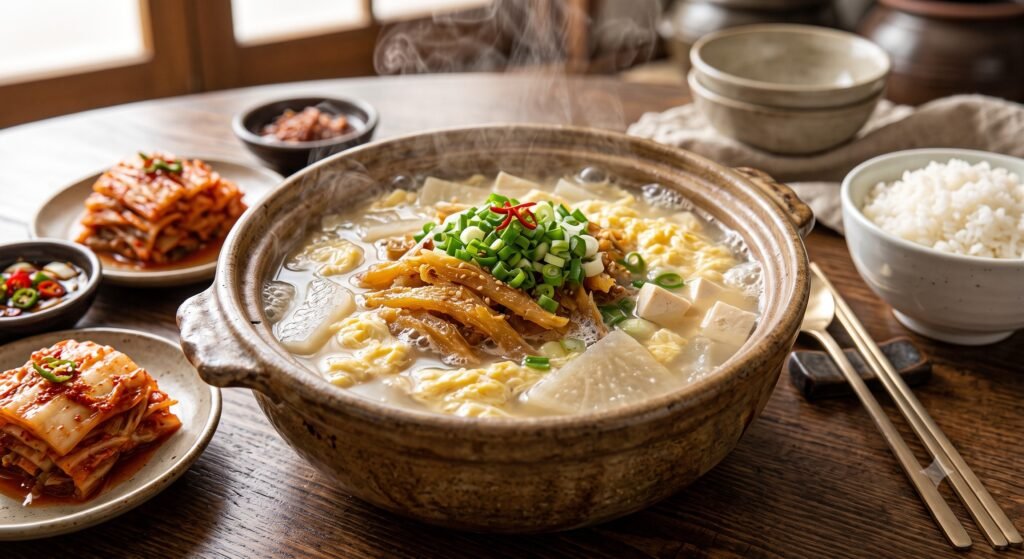
When you need a meal that feels soothing without being heavy, Bugeo-guk is the Korean soup to know. Made with dried pollack, tender radish, egg ribbons, and a clean anchovy-kelp broth, this beloved bowl delivers quiet, savory comfort in every spoonful. Light enough for breakfast yet satisfying enough for dinner, it is a classic example of Korea’s thoughtful, restorative home cooking. 🍲
📜 History and Traditional Background of Bugeo-guk
Bugeo-guk (북엇국) is a traditional Korean soup made with bugeo, dried pollack. In Korea, pollack is preserved through drying in cold winter air, producing a deeply flavorful ingredient with a pleasantly chewy texture and concentrated umami. The dried fish is often called hwangtae when it has been naturally freeze-dried and thawed repeatedly in mountain climates.
For generations, Korean families have served bugeo-guk as a gentle morning soup, a comforting meal during cold weather, and a familiar dish after celebrations. It is especially known as a popular haejangguk, or “hangover soup,” because its warm broth is easy to sip and traditionally considered restorative. Today, this Korean dried pollack soup remains a staple in home kitchens and casual Korean restaurants around the world.
🥣 Easy Korean Bugeo-guk Recipe
This recipe makes approximately 4 comforting servings and takes about 30 minutes from start to finish.
Ingredients
- 2 cups dried pollack strips (bugeo or hwangtae)
- 1 tablespoon sesame oil
- 1 tablespoon minced garlic
- 5 cups water or mild anchovy-kelp broth
- 1 cup Korean radish, peeled and thinly sliced
- 1 tablespoon Korean soup soy sauce (guk ganjang)
- 1 teaspoon fish sauce, optional
- 2 eggs, lightly beaten
- 2 scallions, thinly sliced
- 1 sheet roasted seaweed, shredded, optional
- Salt and black pepper, to taste
👩🍳 Step-by-Step Preparation
- Rinse and soften the pollack. 💧 Place the dried pollack strips in a bowl, rinse them quickly under cool water, then gently squeeze out excess moisture. Do not soak them too long; a brief rinse keeps their flavor concentrated.
- Sauté for deeper flavor. 🔥 Heat the sesame oil in a soup pot over medium heat. Add the softened pollack and minced garlic. Stir-fry for 2 to 3 minutes until fragrant and lightly golden.
- Add radish and broth. Pour in the water or anchovy-kelp broth, then add the sliced Korean radish. Bring the pot to a gentle boil.
- Simmer until tender. 🍲 Reduce the heat to medium-low and simmer for 15 to 18 minutes. The radish should become translucent and slightly sweet, while the dried pollack softens into delicate strands.
- Season carefully. Stir in the soup soy sauce and optional fish sauce. Taste the broth before adding salt, since dried pollack and Korean soup soy sauce both bring natural savoriness.
- Create soft egg ribbons. 🥚 Slowly drizzle the beaten eggs into the gently simmering soup. Wait about 20 seconds, then lightly stir once to create tender ribbons rather than tiny scrambled pieces.
- Finish and serve. Add the sliced scallions, a few grinds of black pepper, and optional shredded seaweed. Serve hot with steamed rice and kimchi for a simple Korean comfort meal.
🌿 Health Benefits and Practical Tips
Bugeo-guk is often appreciated for its high-protein, low-fat profile. Dried pollack provides lean protein, while radish adds fiber, vitamin C, and a natural sweetness that balances the broth. Eggs contribute additional protein and satisfying richness without making the soup heavy.
- Use homemade broth: Anchovy-kelp broth creates the most traditional Korean flavor, but water works well for a clean, light version.
- Choose Korean radish when possible: It is firmer and sweeter than many common radishes, making it ideal for soup.
- Control sodium: Start with less soup soy sauce, then adjust after simmering.
- Add tofu: Soft tofu makes this soup more filling and is an excellent option for a quick weeknight meal.
❓ Bugeo-guk FAQ
What is the best dried fish for Korean bugeo-guk?
Authentic bugeo-guk is made with dried pollack strips, often labeled bugeo, hwangtae, or Korean dried pollock. Look for pale golden strips with a clean, mild ocean aroma and no overly fishy smell.
Can I make bugeo-guk ahead of time?
Yes. Bugeo-guk keeps well in the refrigerator for up to 3 days. For the best texture, prepare the soup base ahead and add freshly beaten egg ribbons when reheating.
What can I substitute for Korean radish?
Daikon is the closest substitute and works beautifully. If unavailable, use a small amount of white turnip, although its flavor will be slightly sharper and less sweet.
Is bugeo-guk good for breakfast?
Absolutely. In Korea, this gentle dried pollack soup is commonly served for breakfast because it is warm, hydrating, protein-rich, and easy to eat with rice.
How can I make Korean pollack soup more spicy?
Add 1 to 2 teaspoons of Korean red pepper flakes, known as gochugaru, while the broth simmers. This creates a warming spicy bugeo-guk without overpowering the delicate fish flavor.
🥬 Recommended Ingredients
Bring authentic Korean comfort to your table with flavorful dried pollack, Korean soup soy sauce, and quality sesame oil. Choose fresh, reliable pantry essentials for the best bugeo-guk broth.
🍳 Recommended Kitchen Tools
A dependable soup pot with a lid makes gentle simmering easy, helping the pollack, radish, and aromatics develop their signature clean, savory flavor.
* Disclaimer: As an Amazon Associate, I earn from qualifying purchases at no additional cost to you.
TAGS: #BugeoGuk, #KoreanSoup, #DriedPollack, #KoreanComfortFood, #HealthyRecipes